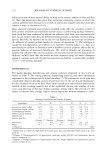
122 JOURNAL OF COSMETIC SCIENCE Table II Shampoo Ingredients Ingredient • Percent active Ammonium lauryl sulfate 2 14.0 Ammonium laureth-3 sulfate 2 3.9 Cocamidopropyl betaine 2 3 Cationic polymer 0.5 DMDM hydantoin 0.4 Deionized water 78.2 Nomenclature taken from International Cosmetics Ingredients Dictionary. Available from Henkel Corporation, Hoboken, NJ. the quantity of deposited polymer was determined by using standardization curves established previously with known quantities of each labeled polymer (17). Fluorescence images of individual hair fibers were taken using a Zeiss LSM10 laser scanning microscope equipped with Zeiss 20x and 10x objectives. An argon ion laser (488 nm) was used to image green emission. The images were acquired with a digital Sony 3 CCD camera. The hair samples were mounted on clean glass slides using a nonfluorescing aqueous/dry mounting medium (14). Rheological studies were con- ducted on a Bohlin CS rheometer (Bohlin Instruments, Cranbury, NJ) using a double- gap (DG) 40/50 cup and bob geometry. The rheological studies were run at 30øC, and the measurements were averaged over 40 seconds with a 0.1-second delay between measurements. Polymers employed in the rheological studies were dialyzed against distilled water (Spectra/Por © Membranes, 1000 MWCO, Spectrum Company, Houston, TX) and lyophilized prior to use. RESULTS AND DISCUSSION EFFECTS OF THE FLUORESCENT DYE ON POLYMER BEHAVIOR The fluorescent labeling of cationic hydroxyethyl cellulose was reported earlier (14) (Scheme I). The dye is a modified fluorescein. It is linked to the polysaccharide backbone through an ether linkage between a reactive triazine on the dye and an available hydroxyl group on the polysaccharide. The reaction occurs readily with various polysaccharides. For the present study we prepared labeled cationic hydroxyethyl cellulose and cationic polygalactomannan. Determination of the degree of substitution of the dye, and assess- ment of the purity of the resulting polymer, i.e., the absence of unreacted dye, were carried out as described earlier (14). In his seminal studies on the deposition of radiolabeled polyquaternium-10, Goddard reported that in the case of cationic polymers deposited directly from aqueous solution, polymers of lower molecular weight tend to deposit more quickly and more heavily (4,5). Goddard attributed the stronger deposition of the low-molecular-weight polymers to their higher mobility. He took it also as an indication of better penetration of these materials into the intercuticular spaces. Preliminary studies were done to reproduce with the fiuorescently labeled polymers the experiments carried out by Goddard and cowork-

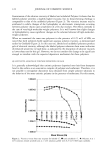
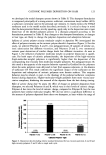
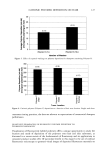
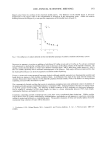
CATIONIC POLYMER DEPOSITION ON HAIR 123 ers with radiolabeled polymers. Surprisingly good agreement between the two methods was obtained in the case of polyquaternium-10 deposition on hair (17). Goddard also studied the deposition of radiolabeled polyquaternium-10 from various simple surfactant platforms (5). The surfactants of most commercial relevance included triethanolamine lauryl sulfate (TEALS) and sodium laureth-3 sulfate (SLES). We repro- duced these deposition studies as closely as possible using fluorescently labeled polyquaternium-10 samples of charge and molecular weight characteristics similar to those of the polymers employed by Goddard in his studies. The results of our investi- gations are shown in Figure 1. The reproducibility of the deposition measurements for both labeling techniques from the strongly anionic surfactant, TEALS, is good. However, we note that from the milder surfactant system, SLES, deposition of the radiolabeled cationic polymer is greater than that seen for the fluorescently labeled polymer. The reasons for this discrepancy are unknown. One possible explanation is that the dye attached to the polymer somehow affects its deposition on hair when used in a milder surfactant system. Other factors might account for the discrepancy as well. For example, one cannot exclude the possi- bility of changes in the raw materials used in the original studies twenty-five years ago. Also, Goddard performed his deposition studies on virgin brown hair, while we have conducted ours on virgin blond. We do not believe this change accounts for the differ- ences noted. To assess whether or not the attached dye affects the behavior of the modified polyquaternium-10 in the presence of strongly anionic surfactants, we investigated the solution rheology of the labeled polymer both alone and in the presence of sodium dodecyl sulfate, SDS, at a concentration high enough to cause gelling of the polymer solution. This latter polymer/surfactant solution behavior was described previously by Goddard (18). The interaction of the cationic polymer and anionic surfactant leading to coacervate phases has been investigated microscopically (19). •mer La•l T•e and Wash •m bet ß Surfac•3 nt 15% ß Cationic Polymer 1.5% ß Laurarnide DEA 2.0% ß DMDM Hydantoin 0.4% ß Water q.s. to 100 Figure 1. Comparative study between radiolabeled polyquaternium-10 (grey bars) and fluorescently labeled polyquaternium-10 (black bars) from shampoos comprised of the ingredients shown in the small appended table (5). The data on the left was taken from a TEALS-containing shampoo and the data on the right from a shampoo with SLES. Data was generated for one and five wash cycles.
Purchased for the exclusive use of nofirst nolast (unknown)
From: SCC Media Library & Resource Center (library.scconline.org)