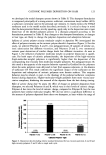
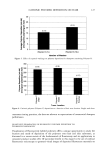
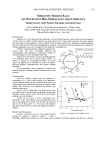
SILICONE OIL DEPOSITION ON HAIR 133 Readers who wish to understand the error and sources of error inherent in the technique are directed to the more detailed article. We wish, at this time, to describe in a general fashion how the x-ray fluorescent spectrometer works in our particular application and some of the important sources of error that can affect the measurements. We have employed both a Kevex energy dis- persive instrument and a Philips Electronic P2400 wavelength dispersive instrument. The terms energy dispersive and wavelength diJ•ersive relate to the method of wavelength discrimination, and for those interested in a more thorough description of these terms, we suggest a recent review by Torok et al. (8). The Philips instrument is more modern and is equipped to spin the sample during analysis. We have found that due to the directionality of hair, it is essential to spin the fibers during analysis, but with the Kevex instrument, this rotation can be done manually in 90 ø steps and the results obtained correlate very well with measurements taken on the instrument that rotates the samples during analysis (7). We have found that the greatest source of error in the analysis technique occurs in the preparation of the shampoos and the washing of the tresses, and we have outlined our steps to minimize these sources of error as much as possible (7). Within our discussion, references to differences in relative silicon deposition can be considered statistically significant. Figure 1 shows a schematic representation of the x-ray spectrophotometer. Very simply, the device is a direct excitation mode instrument in which the sample, i.e., the treated tress, is directly excited by the primary radiation from the x-ray tube. The x-rays from the source strike the hair tress, covering a sample size of approximately one inch in diameter. The x-rays cause various atoms to emit excess energy at specific energies to afford fluorescence. This technique measures the signal from the atoms (i.e., silicon), without regard to their attributes inside a compound. The characteristic silicon fluo- rescence occurs at 1.74 KeV, and is called the Ko• band. Ssmple To orAggollimotor Detector Probe Tip,/ " ß . I X-ray Excitation(primary) Characteristic. X-rays .....:_rayTube I ! Figure 1. Schematic of x-ray fluorescent spectrophotometer.

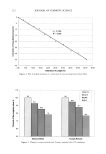
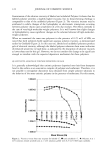
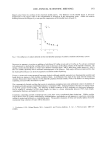
134 JOURNAL OF COSMETIC SCIENCE Since the x-ray energy penetrates only a few microns into the hair tress, it only measures the silicone oils that have deposited onto the surface of the hair tress, i.e., onto the hair cuticle. Because we do not know the absolute value for the amount of silicone deposited onto the hair [although methods exist to measure these absolute amounts (9,10)], we are looking instead at qualitative values of silicone deposition that are taken as counts/ second. Therefore, only tresses washed using carefully controlled model shampoo for- mulations treated under similar washing conditions on the same type of hair can be evaluated, and the use of specific control tresses is critical for relating data. RESULTS AND DISCUSSION In our original discussion, we noted a surprising result that we show graphically in Figure 2. When virgin brown tresses (DeMeo Brothers) are washed with a model shampoo that contains a silicone emulsion but does not contain a cationic polymer (Formulation E), the silicone not only deposits, but after multiple washings continues to deposit, showing indications of a build-up phenomena. The control tresses in this case are also shown and include tresses washed one time with a non-ionic surfactant, 15- Pareth-9 (Formulation G) and tresses washed one and ten times with our model shampoo base without silicone or cationic polymer (Formulation F). However, when we examined the data for our formulation containing a low-molecular-weight polyquaternium-10 at 0.5 wt%, (Formulation A), we noted that while initial single-wash silicone deposition was slightly depressed compared to the silicone-only shampoo, after multiple washes the presence of the cationic polymer appears to modulate the silicone deposition and the build-up phenomena is suppressed. This suggests to us that in the washing process, the two polymers must interact with one another in some fashion that is not presently understood due to the complexity of the application process, which includes high shear, foaming, and dilution effects. While the influence of the cationic polymer on the silicone oil deposition is readily apparent from Formulation and Wash Number Figure 2. Relative silicon x-ray fluorescent intensities for hair tresses treated with various shampoo for- mulations including data for single (lx) and multiple (10x) washing experiments (except as noted).
Purchased for the exclusive use of nofirst nolast (unknown)
From: SCC Media Library & Resource Center (library.scconline.org)