2000 ANNUAL SCIENTIFIC MEETING 139 be accounted for in terms of their co-adsorption at the interface. The methods that can be applied for formulation ofmicroemulsions are briefly described. Finally, the use of polymeric surfactants for formulating microemulsions is described. This has the advantage of avoiding any skin irritation, since these polymeric surfactants cause no disruption of the stratum corneum of the skin. The third part of this overview deals with the topic of nanoemulsions (covering the size range 50 -200 rim) which may also appear transparent or translucent. However, these systems are not thermodynamically stable, but due to their small size they have a long term kinetic stability. This is due to the larger ratio between adsorbed layer thickness and droplet radius, when compared with the values for macroemulsions. Two main procedures could be applied for preparation ofnanoemulsions, namely high pressure homogenization and application of the phase inversion temperature (PIT) principle. The droplets produced using the first technique show a narrower distribution when compared with those obtained using the PIT method. However, nanoemulsions may show growth of droplet size with time as a result of Ostwald ripening (that results from the difference in solubility between the small and large droplets). Two methods may be applied to reduce Ostwald ripening, namely incorporation of a second oil phase with very low solubility and/or incorporation of a polymeric surfactant that is strongly adsorbed at the O/W interface and has low solubility in the continuous phase. The fourth part of the overview deals with liposomes and vesicles which are produced by dispersion of lipids followed by sonication. The principle of the critical packing parameter is applied to predict the formation of vesicles. The latter are useful delivery systems for personal care applications, since nonpolar actives may be solubilized in the hydrocarbon core of the bilayer, whereas polar and Water soluble actives can be intercalated in the aqueous film between the bilayers. Liposomes and vesicles cause no skin irritation since they have similr structure to the lJpid I•ilayer of the stratum corneum. The last section of the overview deal with multiple emulsions which are very useful for formulation of personal care products with several active ingredients. The use of polymeric surfactants for preparation of stable multiple emulsions is described and the criteria of stability is summarized. The multiple emulsion can also be stabilized using thickeners to prevent creaming or sedimentation.

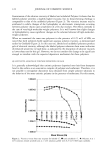
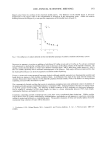
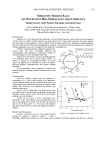
140 JOURNAL OF COSMETIC SCIENCE BEYOND RHEOLOGY MODIFICATION: HYDROPHILICALLY MODIFIED SILICONE ELASTOMERS PROVIDE NEW BENEFITS Michael S. Starch, Jean E. Fiori and Zuchen Lin Dow Corning Corporation, Midland, Michigan Introduction: The introduction of silicone elastomers to our industry has provided fonnulators with new tools for modifying the theology and esthetic properties of silicone-based formulations. These silicone elastomers are based on crosslinked dimethicone and are typically supplied in the form of swollen gels that contain various silicone oils. One such elastomer with the INCI name Dimethicone Crosspolymer (DCP) has been shown to be useful for thickening various types of formulations, particularly anhydrous formulations, where cyclomethicone is the vehicle( This silicone elastomer also provides novel sensory properties that are unlike anything attainable with silicone fluids. The addition ofhydrophilic polyethylene glycol (PEG) functional groups to DCP affects both the chemical and rheological properties of the elastomer. This new class of materials, hereinafter referred to as PEG- modified DCP (PEG-DCP), has very diflkrent properties from the unmodified elastomer. The hydrophilic PEG substituents change the wetting properties of the elastomer and dramatically improve compatibility with polar ingredients 2. We have shown that PEG-DCP can be used as an emulsifier for oil-continuous as well as multiple emulsions. Reduced Syneresis: The utility of DCP and other elastomers prepared from non-polar silicones for thickening anhydrous antiperspirants is illustrated in Figure 1. This data was generated using a simple soft solid formula composed of elastomer, antiperspirant salt, and cyclomethicone. The solid line with triangles shows that the viscosity of the formula increases rapidly as the concentration of DCP is increased. The amount of syneresis for these formulas, (dotted line) however, is relatively insensitive to the DCP concentration. When PEG-DCP is used to prepare the formula, the viscosity is much lower, but syneresis is dramatically reduced by increasing the elastomer concentration to 4% in the formula. These results may be due to an associative thickening effect, whereby the PEG chains are driven to associate in the non-polar formula 450,000 400,000 350,000 300,000 ,B • 250,000 200,000 150,000 100,000 50,000 environment. Under shear conditions, including those used to measure formula viscosity, these associations break down, leading to low viscosity readings. We have found that the viscosity of such formulas is highly dependent on the shear history of the sample and that stirring the sample before measuring viscosity dramatically reduces viscosity. 0 0 2.5 3.0 3.5 4.0 4.5 Elastomer Concentration (wt %) 45 Viscosity - with DCg' • •'-- Vlscos*ty - w Ith FE43- ECP i Syneresls w •th PEG-EX):' - -a- - Syneres,s w ith DCg' I 4O 35 30 o•' 25 .• 2o g 15• 10 rlgUlC I Compatibility with Polar Ingredients: Silicone elastomers such as DCP that have no polar functionality are generally incompatible with organic oils. All the exceptions we have found to this rule are low molecular weight hydrocarbon oils. When mixed with DCP that has been swollen in cyclomethicone, organic oils such as fatty esters appear to alter the gel structure of the elastomer, leading to a loss of thickening efficiency. At higher concentrations, fatty
Purchased for the exclusive use of nofirst nolast (unknown)
From: SCC Media Library & Resource Center (library.scconline.org)