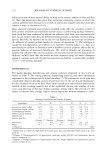
2000 ANNUAL SCIENTIFIC MEETING 141 esters can precipitate DCP, presumably due to poor solvation ofelastomer. The polar functionality of the PEG-DCP elastomer increases the range of organic oils that are compatible. The data shown in Table 1 illustrates this phenomenon with tocopherol. In these experiments, DCP and PEG-DCP were pre-blended with cyclomethicone and the compatibility of these blends with tocopherol was evaluated. The tocopherol was slowly added to the elastomer blends until the mixtures became hazy, indicating incompatibility. The amount oftocopherol required to produce incompatibility was recorded as the "saturation point" for the particular elastomer blend. Two PEG-DCP elastomers with different levels of PEG substitution were tested. The data indicates that the PEG functionality is responsible for the improved compatibility with tocopherol. Table 1: Compatibility of Silicone Elastomer / Cyclomethicone Blends with Tocopherol Elastomer PEG Appearance and Saturation Type Substitution stability of mixtures Point (w/w) DCP None I hazy, separates over time 1% PEG-DCP Low clear, stable over time 20 % PEG-DCP High clear, stable over time 28 % Emulsification: PEG-substituted silicones such as dimethicone copolyols are known in the industry for their ability to form water-in-oil (W/O) emulsions, where the continuous phase is composed primarily of cyclomethicone. One application for these W/O emulsions is clear antiperspirant gels, where an aqueous phase containing the antiperspirant salts is emulsified into a continuous silicone phase. We compared the emulsification performance of a widely used dimethicone copolyol with that ofa PEG-DCP elastomer in a simple antiperspirant gel formulation. We found that both produced stable W/O emulsion gels, but the viscosity of the gel with PEG-DCP was significantly higher (13,000 cP for the PEG-DCP gel versus less than 6,000 cP for gel with Dimethicone copolyol), due to the thickening effect of the elastomer in the continuous phase. In addition to simple W/O emulsions, PEG-DCP can be used to prepare multiple emulsions, including water-in-oil-in-water (W/O/W) emulsions 3 and propylene glycol-in-oil-in-water emulsions 4. In these systems, we believe the thickening effect of the silicone elastomer in the silicone oil phase helps to stabilize the initial W/O (or PG/O) emulsions and allows them to be dispersed in water without inversion. This offers the potential to formulate products with ingredients that may not be stable in conventional emulsions. Placing them in the innermost phase of a multiple emulsion could protect such ingredients from degradation. Summary: The development of silicone elastomers with hydrophilic functionality in the form of PEG substituents provides benefits beyond the thickening that can be achieved with non-functional silicone elastomers. We have shown that PEG-DCP, in particular, is compatible with a wider range of personal care ingredients, compared to the unmodified elastomer (DCP). When blended with cyclomethicone, PEG-DCP forms a silicone phase that can solubilize organic oil and will emulsify water to form stable W/O emulsions. The PEG-DCP provides thickening as well as emulsification, and this combination of properties allows the preparation of multiple emulsions. References: I) Schulz, Jr., W.J. Zhang, S., U.S. Patent 5,654,362 (August 5, 1997) 2) Schulz, Jr., W.J. Zhang, S., U.S. Patent 5,811,487 (September 22, 1998) 3) Lin, Z., Schulz, Jr.• W.J. Zhang, S., U.S. Patent 5,948,855 (September 9, 1999) 4) Lin, Z. Schulz, Jr., W.J. Smith, J. M., U.S. Patent 6,080,394 (June 27, 2000)

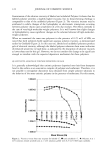
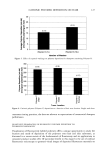
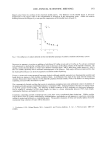
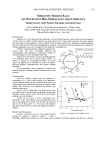
142 JOURNAL OF COSMETIC SCIENCE THE IMPORTANCE OF MESOMORPHIC (LAMELLAR) PHASES IN EMULSION STABILITY Gillian M. Eccleston, Ph.D. Department of Pharmaceutical Sciences, University of Strathclyde, Glascow, Scotland, G40NR Dermatological lotions and creams are often complex multiphase emulsions with stability and physical chemical properties related to the mesomorphic phase behaviour of the emulsifiers rather than to droplet interactions described by classical emulsion theories. A knowledge of the relationship between the properties of such formulations and their microstructure is essential to optimise manufacture, provide cosmetic elegance and to control the delivery of a cosmetic agent to the skin. In this presentation, the microstructure and properties of a range of fluid and semisolid liquid paraffin-in-water emulsions (aqueous creams) stabilised by either (i) combinations of surfactants (ionic cetrimonium bromide or non- ionic ceteth 20) and pure or mixed homolog fatty alcohols or (ii) partially neutralised fatty acids will be discussed. In particular, tl•e important relationships between emulsion microstructure, stability and rheology. The rclevance of oil free ternary systems, formed by dispersing mixed emulsifiers in controlled percentages of water, to investigations into emulsion microstructure will be emphasised. The stabilities and theological properties of emulsions containing fhtty alcohol/surfactant mixed emulsifiers (emulsifying waxes) are controlled by the swelling properties of an a-crystalline lameliar gel network formed when mixed emulsifier interacts with continuous phase water. Despite the complexity of these systems, combinations of low and high angle X-ray diffraction measurements (Daresbury Laboratory Synchrotron Radiation Source, SRS) provide direct and accurate measurements of the interlamellar water spacings (1). These spacings affect the theological properties of the creams. The influence of batch variations of the surfactants or changes in homologue composition of the alcohol on emulsion stability and rheology can also be correlated directly to extent of swelling of the lameliar gel network. The cationic emulsifying wax shows phenomenal swelling in water. The reflection that incorporates interlamellar water increases continuously to over 500A at 93% water. The trend is not influenced by the inethod of incorporation of the components and swollen lameliar phase is also identified in the corresponding emulsion (Figure 1). sssA I st Order Ternary Gel 280A • I -•-- 3rd Order 0.010 0.020 CrEam lst Order '•x 2rid Order '•- 3rd Order 0.• 0.• 0.• 0.• 0.010 0.014 0.018 S (1 / A) Fig. 1 Comparison of small angle X-ray diffraction patterns of cetrimonium brolnide emulsion and ternary system The extensive swelling is electrostatic in nature. The surthctant molecules interposition among the fhtty alcohol molecules and electrical double layers arise t¾om the dissociation and diffusion of counterions from the surfactant headgroups at the surface of the bilayers into the surrounding water. Electrostatic repulsion between a4jacent
Purchased for the exclusive use of nofirst nolast (unknown)
From: SCC Media Library & Resource Center (library.scconline.org)