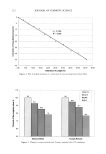
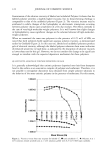
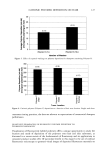
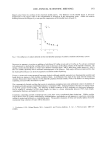
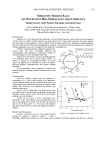
2000 ANNUAL SCIENTIFIC MEETING 143 bilayers arise from the overlap of the electrical double layers. The thickness of the double layers is inversely proportional to the square route of the concentration of electrolyte in the surrounding water. Added salt reduces swelling between the bilayers by a non-specific compression of the double layers (Figure 2). Fig. 2 The influence of sodium chloride on the interlamellar spacings of cationic emulsion and ternary system. Decreases in apparent viscosities on addition of salt (from 107 mPas at zero salt to l0 mPas at 2% salt) are correlated with reductions in interlamellar swelling which result in decreases in the phase volume of the lameliar structures. On storage, creams become thicker as water layer distance increases (from -460 A after three weeks storage to -600 A after six months) probably due to surfactant rearrangement in the bilayers. High angle diffraction data confirm that the hydrocarbon bilayers are in the hexagonal {x-crystalline mode of packing. Ternary systems and creams prepared from pure alcohols, although initially semisolid, are rheologically unstable and break down on storage to form mobile crystalline fluids. A preliminary low angle X-ray study into the kinetics of structure break down shows that the swollen lameliar gel phase formed initially swells even further on storage betbre separating into unswollen monoclinic crystals. The comparatively limited swelling that occurs in emulsions containing non-ionic surfactants is due to hydration of the polyoxyethylene groups (interlamellar distances of around 110A). Initial consistency increases on storage occur as the POE groups slowly hydrate. The influence of batch variations of POE surfactant on theological properties can be related to variations in POE chain length, fbr there is a linear relationship between POE chain length, interlamellar thickness and apparent viscosity. Emulsions containing partially neutralised fatty acids show more complicated phase behaviour. Whilst swollen bilayer phases form in systems neutralised by triethanolamine, such phases are not apparent in emulsions containing sodium or potassium hydroxide as neutralising agent. The possible structures of these non-lamellar phases that also incorporate large volumes of water will be discussed. 1. Eccleston, G.M., Bchan-Martin, M.K., Jones,G.R. and Towns-Andrews, E. lnt. ,l. Pharmaceutics 203 127 (2000).

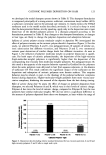
144 JOURNAL OF COSMETIC SCIENCE SELF-EMULSIFICATION OF SURFACTANT-OIL MIXTURES PRODUCED BY DIFFUSION AND CHEMICAL REACTION Clarence A. Miller, Ph.D. Department of Chemical Engineering, Rice University, Houston, Texas 77251-1892 Abstract. Drops having diameters of order 100 gm and containing various combinations of oils, surfactants, and in some cases alcohols were injected into water or aqueous salt or buffer solutions. The resulting dynamic behavior was observed by videomicroscopy. Spontaneous emulsification yielding oil droplets a few microns in diameter was seen in a variety of systems when diffusion and/or chemical reaction caused inversion of the drop from an oil-continuous to a water-continuous phase, leading to local supersaturation in oil. Surfactants used included nonionic (C•2E6) , anionic (Aerosol-OT), and zwitterionic (tetradecyldimethylamine oxide). In some experiments inversion occurred because a lipophilic surfactant was converted to a hydrophilic surfactant, e.g., a double-chain phospholipid to two single-chain surfactants. Introduction. When emulsions are formed by mixing oil and water phases, high shear rates are typically required to generate small drops having diameters of order 1 gin. When it is necessary or desirable to obtain small drops without high shear rates, spontaneous emulsification should be considered. Compositions of the initial oil and water phases are chosen in such a way that small droplets form spontaneously when the phases are brought into contact, i.e., no external energy of agitation is required. "Self-emulsification" refers to situations where a small amount of agitation is supplied to achieve gentle mixing. Typically the droplets form spontaneously, and mixing serves mainly to disperse them throughout a large volume and to bring together portions of the oil and water phases which were not in contact initially. Self-emulsification of oils containing dissolved solutes is not only an intriguing phenomenon but is also of practical interest in delivery of agricultural chemicals and drugs as well as during use of cutting oils, bath oils, etc. A surfactant or a mixture of surfactants is added to the oil, so that it will emulsify spontaneously when contacted with water. The objective of our study was to gain insight into the mechanism of spontaneous emulsification, which has not been well understood, and thereby provide a basis for choosing suitable surfactant/oil mixtures. Results. Rang and Miller • used videomicroscopy to study self-emulsification of n- hexadecane/C•2Es/n-octanol drops some 100 gm in diameter injected into water. Spontaneous emulsification yielding only small oil droplets was observed when the initial ratio of alcohol to hydrocarbon was greater than that in the excess oil phase in equilibrium with a m•croemulsion and water at the temperature of interest, i.e., above the ratio existing at the Phase Inversion Temperature (PIT), and when surfactant
Purchased for the exclusive use of nofirst nolast (unknown)
From: SCC Media Library & Resource Center (library.scconline.org)