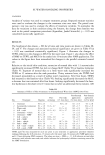
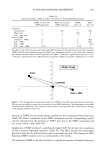
246 JOURNAL OF COSMETIC SCIENCE Table III "In vitro" Diffusion Coefficients of Preservatives Incorporated in Different Topical Forms Determined Utilizing Franz-Type Diffusion Cell Preservative Jo ' lag/cm2h C (mg/ml) Jn ' cm/h x 10 3 log Jn Aqueous solution Methylparaben 17.48 0.5 34.96 1.54 Ethylparaben 14.39 0.5 28.77 1.45 Propylparaben 11.55 0.5 23.16 1.36 W/O emulsion Methylparaben 3.48 0.5 6.96 0.84 Ethylparaben 3.37 0.5 6.74 0.82 Propylparaben 1.08 0.5 2.16 0.33 O/W emulsion Methylparaben 4.87 0.5 9.74 0.98 Ethylparaben 1.40 0.5 2.80 0.44 Propylparaben 0.37 0.5 0.74 -0.13 Pemulen gel Methylparaben 0.67 0.5 1.34 0.12 Ethylparaben 1.27 0.5 2.54 0.40 Propylparaben 1.34 0.5 2.67 0.42 Carbopol gel Methylparaben 3.95 0.5 7.90 0.89 E thylparaben 8.47 0.5 16.94 1.22 Propylparaben 9.22 0.5 18.44 1.26 The reported results represent the average of six independent experiments. In the case of aqueous solutions, the diffusion coefficients of parabens (Jn values) are at least fivefold higher than in the case of viscous forms. In addition, the diffusion coef- ficients are a function of the substituent of preservatives: the higher the solubility, the higher the diffusion of parabens. The same behavior is reliable for the emulsions, in particular in the case of the O/W, where the normalized fluxes (J,) were 9.74, 2.8, 0.74 cm/h x 103 for MP, EP, and PP, respectively. On the contrary, in the case of the hydrophilic gels, the higher the parabens solubility, the lower the diffusion coefficients. In particular, in the case of Carbopol gel, J, values were 7.9, 16.94, and 18.44 cm/h x 103 for MP, EP, and PP, respectively. The different types of vehicles could account for the differences in the diffusion coeffi- cients of the preservatives. MP and EP exhibit more affinity with the hydrophilic matrix of gels in comparison to PP, which, being more insoluble, is less retained, resulting in a higher diffusion coefficient. Moreover, in the case of Pemulen gel, Jn values are lower with respect to those exhibited by parabens incorporated in Carbopol gel. The trend can be attributed to the different lipophilicity of the resins in fact, the acrylates/C10-30 alkyl acrylate crosspolymer, having C10-C30 chains, is able to dissolve parabens better than the carboxy vinyl polymer carbomer. This behavior is particularly evident for PP, which is much more retained by Pemulen gel in comparison to Carbopol gel (J, of 2.67 versus 18.44 cm/h x 103) due to the chemical affinity of PP to the acrylates/C10-30

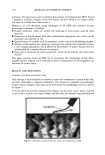
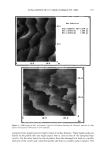
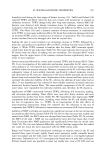
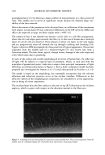
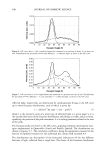
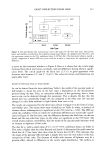
DIFFUSION OF PRESERVATIVES 247 20 15 methyl- ethyl- -p- hydroxybenzoate propyl- Figure 3. Comparative effect of different formulations on the in vitro diffusion of preservatives. Histograms represent the mean values (n = 6) + SD of log J,. Filled pattern: water-in-oil emulsion. Left diagonal lines pattern: oil-in-water emulsion. Criss-cross lines pattern: Pemulen gel. Right diagonal lines pattern: Car- bopol gel. alkyl acrylate (Pemulen) resin. The scarce attraction of Carbopol gel to parabens can suggest the use of acrylates/C10-30 alkyl acrylate crosspolymers (for instance carbomer 1342) instead of the carboxy vinyl polymer in order to produce well-preserved topical formulations, able to hold onto parabens. Different considerations should be made in the case of the emulsions that, being two- phase systems, can dissolve parabens part in the oil and part in the aqueous phases. In this regard, the water phase concentrations of parabens in the different emulsions were determined by HPLC analysis. It was found that the aqueous phase concentrations of parabens in the W/O emulsion were 2.54, 1.12, and 0.6 mg/ml for MP, EP, and PP, respectively, while in the aqueous phase of the O/W emulsion, paraben concentrations were 2.6, 1.08, and 0.48 for MP, EP, and PP, respectively. The trend of paraben diffusion On MP Jn EP Jn PP, Table III) is in agreement with the water solubility of parabens, both in the W/O and O/W emulsions. Considering diffusion of the different parabens, in the case of MP, Jn is higher in the O/W emulsion in comparison to the W/O emulsion (9.74 versus 6.96 cm/h x 103), probably because in the O/W emulsion, MP is mostly dissolved in the external aqueous phase and its diffusion in the receiving medium is faster. On the contrary, in the case of the more lipophilic EP and PP, Jn values are lower in the O/W emulsion (2.8 and 0.74 cm/h x 103 for EP and PP, respectively) in comparison to the W/O emulsion (6.74 and 2.16 cm/h x 103 for EP and PP, respectively). This trend can be related to the low solubilities in water of these parabens, mostly dissolved in the internal disperse phase of the O/W emulsion or in the continuous oil phase of the W/O emulsion. The different partition of parabens in the phases of the two emulsions can account for differences in J• values. In addition, one should consider the different compositions of the oil phases. In the O/W
Purchased for the exclusive use of nofirst nolast (unknown)
From: SCC Media Library & Resource Center (library.scconline.org)