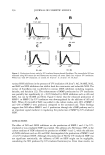
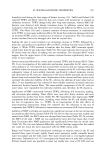
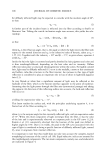
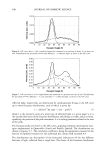
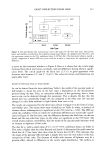
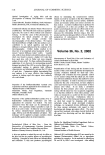
234 JOURNAL OF COSMETIC SCIENCE 0.8 :• 0.7 0.6 o 0.5 ß ,.., 0.4. (..1 = 0.3 o (• 0.2 .4,.,• •3 0.1 0 S Concentration of SNP(microM) Figure 2. The effect of sodium nitroprusside on the production of MMP-1 and MMP-2 by human dermal fibroblasts. A: without UV irradiation. B: with UV irradiation. *n = 3. p 0.05 vs no treatment. which means that the UV irradiation already produced a near-maximum increase in the production of MMP-1 and the addition of 50 microM of SNP could not increase the MMP-1 production further. On the other hand, the production of MMP-2 seems to be influenced by both UV irradiation and SNP treatment at the same time. In some biological systems, the effects of NO are mediated by cGMP this signaling cascade may involve activation of guanylate cyclase, up-regulation of cGMP, and activation of cGMP- dependent protein kinase (21). To determine the degree of involvement of cGMP in the production of MMPs, the effects of 8-Br-cGMP were measured. 8-Br-cGMP is a stable cell-permeable analog of cGMP that can mimic the cellular effects of cGMP. Treatment with 50 microM of 8-Br-cGMP also increased MMP-1 and -2 production by 137% and 254%, respectively, similar to the effect of SNP (Figure 3). This result indicates that the increase in MMP-1 and -2 production by SNP-treated HDF is not the result of a toxic effect of SNP on the cells, but is mediated by NO or related metabolites, and that NO and cGMP possibly mediate the UV-induced increase of MMP production. EFFECT OF UV ON THE PRODUCTION OF iNOS AND NO The production of nitric oxide in UV-irradiated keratinocytes was reported by Romero-

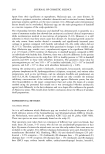
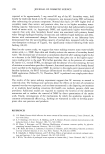
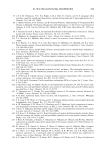
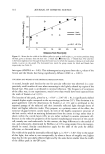
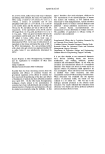
INHIBITION OF MATRIX METALLOPROTEINASES 235 0.3 0.25 0.2 0.15 0.1 0.05 '• MMP1 [] MMP2 0 10 25 Concentration of 8- Br- cGMP(microM: Figure 3. The effect of 8-Br-cGMP on the production of MMP-1 and MMP-2 by human derreal fibroblasts. *n = 3. p 0.05 vs no treatment. Graillet et al. (13), and they confirmed that NO plays an important role in the paracrine mediation of UV-induced melanogenesis. Figures 4 and 5 show the expression of in- ducible NOS (iNOS) and the production of NO from HDF treated with UV radiation of 30 J/c m2. The mRNA of iNOS was increased by 15% when HDF was treated with UV of 30 J/cm 2 (Figure 4), and the production of NO was increased by 14% (Figure 5), but the results were not significant statistically (p 0.05). Although the increase of iNOS and NO in the UV-irradiated HDF was not meaningful, the source of NO- influencing HDF is not negligible, considering the NO produced by keratinocytes. In a separate experiment, we confirmed that the addition of a culture supernatant of UV-irradiated keratinocytes to the culture medium of HDF also enhanced the produc- tion of MMP-1 and -2 by HDF (data not shown). INHIBITION OF MMP PRODUCTION BY iNOS INHIBITORS To confirm the action of NO on the MMP production by HDF, HDFs were treated with 0.4 0.35 0.3 0.25 0.2 z0.15 0.1 0.05 0 Co ntrol UV30 ( J/c m 2) Figure 4. Production of inducible nitric oxide synthase by UV-irradiated human derreal fibroblasts. The intracellular mRNA of iNOS was determined by using the RT-PCR-ELISA method. *n = 4. p 0.05 vs no UV exposure.
Purchased for the exclusive use of nofirst nolast (unknown)
From: SCC Media Library & Resource Center (library.scconline.org)