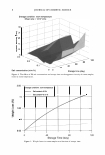
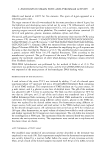
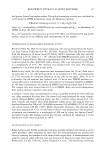
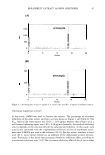
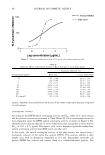
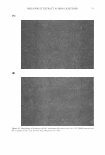
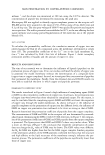
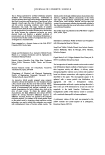
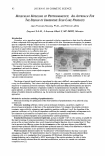
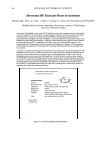
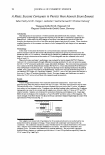
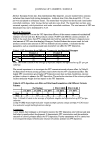
38 JOURNAL OF COSMETIC SCIENCE month. One strain, named TI-C3, showing 498 U/ml of anti-tyrosinase activity, was isolated from forest soil collected in Taiwan and chosen for further study due to the highest anti-tyrosinase activity (Figure 1). Under a light microscope, aerial mycelium of the strain TI-C3 exhibited long and straight filaments (Figure 2a). The mycelium also contained spore-bearing branches arranged in whorls at intervals. Sporophores were formed on aerial mycelia, and short umbels of spore chains were observed under a scanning electron microscope (Figure 26). Analysis of the whole-cell hydrolysate of the strain TI-C3 showed the presence of a chemotype I cell wall characterized by LL-A2pm. No diagnostic sugars were found. According to the typical colony appearance, microscopic morphologies, and chemical analysis, the strain TI-C3 belonged to the whorl-forming genus Streptomyces (formerly Streptoverticillium) (15). For identifying the strain further, a part of sequence (1216 nt) of gyrB of TI-C3 was amplified and compared with those whorl-forming strains of Streptomyces available from the public databases. The highest value of sequence similarity (97-98%) was observed between TI-C3 and Streptomyces hiroshimensis BCRC 12423 (formerly S. fervens subsp. fervens). Then, we used DNA-DNA hybridization to identify the homology level be tween the two strains and obtained a 67 .8% homology level. Besides the molecular Table I Physiological Characteristics of the Strain TI-C3 Compared with S. hiroshimensis Strain BCRC 12423 Characteristics Growth temperature (°C) Melanin production Lysozyme resistance Carbon utilization: Arabinose Cellulose Fructose Glucose Inositol Mannitol Raffinose Salicin Starch Sucrose Xylose Substrate hydrolysis: Adenine Casein Esculin Gelatin H ypoxanthine Keratin Nitrate Tyrosine Urea Xanthine Xylan TI-C3 15--40 + + + + + + + S. hiroshimensis strain BCRC 12423 15--40 + + + + + + +

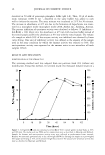
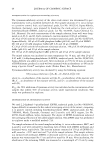
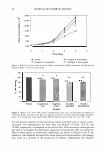
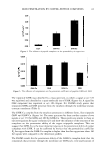
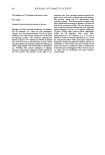
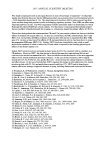
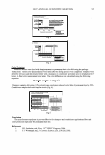
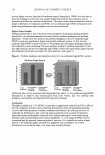
S. HIROSHIMENSIS STRAIN WITH ANTI-TYROSINASE ACTIVITY 39 analysis described above, we also identified the strain by using physiological character izations. Table I lists the comparison of the physiological characteristics between TI-C3 and BCRC 12423. All the criteria except esculin hydrolysis and melanin production gave identical results. Based on these results, the strain TI-C3 was identified as a strain of S. hiroshimensis. FERMENTATION OF S. HIROSHIMENSIS STRAIN TI-C3 S. hiroshimensis strain TI-C3 was cultivated using different carbon and nitrogen sources and analyzed for anti-tyrosinase activity. As shown in Figure 3, the strain TI-C3 ex hibited maximal anti-tyrosinsae activity (5 72 U/ml) when glucose was used as the 700 i 600 - e, 500 � ] 400 300 � ;§ 200 :a 100 = j,,,,,I a b 0 1000 900 800 700 600 500 400 300 200 100 0 Glycerol Glucose Com steep Malt extract liquor Maltose Sodium propionate Carbon Source ( 4 g/1) Soya Tryptone peptone Nitrogen Source (14 g/1) Yeast extract Sorbitol YMG control Figure 3. Inhibitory activity of the strain TI-C3 cultivated using different carbon (a) and nitrogen (b) sources. The fermentations and assays of anti-tyrosinase activity were done as described in Materials and Methods.
Purchased for the exclusive use of nofirst nolast (unknown)
From: SCC Media Library & Resource Center (library.scconline.org)