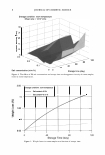
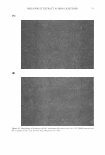
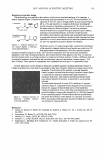
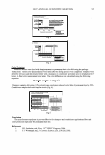
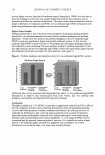
40 JOURNAL OF COSMETIC SCIENCE carbon source (Figure 3a). On the other hand, TI-C3 grew poorly and showed little anti-tyrosinase activity when cultivated using ammonia sulfate, casein, sodium nitrate, or urea as the nitrogen source (not shown). In contrast, TI-C3 displayed potent and mildly different anti-tyrosinase activity when cultivated using more complex and di gested nitrogen sources (Figure 36). TI-C3 showed 905 U/ml of anti-tyrosinase activity when malt extract was used as the nitrogen source. CONCLUSION The isolated strain TI-C3 displayed 905 U/ml of the anti-tyrosinase act1v1ty under cultivation using glucose and malt extract as the sole carbon and nitrogen sources, respectively. The strain was identified as a strain of S. hiroshimensis by morphological, physiological, and chemical analysis, gyr B sequences, and DNA-DNA hybridization analysis. The purification of the active compound from the strain TI-C3 is under research in our laboratory. REFERENCES (1) S. Y. Seo, V. K. Sharma, and N. Sharma, Mushroom tyrosinase: Recent prospects,]. Agr. Food Chem., 51, 2837-2853 (2003). (2) S. Briganti, E. Camera, and M. Picardo, Chemical and instrumental approaches to treat hyperpig mentation, Pig. Cell Res., 16, 101-110 (2003). (3) N. Baurin, E. Arnoult, T. Scior, Q.T. Do, and P. Bernard, Preliminary screening of some tropical plants for anti-tyrosinase activity,]. Ethnopharmacol., 82, 155-158 (2002). (4) Q. X. Chen and I. Kubo, Kinetics of mushroom tyrosinase inhibition by quercetin,j. Agr. Food Chem., 50, 4108-4112 (2002). (5) Y. M. Kim, J. Yun, C. K. Lee, H. Lee, K. R. Min, and Y. Kim, Oxyresveratrol and hydroxystilbene compounds: Inhibitory effect on tyrosinase and mechanism of action, ]. Biol. Chem., 277, 16340- 16344 (2002). (6) M. Shiino, Y. Watanabe, and K. Umezawa, Synthesis and tyrosinase inhibitory activity of novel N-hydroxybenzyl-N-nitrosohydroxylamines, Bioorg. Chem., 31, 129-135 (2003). (7) X. L. Piao, S. H. Baek, M. K. Park, and J. H. Park, Tyrosinase-inhibitor furanocoumarin from Angelica dahurica, Biol. Pharm. Bull., 27, 1144-1146 (2004). (8) T. S. Chang, C. F. Chiou, S. J. Chu, and M. Wu, Development of an efficiency high throughout screening method by using microplates, Fifty-First Chinese Chemical Engineering Conferences, 1096-1099 (2004). (9) E. B. Shirling and D. Gottlieb, Methods for characterization of Strepotmyces species, Int.]. Sys. Bacterial., 16, 313-340 (1966). (10) D. Berd, Laboratory identification of clinically important aerobic actinomycetes,J. Appl. Microbial., 24, 665-681 (1973). (11) T. Hasegawa, M. Takizawa, and S. Tanida, A rapid analysis for chemical grouping of aerobic actino mycetes,J. Gen. Appl. Microbial., 29, 319-322 (1983). (12) K. Hatano, T. Nishii, and H. Kasai, Taxonomic re-evaluation of whorl-forming Streptomyces (formerly Streptoverticillium) species by using phenotypes, DNA-DNA hybridization and sequences of gyrB, and proposal of Streptomyces luteireticuli (ex Katoh and Arai, 1957) corrig., sp. nov., nom. rev., Int.]. Sys. Evol. Microbial., 53, 1519-1529 (2003). (13) T. Ezaki, S. M. Saidi, S. L. Liu, Y. Hashimoto, H. Yamamoto, and E. Yabuuchi, Rapid procedure to determine the DNA base composition from small amounts of gram-positive bacteria, FEMS Microbial. Lett., 55, 127-130 (1990). (14) T. S. Chang and M. Tseng, Preliminary screening of soil actinomycetes for anti-tyrosinase activity,]. Mar. Sci. Technol., 14, 190-193 (2006). (15) M. P. Lechevalier and H. Lechevalier, Chemical composition as a classification of aerobic actinomy cetes, Int.]. Sys. Bacterial., 20, 435-443 (1970).

J. Cosmet. Sci.) 59, 41-58 CTanuary/February 2008) Evaluation of the effect of Thai breadfruit's heartwood extract on melanogenesis-inhibitory and antioxidation activities PIYAPORN DONSING, NANTEETIP LIMPEANCHOB, and JARUPA VIYOCH, Department of Pharmaceutical Technology) Faculty of Pharmaceutical Sciences (P.D.J J. V.)! Department of Pharmacy Practice! Faculty of Pharmaceutical Sciences (N.L.)! and Cosmetic and Natural Product Research Center! Naresuan University Hospital U. V.)! Naresuan University! Phitsanulok! 65000 Thailand. Accepted for publication September 14! 2007. Synopsis The aim of this study was to clarify the melanogenesis-inhibitory and antioxidant activity of Thai bread fruit's heartwood extract for application as a skin-lightening agent. The heartwood of breadfruit (Artocarpus incisus) grown in Phitsanulok Province, Thailand, was extracted by using diethyl ether or methanol. The amount of artocarpin, a major component of A. incisus extract, was determined by using the HPLC method. The artocarpin content found in ether extract was 45.19 ± 0.45% w/w, whereas that in methanol extract was 19.61 ± 0.05% w/w. The ether extract was then evaluated for tyrosinase-inhibitory, melanogenesis inhibitory, and antioxidant activities. The tyrosinase-inhibitory activity was tested in vitro by monitoring the inhibition of the extract against the formation of DOPAchrome by tyrosinase enzyme. The results showed that the tyrosinase-inhibitory activity of the extract was in a dose-dependent manner. The obtained IC50 value was 10.26 ± 3.04 µg/ml, while kojic acid, a well-known tyrosinase inhibitor, provided an IC50 of 7.89 ± 0.18 µg/ml. Melanocyte B16Fl melanoma cells (ATCC No. CRL-6323) were then used for determination of the melanogenesis-inhibitory activity of the extract, comparing it to hydroquinone, kojic acid, and purified artocarpin. The amount of melanin produced by the cells was monitored by measuring an absorbence at 490 nm. The obtained results indicated that A. incisus extract at a concentration of 2 to 25 µg/ml was able to decrease the melanin production of the melanocyte B16Fl cells. The obtained micrograph also confirmed that the extract did not change the cell morphology but reduced the melanin content by inhibiting melanin synthesis, whereas the purified artocarpin at a concentration of 4.5 µg/ml caused changes in cell morphology. Additionally, the extract exhibited antioxidant activity in a dose dependent manner at an EC 50 of 169.53 ± 9.73 µg/ml, according to DPPH assay. The obtained results indicated that the ether extract of A. incisus's heartwood has the potential of acting as a skin-lightening agent for application in cosmetics. INTRODUCTION In the cosmetic industry, the demand for multifunctional products and their efficiency are the keys to trends in technology, innovations, and the cosmetic market. Skin- Address all correspondence to Jarupa Viyoch. 41
Purchased for the exclusive use of nofirst nolast (unknown)
From: SCC Media Library & Resource Center (library.scconline.org)