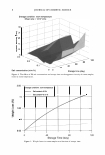
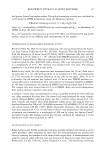
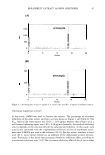
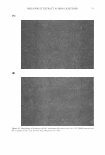
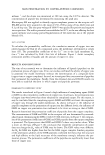
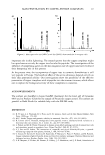
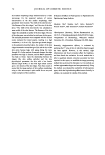
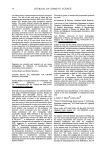
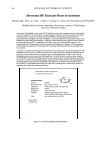
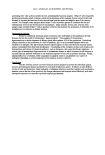
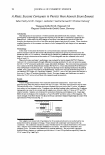
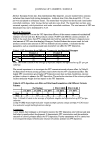
46 JOURNAL OF COSMETIC SCIENCE Figure 1. The appearance of A. incisus ether (A) and methanol (B) extract. was used to investigate the phenotypic appearance of the melanocyre cells at, before, and after treatment with the rested samples. STATISTICAL ANALYSIS All experimental data were analyzed using analysis of variance (ANOV A), and the significant difference of the mean from triplicate analysis at p 0.05 was determined by Duncan's multiple range test using SPSS 12.0 for Windows (SPSS Inc., Illinois). RESULTS AND DISCUSSION APPEARANCE AND AR TOCARPIN CONTENT OF THE EXTRACTS The appearance, moisture content and percent yield of the diethyl ether or methanol extract are shown in Figure 1 and Table I. Extraction of diethyl ether provided a yellow-powder solid, whereas that of methanol provided a deep brown paste. The HPLC chromatogram of artocarpin contained in both kinds of extract is shown in Figure 2. The amount of artocarpin contained in the ether and methanol extract was 45.19 ± 0.45 and 19.61 ± 0.05 % w/w, respectively. Because of the higher content of the major component, the ether extract of A. incisus was selected for further studies to clarify its action on melanogenesis-inhibitory and antioxidation activity. Table I Appearance, Percentage of Yield, and Moisture Content of Extracts from the Heartwood of A. incisus Characteristics % Yield % Moisture content Appearance A. incisus ether extract 0.82 7.19 ± 0.36 Yellow powder Type of extraction A. incisus methanol extract 1.10 11.36 ± 0.78 Deep brown paste

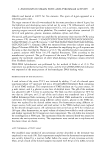
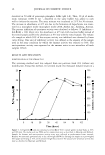
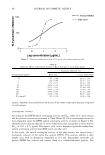
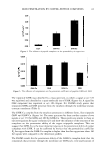
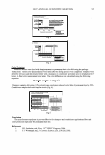
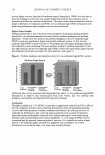
:::) BREADFRUIT EXTRACT AS SKIN LIGHTENER (A) 1500 1000 500 0 .I 0 (B) 400 200 0 0 5 5 artocarpin 10 Minutes artocarpin 10 Minutes 15 15 47 20 20 Figure 2. Chromatograms of (A) 0.5 mg/ml of A. incisus ether and (B) 1.0 mg/ml of methanol extracts. TYROSINASE-INHIBITORY ACTIVITY In this study, DMSO was used to dissolve the extracts. The percentage of tyrosinase inhibition of the ether extract and kojic acid are shown in Figure 3 and Table II. The IC 50 value of the ether extract was 10.26 ± 3.04 µg/ml, whereas that of kojic acid, a well-known lightening agent, was 7 .89 ± 0.18 µg/ml. Generally, the mode of inhibitory activity depends on the structure of both the substrate and inhibitor. In this study, such activity was concerned with the o-diphenolase inhibitory activity of mushroom tyrosi nase since 1-DOPA was used as the substrate (10,11). For this reason, similarly to kojic acid, the A. incisus extract behaves as an inhibitor of the diphenolase activity of tyros inase. Previously, it was found that artocarpin showed no inhibitory effect, according to a mushroom tyrosinase assay (3,4). The tyrosinase-inhibitory effect of the A. incisus ether
Purchased for the exclusive use of nofirst nolast (unknown)
From: SCC Media Library & Resource Center (library.scconline.org)