80 JOURNAL OF COSMETIC SCIENCE The Influence of UV Radiation On Nucleic Acids Piotr 4bek National Food and Nutrition Institute in Warsaw Damages in DNA nucleotides evoked by UV radiation are not mutations yet. These are just permutation changes. As it was mentioned above, we can say about mutations only if the primary changes are not removed by repairing systems. Two processes repairing the defects caused by UV radiation are known at present time. The first one uses the photolyase enzyme, which cuts photodimers into monomers under the influence of visible light together with flavoprotein chromophores (i.e. F ADH2). The second mechanism of damage removal is repairing by cutting out. On the contrary to the first process, the presence of the light is not necessary here. Four enzymatic proteins coded by the genes: uvr A, uvrB, uvrC, uvrD take part in this process. The proteins, along with UV endonuclease form repairing complex. The whole system recognizes the place of deformation exerting by dimmers, cut them off and finally polymerase DNA I fills the formed gap. Both systems are the basic defence line in all organisms against mutagenic activity of UV radiation. Mutations in genes coding repair proteins follow catastrophic results for all organism. They cause cells' hypersensitivity to UV radiation as it is in case if hereditary disease xeroderma pigmentosum. As a result the sick persons fall ill with a skin cancer much more frequently. Despite the ultraviolet radiation activity on nucleotides is very harmful, the repair systems of the organisms remove its undesired results very effectively if only they are not damaged or if the UV doses are not too high, what do sunbathing and solaria amateurs usually forget.

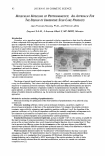
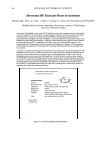
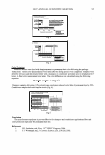
82 JOURNAL OF COSMETIC SCIENCE MOLECULAR MODELING OF l'EPTIDOMIMETICS: AN APPROACH FOR THE DESIGN OF INNOVATIVE SKIN CARE PRODUCTS Jean-Francois Nicolay, Ph.D., and Patrick Lafitte Exsymo/ S.A.M., 4 A venue Albert II, MC-98000, Monaco Introduction Nowadays, active ingredient suppliers are requested to display comprehensive data about the aftermath of their compounds following application on the surface of the skin. Percutaneous absorption, for instance, must be compatible with the claimed activity. It is necessary to determine the "bioavailability" of the active ingredient, e.g. to provide evidence that the compound can reach its target within cutaneous tissue. The design of innovative in vivo-effective skin care products must now take into account a number of parameters that dictate bioavailability (Figure 1 ). These parameters also bring some insight into possible systemic exposure, useful for risk assessment. - The ability to cross the stratum comeum, and to reach the inner layers of the epidermis (penetration) - The capacity to permeate, e.g. to leave the epidermal compartment, and reach the dermis - The sensitivity to intra or extra cellular cutaneous enzymes (metabolization) - The possible uptake of the substance into the vascular system (resorption) Figure 1: parameters modulating percutaneous absorption and systemic distribution of skin care nroducts The design of peptide-based bioactive ingredients for skin care is difficult, since peptides generally have a very low bioavailability. This is due to their high hydrophilicity that opposes penetration, and also to their sensitivity to cutaneous proteolytic enzymes, which rapidly hydrolyze them (metabolization) into inactive fragments. Structural modification of peptides (synthesis ofpeptidomimetics structurally related to the parent peptide), is needed to limit the sensitivity to proteolytic enzym�s and to enhance lipophilicity. The design of suitable chemical modification, e.g. the molecular modeling of peptidomimetics, requires specific approaches. Methods for molecular modeling of peptidomimetics Molecular modeling for optimization of the bioavailability of peptidomimetics was achieved using several tools: Molecular modeling software, widely used in medicinal chemistry, can predict a number of physicochemical properties on the basis of the molecular formula. For instance, they display ionization constants, water-solubility estimation, and a predictive partition coefficient. Log P, the logarithm of the partition coefficient, or Log D the pH-dependent coefficient for ionizable compounds, are important tools for estimation of percutaneous absorption since it is generally accepted that the stratum comeum, considered as a globally lipophilic layer, predominantly controls penetration. Standardized human reconstituted epidermis, an easy-to-handle "3-D" in vitro system, is suitable for the rapid screening of cutaneous penetration. Reconstiruted epidermis obtained from normal keratinocytes grown at the air-liquid interface have a well characterized barrier function, close to normal skin [1]. They can be mounted on diffusion systems for the determination of the total mass balance (non-diffusible material/trans-epidermal diffusible material/intra-epidermal material). Srudy of the distribution within the thickness of the epidermis is also possible by llllID.unohistolocalization. Multi-enzymatic mixtures enable the "modelization" ofbiotransformations that may occur upon percutaneous transport. The peptidomimetics may be exposed to microsomial fractions obtained from cutaneous cells, or to standardized liver homogenates (S9 fractions). Metabolites resulting from biotransformation can be identified by HPLC monitoring of the reaction mixtures. In order to better identify the benefits obtained from the structural modification, we have also carried out a substrate competition test [2].
Purchased for the exclusive use of nofirst nolast (unknown)
From: SCC Media Library & Resource Center (library.scconline.org)