2007 ANNUAL SCIENTIFIC MEETING 93 UVB and UV A however, may contribute equally to immuno-modulation, which allows the nascent tumour cell to escape immune surveillance and destruction. This UVR induced immune suppression can be measured by several different in vivo protocols, however they are all much more invasive and complicated than the current SPF protocol. For example, the contact hypersensitivity assay measures a complex function involving local cell and lymph node communication, integrates a number of cell and tissue damage and inflammatory events that occur in the skin following UV injury, tests functions other than redness, but is not practical for industry use. How should we design a new sun protection factor? Must be related to skin immune function and reflect the current knowledge of other risk factors for skin cancer Must measure a short-term effect that is practical for high through-put screening during product development Should account for "real-life" exposure (possibly multiple sub-erythemogenic doses) Protection should be expressed by a value that consumers can understand and use for comparison 1 Selgrade MK, Smith MV, Oberhelman-Bragg LJ, LeVee GJ, Koren HS, Cooper KD. Photochem Photobiol 74(1):88-95, 2001 2 Wolf P, Hoffmann C, Quehenberger F, Grinschgl S, Kerl H .. J Invest Dermatol. 121, 1080-7 2003. 3 Young AR, Walker SL. Exp Dermatology 11(suppl 1): 17-19, 2002. 4 Ullrich SE, Kim TH, Ananthaswamy HN, Kripke ML. J lnvestig Dermatol Symp Proc. 4(1 ):65-9, 1999. 5 Berg D, Otley CC. J Am Acad Dermatol. 47(1):1-17, 2002 6 Cooper KD, Baron ED, LeVee G, Stevens SR .. Exp Dermatol. 11 Suppl 1:20-7, 2002 7 Terence S. C. Poon, Ross StC. Barnetson, and Gary M. Halliday. J Invest Dermatol 121:184 - 190, 2003 8 Kelly DA, Seed PT, Young AR, Walker SL. J Invest Dermatol. 120, 2003. 9 Baron ED, Fourtanier A, Compan D, Medaisko C, Cooper KD, Stevens SR. J Invest Dermatol. 121, 2003. 10 Stephanie Liardet, Corinne Scaletta, Renato Panizzon, Patrick Hohlfeld, and Lee Laurent Applegate. J Invest Dermatol 117:1437-1441, 2001. 11 Adapted from Granstein RD, Matsui MS. Cutis 74(supple 5): 4-10, 2004 1 2 Agar NS, Halliday GM, Barnetson RS, Ananthaswamy HN, Wheeler M, Jones AM. Pree Natl Acad Sci US A. 101(14):4954-9, 2004

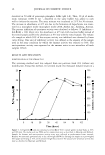
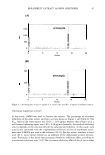
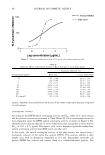
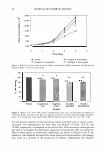
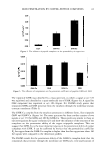
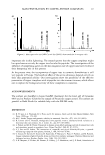
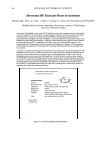
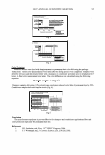
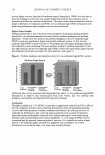
94 JOURNAL OF COSMETIC SCIENCE A NOVEL SILICONE CO POLY MER TO PROTECT HAIR AGAINST SOLAR DAMAGE Sahar Fakhry-Smith1, Helger I. Leidreiter2, Sascha Herrwerth2, Christian Hartung2 1 Degussa Goldschmidt, Hopewell, VA 2 Degussa Goldschmidt GmbH, Essen, Germany Introduction Skin damage due to sun exposure is well documented and understood by the consumer. Th.ere is a growing body of knowledge that suggests that exposure to the sun and UV irradiation in particular also damages hair. Unlike reddening skin, damage to hair fibers is not immediately perceived. Like skin however, the alterations that occur to hair fibers are both chemical and physical in nature. These alterations manifest themselves to the consumer over time as a lack of manageability and changes in hair appearance and elasticity. Methodology In this study we document the benefits of a novel polysiloxane copolymer modified with methoxycinnamic acid ester and cationic alkylamidopropyl ammonium groups to protect hair from the deleterious effect of UV irradiation. Methods used to establish key parameters such as molecular weight, degree of cationic substitution and the number of UV-absorbing units was also addressed in the earlier body of work (1). This polysiloxane copolymer's performance was evaluated for tensile strength (MTI670 Diastron, Andover, U.K.), keratin integrity through differential scanning calorimetry (2) and color protection using the CIE= L *a*b* colorimeter method (Dr. Lange, Dii · eldorf, Germany). The color protection assessments were conducted for both demipennanent (Garnier Movida #27, L'Oreal) and permanent (Poly Brilliance# 868, Schwarzkopf & Henkel) hair dyes. European bleached hair tresses (Keding International Haarfabrik GMBH, 20cm, lgm/cm) were used for all measurements. Tresses were UVNIS irradiated using a SOL 2 sun simulator (Dr. Hoenle AG, Graefeling, Germany). The SOL 2 uses a D65 light source that simulates a dose rate of 1 day at 50°northern latitude per 4 hours. Prototype shampoo and conditioner were used to deliver the 2% UV actives to hair fibers with commonly used raw materials. ResuJts Tensile Strength Tensile strength measurements were conducted on bleached European hair. Initial values were generated using fibers that were not treated with any UV active. The fibers were allowed to relax in water (2h) and allowed to dry. Conditioner prototypes contained 2% active level of the UV active. All samples were subject to four treatment cycles. Treatment cycles included soaking in the conditioner for IO minutes, rinsing under tap water for six seconds and all samples were allowed to dry for 12 hours at 22°C and 50% relative humidity. Samples were irradiated for seven hours following each treatment cycle. Single hair fibers (30 per test formula) were evaluated at a "load 15% (mN)" and force value at 15% elongation. The tensile strength of the fibers treated with the polysiloxane copolymer remained higher than the control with approximately 40% protection (Fig. 1). Keratin Integrity by DSC Hair samples were treated with 0.5g shampoo for 30 seconds and allowed to rest on the hair for one minute followed by one minute of rinsing. Tresses treated with conditioner were treated with 0.5g conditioner. The conditioner remained in contact with the hair for two minutes followed by a two minute rinse. Samples were air dried and then irradiated for 4.25 hours. All tresses were subjected to four treatment cycles. The tresses were fanned out for uniform irradiation. The polysioxane copolymer delivered from a shampoo or conditioner provides about 11 % and 12% protection respectively versus the CTAC control (Fig. 2 and Fig.3).
Purchased for the exclusive use of nofirst nolast (unknown)
From: SCC Media Library & Resource Center (library.scconline.org)