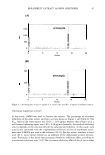
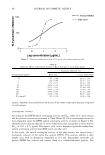
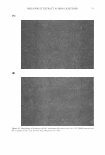
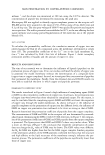
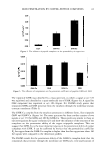
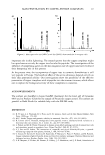
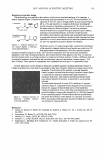
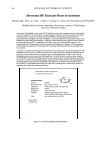
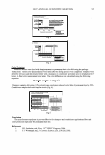
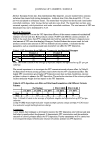
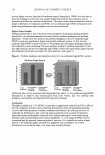
2007 ANNUAL SCIENTIFIC MEETING 97 Fiber Damage: A key measure for a new oxidant is the change in fiber properties over multiple use cycles. It is also important to measure changes to the inside of the individual hair fibers (e.g. internal strength), to the outside of the hair (e.g. hydrophobicity/cuticle structure), and also to the how these changes affect the bulk properties of the hair. This is because the hair has a complex morphology and the reactivity of the different fiber components of the structure will be different for the different oxidants. (1) Internal Strength Changes: Tensile strength is a key method to assess the internal strength of hair. It was found that the internal strength of the hair treated with just the matched lightening ammonium carbonate/hydrogen peroxide oxidant at pH 9 was lower than the current oxidant system of ammonium hydroxide/hydrogen peroxide at pH 10. However, on addition of a radical scavenger such as a glycine both the wet and the dry tensile strength were significantly improved and were, depending on the level and oxidant system, equal or superior to the current oxidant system over multiple cycles. Tensile strength measurements on wet fibers Plateau Load Break Load (Gmf/sq. micon x 103) (Gmf/sq. micon x 103) Ammonium Hydroxide/Hydrogen Peroxide/pH 10 5.60 ± 0.81 18.4 ± 2.3 Ammonium Carbonate/Hydrogen Peroxide/Glycine/pH 10 6.08 ± 0.76 18.8 ± 1.7 The proposed mechanism for the role of the glycine is to act as a radical scavenger to protect against the formation of the hydroxyl radical and the carbonate radical inside the fiber. The hydroxyl radical is formed from the reaction of hydrogen peroxide with redox active metals. The carbonate radical is likely formed via the reaction of this hydroxyl radical with the carbonate anions present. H202 + Cu+ ----• HO* + cot Cu2+ + HO- + HO* CO3-* + HO- (2) Hydrophobicity Changes: The surface of uncolored hair is hydrophobic due to the presence on the outer surface of each cuticle cell of the chemically bound lipid 18-MEA (18-methyl eicosanoic acid). During the use of current coloring products it has been demonstrated that this lipid is removed via a perhydrolysis mechanism (i.e. the key species responsible for its removal is the perhydroxyl anion, HOO-). This removal dramatically increases the wet feel and wet combing forces and also the efficient deposition of conditioner actives such as silicones. As the ammonium carbonate/hydrogen peroxide/glycine oxidant is formulated at a lower pH (9.0 vs 10.0) the concentration of the perhydroxyl anion is significantly reduced and as a consequence the F-Layer is less readily removed and the hydrophobicity of the fiber is retained. Data will be presented that measures the increased hydrophobicity of the ammonium carbonate/hydrogen peroxide/glycine oxidant by comparing the contact angle of a drop of water wetting the surface of the fiber for the two oxidant systems vs the starting untreated hair. In addition, supporting ToF SIMS data, that directly measures the presence of the 18-MEA lipid, will be presented. 120 ,. .... _______ s 1a_rti_g_s_ub--4s�1ra_te____ n __. j 100 :r�----------------- � 80 1 Anm::mi u m carbon a te/Hydro g en Pero lde/Glyci at pH 9 --3 fa 6 0 1 4 0 tJ 20 Arrm?nium Hydroxide/Hydrogen Peroxide at pH 10 - 3 :: :: :: :: :: :: D 20 40 60 80 100 120 -20 Time (sec) (3) Cuticle Structure/Bulk Hair Property Changes: * Chart I: Cuticle Angle measurements as a function of time The hypothesis was the improved retention of the F-Layer would also translate into improved cuticle quality over multiple coloring cycles with washing/combing/blow drying physical damage between cycles. This benefit is observed after treatment for five repeat coloring cycles in both the SEM (scanning electron microscope) and TEM (transmission electron microscope). In addition we have demonstrated how the changes in these single fiber properties have also improved bulk hair properties such as shine and manageability. Data will be presented that illustrates these benefits. Conclusion: The ammonium carbonate/hydrogen peroxide/glycine pH 9 oxidant system offers the possibility to formulate a hair colorant that has the ability to lighten and form color but in a shorter application time, at a lower pH giving an improved odor profile and also an improved fiber damage profile

98 JOURNAL OF COSMETIC SCIENCE DVNAMIC INDENTOMETRIC ANALYSIS OF HAIR ASSEMBLIES Janusz Jachowicz, Ph.D. Better Cosmetics, LLC Dynamic mechanical analysis is frequently employed to study polymeric materials. It is a convenient method to determine elastic and viscous properties of a tested sample in one experiment. The measurements of solid materials yield parameters such as storage and loss modulae, which are related to elastic deformation and viscous energy dissipation, respectively. Similar principles are used in dynamic rheological measurements of liquids. The fundamental properties of interest in this case are shear modulus and viscosity. Dynamic rheological methods are widely used in cosmetic science to characterize cosmetic formulations, thickeners, surfactant solutions, etc. Dynamic mechanical analysis was also used for characterization of hair (rheovibron) and skin (gas bearing electrodynamometry). In the context of hair research, published dynamic studies were limited to longitudonal deformations and the determination of dynamic Young's modulae. There has also been a study of wet hair subjected to bending deformation in water at various pH [ 1]. In this work we have employed dynamic mechanical analysis to study the behavior of random or organized assemblies of various types of hair such as Caucasian, Chinese, and African. Hair fibers in such systems can assume various positions and orientations, and can shift versus each other during deformation. This contributes to energy dissipation and increases the values of loss modulae. Fiber arrangements were prepared by setting wet hair to impart curling characterized by different geometrical dimensions. Straight hair assemblies with controlled distribution of orientations as well as fiber assemblies in the form of omega-loops were also investigated. Dynamic mode of operation of a Texture Analyzer (Texture Technologies Corp.) was employed with the deformations ranging from 0.01 mm to 1 mm and frequencies from 1 Hz to 100 Hz. FFT Image Analysis was used to quantify the shape and orientation of fibers. [1] - J.Jachowicz, Methodologies for evaluating hair-care products, Cosmetics& Toiletries, 113 (6), 45 (1998).
Purchased for the exclusive use of nofirst nolast (unknown)
From: SCC Media Library & Resource Center (library.scconline.org)