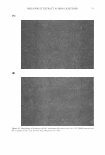
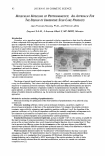
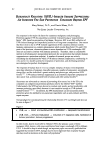
2007 ANNUAL SCIENTIFIC MEETING MAXIMIZING ANTI-DANDRUFF SHAMPOO PERFORMANCE WITH DEPOSITION TECHNOLOGY 99 Wing Li, Xiaodong Zhang, Ph.D., Anita Protonentis, Diane Frank and Jennifer Amos Amerchol/DOW, 171 River Road, Piscataway, NJ 08854 Summary: Zinc pyrithione (ZPT) is a commonly used anti-dandruff agent for scalp treatment which is most often delivered from shampoo systems. Anti-dandruff shampoos with conditioning benefits dominate the current market. Cationic polymers are widely used to facilitate deposition of benefit agents from cleansing products. Previous studies have documented that polymeric deposition efficacy depends on the molecular weight, charge density and the hydrophobicity of the polymer as well as the nature of the substrate. Today, most of the commercial products are optimized to provide maximum conditioning performance for hair. However, the deposition target for the anti dandruff agent is on scalp. The current technology to measure anti-dandruff effectiveness relies on clinical data which is time consuming and expensive. A new, simple in vitro method has been developed that simulates the shampooing process while simultaneously monitoring ZPT deposition on both hair and scalp using acid extraction and measuring zinc by atomic absorption spectroscopy (AAS). Results indicate that most ZPT deposits onto the hair instead of scalp from the current commercial products. This new technique is simple and can be used as screening tool during new product development to maximize the performance of 2-in-1 anti-dandruff shampoos. Background: Dandruff is a chronic scalp condition characterized by excessive flaking and it is a problem in approximately 30% of the world's population. Anti-dandruff shampoo containing anti-fungal ingredients, such as Zinc Pyrithione (ZPT) are widely used to treat this condition. The amount of active ingredient delivered to the scalp from the shampoo directly relates to the antidandruff efficacy. 2-in-1 anti-dandruff shampoos are becoming more popular because they provide the additional benefit of an effective conditioner. Cationic polymers are well known to provide conditioning benefit and facilitate deposition of benefit agents from cleansing product. Through the flocculation mechanism, the benefit agents are entrapped in/on the coacervate, polymer-surfactant complex, and deposited onto different targets, hair and scalp. For example, silicone oil is deposited onto hair for conditioning benefit and ZPT is delivered onto scalp for antidandruff purpose. Clinical studies are currently the method of choice to measure antidandruff efficacy. This method is time consuming and expensive, therefore it is not suitable to be used as screening tool for new product development. We developed a new, simple in vitro method to simulate the shampooing process while simultaneously monitoring ZPT deposition on both hair and scalp. Experimental Section: Commercial products: Product A (1 ¾ZPT/Cationic Polymer A), Product B (1 % ZPT/Cationic PolymerB) Formulation: 0.25% cationic polymer with 1 % to 3% ZPT, 2% Ethylene Glycol Distearate, 1 % Silicone Emulsion (0.5um), 0.21 % Citric Acid, 0.4% DMDM Hydantoin in 15.5% Sodium Laureth Sulfate and 2.6% Disodium Cocoamphodiacetate. The control formulation does not contain cationic polymer.

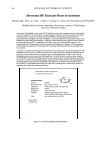
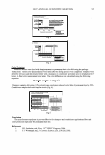
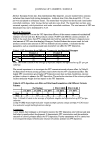
100 JOURNAL OF COSMETIC SCIENCE Method: European brown hair, from International Hair Importer, was pre-washed with a nonionic surfactant then treated with testing formulation. Artificial skin (Vitro-Skin from IMS., CT) was pre-wet and placed on a Buchner funnel. The treated hair was placed on the skin and rinsed under controlled conditions. After rinsing, the hair and skin were dried. The treated hair and skin were extracted separately with hydrochloric acid under controlled conditions. The total amount of ZPT was determined Zinc ion by determined by AAS. Result & Discussion: The first experiment is to test the ZPT deposition efficacy of the current commercial antidandruff shampoo onto hair and skin. Both products contain 1 % ZPT and different cationic polymers. In Table I, the result shows that ZPT is deposited onto both hair and skin. Product A deposits more total amount of ZPT onto skin than hair. However, Product B shows the reverse trend. As both products contains same amount of ZPT but different cationic polymer, it indicates that the parameters, such as concentration and type of polymer can affect the ZPT deposition . T bl I ZPT d a e : ti epos1tion rom 0-fti 1 erent C ommerc1a ti-dandruff . I Shampoo Product A ProductB ZPT/Cationic Polymer A ZPT/Cationic Polvmer B Hair 15 22 Skin 25 17 Note: The result is based on the average of triplicate samples and expressed as ug ZP per gm substrate. The second experiment is to investigate the ZPT concentration and polymer effect. In Table II, the formulation without cationic polymer clearly shows that the ZPT concentration effect. The higher ZPT concentration gives higher ZPT deposition onto hair and skin. In addition, cationic polymer is shown to enhance the ZPT deposition. The molecular structure of the cationic polymer, such as molecular weight also has impact on the ZPT deposition. Table Il: ZPT deposition onto Hair and Skin from Formulation with Different Cationic p I otymer No Polymer PQ-10 (HID PQ-10 (LID l¾ZPT 2%ZPT J¾ZPT l¾ZPT l¾ZPT Hair 16 58 71 22 34 Skin 17 67 73 27 33 Note: 1) Result is based on the average of triplicate samples and expressed as ug ZPT per gm substrate 2) PQ-10 (HH) means high molecular weight and high cationic charge and PQ-10 (LH) means low molecular weight and high cationic charge Conclusion: A new simple, fast technique is developed to monitor the ZPT deposition onto both hair and skin that helps to speed product development. It demonstrates ZPT concentration and the molecular structure of cationic polymer affects the ZPT deposition. Further experiments will be carried out to investigate the impact of molecular structure of cationic polymer on ZPT deposition.
Purchased for the exclusive use of nofirst nolast (unknown)
From: SCC Media Library & Resource Center (library.scconline.org)