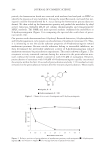
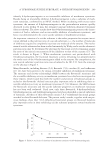
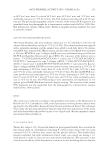
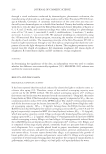
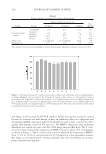
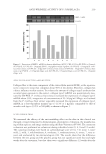
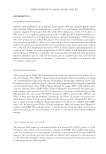
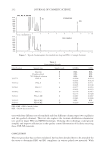
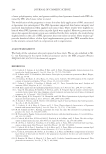
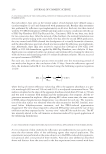
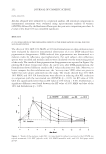
JOURNAL OF COSMETIC SCIENCE 220 Figure 3. Expression of collagen type I mRNA in human fi broblast cells: (a) Control (b) 100 μM vitamin C (c) 250 μM vitamin C (d) 500 μM vitamin C (e) 10 μg/ml P. strobilacea fruit extract (f ) 20 μg/ml P. strobilacea fruit extract (g) 50 μg/ml P. strobilacea fruit extract (h) 0.25 μg/ml ellagic acid (i) 0.5 μg/ml el- lagic acid (j) 1.0 μg/ml ellagic acid. The data are expressed as the mean values (± standard deviation) of three experiments. Figure 4. Weekly comparison of photodamage scores in the crow’s feet area after the use of the formulation containing P. strobilacea fruit extract for 12 weeks (*p 0.05). The visual evaluation was conducted by two dermatologists via a double-blind method. In any case of the readings of the two doctors not agreeing, the lower score for the anti-wrinkle activity was selected for analytical purposes. treatment (Figure 4). In an image analysis of skin replicas by the Skin-Visiometer SV 600, among the roughness parameters already mentioned, skin roughness R1 is the dis- tance between the basic and reference profi le, referred to a given reference length L. R3,

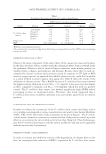
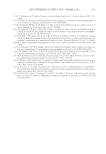
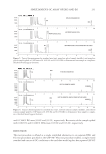
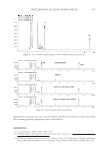
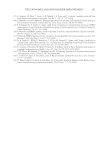
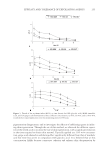
ANTI-WRINKLE ACTIVITY OF P. STROBILACEA 221 Figure 6. Photographic assessment of wrinkles in the crow’s feet area of (a) the test group and (b) the pla- cebo group by CCD camera after the use of the formulation containing P. strobilacea fruit extract for 12 weeks. Figure 5. Weekly comparison of R3 (average roughness) values measured by the Skin-Visiometer SV 600 (Courage & Khazaka, Germany) in the crow’s feet area after the use of the formulation containing P. strobila- cea fruit extract for 12 weeks (*p 0.05). the average roughness, is the arithmetic average of the different segment roughnesses. Inherent in their defi nitions, R3 is the most adequate parameter for studying. The test formulation also showed a signifi cant improvement in the average difference in roughness (ΔR3, −0.02 ± 0.06) than did the placebo formulation (ΔR3, 0.01 ± 0.05) 12 weeks after the treatment (Figure 5). In the clinical study of measurements using visual evaluation and image analysis, the test cream showed a signifi cantly different effect (p 0.05) from that of the placebo (Figure 6). CONCLUSIONS In this study, in order to investigate the potential of P. strobilacea fruit extract as an active ingredient for wrinkle-care cosmetics, we measured their free-radical scavenging activity, elastase inhibitory activity, the expression of MMP-1 in vitro, and type I collagen synthe- sis in normal human fi broblast cells. P. strobilacea fruit extracts (SC50 5 μg/ml) showed very high free-radical scavenging activity compared to BHT (SC50 = 25.4 μg/ml) as a positive control. Elastase inhibitory activity of P. strobilacea fruit extract (IC50 = 37.9 μg/ml)
Purchased for the exclusive use of nofirst nolast (unknown)
From: SCC Media Library & Resource Center (library.scconline.org)