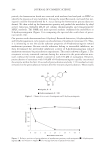
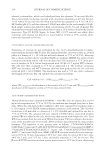
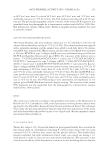
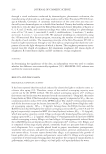
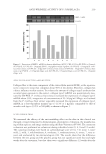
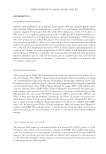
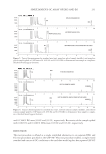
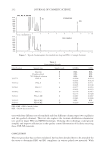
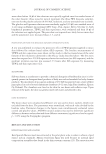
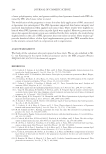
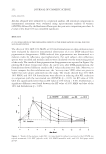
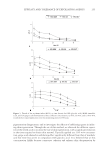
JOURNAL OF COSMETIC SCIENCE 208 periods, the fermentation broth was extracted with methanol and analyzed via HPLC to identify the presence of any metabolite. Among the tested fl avonoids, we found that nar- ingenin could be biotransformed by A. oryzae during the fermentation process (data not shown). We then scaled up the fermentation quantity and purifi ed the metabolite by ethyl acetate extraction, Sephadex LH-20 gel column chromatography, and semi-preparative HPLC methods. The NMR and mass spectral analysis confi rmed the metabolite as 8-hydroxynaringenin (Figure 1) in comparing the spectral data with those of previ- ous reports (14). Our previous work demonstrated two 8-hydroxyl fl avonoid derivatives, 8-hydroxydaidzein and 8-hydroxygenistein, to be potent suicide substrates of mushroom tyrosinase (16). Thus, it is interesting to test the suicide substrate properties of 8-hydroxynaringenin toward mushroom tyrosinase. Because suicide substrates belong to irreversible inhibitors, we then determined the irreversible inhibitory activity of 8-hydroxynaringenin toward mushroom tyrosinase by preincubation experiments. The result is shown in Figure 2. The enzymatic activity remained constant during fi ve minutes in the preincubation mix- tures without the tested samples (control) or with 100 μM of naringenin. However, preincubation of tyrosinase with 100 μM of 8-hydroxynaringenin quickly inactivated the enzyme within the fi rst 30 seconds of preincubation and only 1.5% residual activity remained in the preincubation mixture after fi ve minutes of preincubation. These results Figure 1. Chemical structures of naringenin and 8-hydroxynaringenin. Figure 2. Relative activities of preincubations of mushroom tyrosinase with naringenin (□), 8-hydroxynar- ingenin (▲), and without a sample (●) for varying durations of preincubation time.

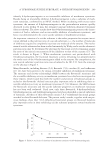
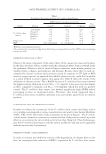
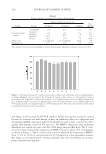
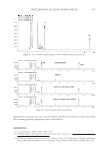
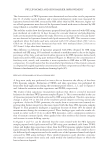
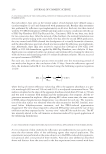
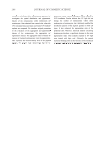
A TYROSINASE SUICIDE SUBSTRATE: 8-HYDROXYNARINGENIN 209 identify 8-hydroxynaringenin as an irreversible inhibitor of mushroom tyrosinase. Besides being an irreversible inhibitor, 8-hydroxynaringenin is also a substrate of mush- room tyrosinase, confi rmed by an HPLC method. When incubating with excess native tyrosinase, the amount of 8-hydroxynaringenin in the preincubation mixture quickly decreased to zero within 30 min, but remained constant with heat-denatured tyrosinase (data not shown). The above results show that 8-hydroxynaringenin possesses the charac- teristics of both a substrate and an irreversible inhibitor of mushroom tyrosinase, and hence was demonstrated to be a new suicide substrate of mushroom tyrosinase. An important criterion of a suicide substrate is the molar proportion for enzyme inacti- vation (defi ned as the partition ratio of a suicide substrate), i.e., the number of molecules of inhibitors required to completely inactivate one molecule of the enzyme. The mecha- nism of suicide substrates has been studied extensively by Waley, and a suicide substrate’s partition ratio may be determined by plotting the fractional activity remaining against the ratio of the initial concentration of the inhibitor to that of the enzyme (15). The result is shown in Figure 3. When mushroom tyrosinase was preincubated with 8-hydroxynaringenin, the fractional enzymatic activity remaining was proportional to the molar ratio of the 8-hydroxynaringenin added to the enzyme. By extrapolation, the new suicide substrate’s partition ratio was calculated to be 283 ± 21 from the intercept on the abscissa in Figure 3. Many fl avonoids, including fl avones (5,6), fl avonols (7,8), catechin (9), and isofl avones (10–12), have been proven to be strong, reversible inhibitors of mushroom tyrosinase. The structure and activity relationships (SAR) between the fl avonoids’ structures and the reversible inhibitory activity on mushroom tyrosinase have also been investigated in those reports, which found that both the number and position of hydroxyl groups at- tached to the fl avonoids’ skeletal structure play important roles in exhibiting their re- versible inhibitory activity on mushroom tyrosinase (5,7,8). However, the SAR between the fl avonoids’ structures and the suicide substrate properties on mushroom tyrosinase has not been well evaluated. Until now, only three fl avonoids, 8-hydroxydaidzein, 8-hydroxygenistein, and 8-hydroxynaringenin, have been identifi ed as suicide substrates of tyrosinase. All three of these fl avonoids contain 7,8,4′-trihydroxyl functional groups attached to their fl avonoid skeletons. The present study’s results, together with our pre- vious fi ndings, show that 7,8,4′-trihydroxyl functional groups on fl avonoid skeletons play important roles in their exhibiting suicide substrate properties toward mushroom tyrosinase. Figure 3. Relative activities of titrations of mushroom tyrosinase with 8-hydroxynaringenin.
Purchased for the exclusive use of nofirst nolast (unknown)
From: SCC Media Library & Resource Center (library.scconline.org)