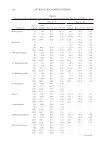
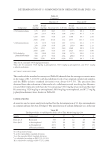
JOURNAL OF COSMETIC SCIENCE 308 The forehead is located in front of the forebrain. When the brain works hard especially during stress it must be cooled from the forebrain (selective brain cooling) (18,19). In men forehead sweating was shown to be maintained during exercise even when dehy- drated (20). We recently found that water retention in the forehead skin of women at the start of the menstrual cycle was positively correlated with the degree of stress (unpub- lished data) this relationship was not found in the cheek areas. Furthermore, the ben- efi cial effects on stratum corneum hydration and transepidermal water loss of an oral contraceptive containing chlormadinone and ethinylestradiol were shown to be different between the cheek and the forehead (21). Consequently, it is likely that the skin on the forehead is different from the skin on the cheeks, making the former particularly vulner- able to stress and negative mood. ALA is generally thought to be cardioprotective and anti-infl ammatory (22). Only a few documents have reported a relationship between ALA and mood/behavior/personality. Suzuki et al. (23) found that the odds ratios of depression in newly diagnosed lung cancer patients were about one-half in the highest quartile of daily ALA intake compared with the lowest. Moreover, Conklin et al. (24) observed an inverse correlation between serum ALA concentrations and impulsivity in 105 hypercholesterolemic patients. In a pilot study, Joshi et al. (25) also reported that ALA and vitamin C improved attention defi cit hyperactivity disorder symptoms. Taken together, our fi ndings showing the negative cor- relations between RBC ALA concentrations and negative mood (Tables IV and V) appear to follow the same conclusion. In a cross-sectional study, Yoneyama et al. (26) found that serum C-reactive protein (CRP) levels were inversely related to the intake of ALA in 1461 women. In addition, Rallidis et al. (27) reported in a randomized controlled trial of 76 male dyslipidemic patients that dietary supplementation with ALA signifi cantly decreased serum levels of CRP and interleukin-6. The relationship between infl ammatory markers and mood has been well documented (28). Although it is diffi cult to prove that ALA caused lower scores of nega- tive mood from the present results alone, it is possible that negative mood was reduced through the control of infl ammatory reactions by ALA. We originally believed that n–3 and n–6 fatty acids exerted favorable and unfavorable effects on skin conditions, respectively. This idea depended on the relationship between essential fatty acids and infl ammation (4) and the indirect relationship with various favor- able effects of n–3 fatty acids on mood (5–7,9). Although we found only two signifi cant unfavorable correlations between skin conditions and AA, there were no signifi cant cor- relations between skin conditions and EPA, DHA, or ALA. The effects of n–3 fatty acids on skin conditions might be considerably small in participants who regularly consume a large amount of fi sh (17). In vitro experiments using cultured murine melanoma cells showed that ALA inhibited melanin production by more than 80% at 25 μmol/l (29). We could not fi nd any correlations between RBC ALA concentrations and pigmentation probably because of very low concentrations of ALA at the tissue level (there was only 0.2% of ALA in RBC PL fraction Table I). In all participants, both depression-dejection and fatigue (POMS) were signifi cantly cor- related with the total length of wrinkles (Table II). Grimacing as a result of a negative mood might increase wrinkles. There are a few intervention studies reporting the effects of fi sh oils on POMS scores. Antypa et al. (30) performed a placebo-controlled double-blind study of 54 healthy university

RELATIONSHIPS AMONG SKIN CONDITION IN WOMEN 309 students who randomly received either fi sh oil (1.74 g EPA and 0.25 g DHA) or a placebo for 4 weeks. They found that fatigue scores in POMS were signifi cantly decreased in the fi sh oil group. Fontani et al. (31) performed a randomized control study of 33 healthy participants administered fi sh oil (1.6 g EPA, 0.8 g DHA, and 0.4 g of other n–3 fatty acids) and 16 participants administered a placebo. They found that all mood states in- cluding fatigue were signifi cantly improved when assessed within the fi sh oil group alone. Our fi nding showing the favorable correlation between DHA and fatigue is in line with those reports (30,31). CONCLUSIONS Pigmentation characteristics were dependent on the area of the face. A negative mood and AA were unfavorably correlated with skin conditions however, no meaningful correla- tions were found between n–3 fatty acids and skin conditions. ALA was favorably corre- lated with mood. ACKNOWLEDGMENTS We are grateful to Hiroko Hamatani (University of Toyama) and Shizuko Takebe (University of Toyama) for their technical assistance. This work was partly supported by a Health and Labour Sciences Research Grant. REFERENCES (1) J. Y. Koo and C. T. Pham, Psychodermatology. Practical guidelines on pharmacotherapy, Arch. Dermatol., 128, 381–388 (1992). (2) P. Magin, D. Sibbritt, and K. Bailey, The relationship between psychiatric illnesses and skin disease: A longitudinal analysis of young Australian women, Arch. Dermatol., 145, 896–902 (2009). (3) M. Katzman and A. C. Logan, Acne vulgaris: Nutritional factors may be infl uencing psychological sequelae, Med. Hypotheses, 69, 1080–1084 (2007). (4) P. C. Calder, Dietary modifi cation of infl ammation with lipids, Proc. Nutr. Soc., 61, 345–358 (2002). (5) P. Y. Lin and K. P. Su, A meta-analytic review of double-blind, placebo-controlled trials of antidepres- sant effi cacy of omega-3 fatty acids, J. Clin. Psychiatry, 68, 1056–1061 (2007). (6) B. M. Ross, J. Seguin, and L. E. Sieswerda, Omega-3 fatty acids as treatments for mental illness: Which disorder and which fatty acid?, Lipids Health Dis., 6, 21 (2007). (7) J. R. Hibbeln, Depression, suicide and defi ciencies of omega-3 essential fatty acids in modern diets, World Rev. Nutr. Diet., 99, 17–30 (2009). (8) T. Hamazaki, S. Sawazaki, M. Itomura, E. Asaoka, Y. Nagao, N. Nishimura, K. Yazawa, T. Kuwamori, and M. Kobayashi, The effect of docosahexaenoic acid on aggression in young adults. A placebo- controlled double-blind study, J. Clin. Invest., 97, 1129–1133 (1996). (9) T. Hamazaki and K. Hamazaki, Fish oils and aggression or hostility, Prog. Lipid Res., 47, 221–232 (2008). (10) A. Kawada, S. Kawara, N. Oiso, H. Endo, E. Yoshinaga, N. Konishi, T. Kurimoto, and T. Momma, An evaluation of whitening effect of an intense pulsed light source using computer analysis of the video- captured digital image, Arch. Dermatol. Res., 300 (Suppl 1), S39–S41 (2008). (11) Image J, Image Processing and Analysis in Java, accessed January 15, 2007, http://rsb.info.nih.gov/ij/index. html (12) K. Hamazaki, M. Itomura, M. Huan, H. Nishizawa, S. Sawazaki, M. Tanouchi, S. Watanabe, T. Hamazaki, K. Terasawa, and K. Yazawa, Effect of omega-3 fatty acid-containing phospholipids on blood catecholamine concentrations in healthy volunteers: A randomized, placebo-controlled, double- blind trial, Nutrition, 21, 705–710 (2005).
Purchased for the exclusive use of nofirst nolast (unknown)
From: SCC Media Library & Resource Center (library.scconline.org)