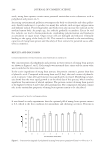
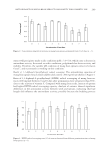
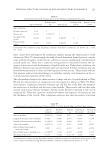
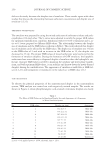
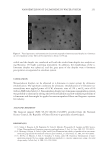
JOURNAL OF COSMETIC SCIENCE 208 seeds, mung bean sprouts contain more potential antioxidant active substances such as polyphenol and protein (4–7). Increasing environmental pollution overexposes the body to ultraviolet and other pollut- ants, thereby inducing it to produce too many free radicals, such as super oxygen anion and hydroxy radical. Poor living habits and work stress also increase free radicals in the modern human body. As people age, free radicals gradually accumulate. Excess fat and free radicals can lead to biomacromolecule crosslinking polymerization and lipofuscin accumulation in organ tissue. Organ tissue cells are damaged and reduced, eventually leading to the aging of the body (8–10). This research is devoted to the antioxidizing capacities of mung bean sprouts and the safety of their extracts for potential use as addi- tives in cosmetics. RESULTS AND DISCUSSION CONCENTRATIONS OF POLYPHENOLS AND PROTEINS IN EXTRACTS The concentrations of polyphenols and proteins in water extracts of mung bean sprouts are shown in Figures 1 and 2. Each sample was measured three times and the mean value was recorded as the detection result. In the active ingredients of mung bean sprouts, the protein content is greater than that of phenolic acids. Compared with mung bean seed (0 day), the total content of phenolic acids in sprouts 3 days after germination was signifi cantly increased. Morphological anal- ysis shows that the most rapid growth is on the third day of this process, which involves signifi cant bioconversion of related enzymes. The protein content of mung bean sprouts is the highest between 0 and 8 days after germination. The components that play a major role in the antioxidant properties of mung bean sprouts remain to be elucidated. ANTIOXIDANT ACTIVITY DETERMINATION It was found in early experiments that the optimal pH of mung bean sprouts extract is 6.6, which is the best condition for antioxidant and chelating activities. Proteins in Figure 1. Concentration (mg/ml) of polyphenols in mung bean sprouts germinated from 0 to 8 days (n = 3).

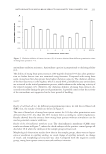
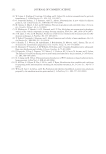
ANTIOXIDANTS IN MUNG BEAN SPROUTS AND SAFETY FOR COSMETIC USE 209 extract will precipitate under acidic conditions (pH = 3.0–5.0), which cause a decrease in antioxidant activity. In neutral or acidic conditions, polyphenols has better activity and stability. Therefore, the suitable pH condition of mung bean sprouts extract is between 6 and 7, and our research is working on this condition. Results of 1,1-diphenyl-2-picrylhydrazyl radical scavenging. The antioxidizing capacities of mung bean sprout extracts (total soluble solid content: 200 mg/ml) are shown in Figure 3. Rates of 1,1-diphenyl-2-picrylhydrazyl (DPPH) radical scavenging of mung bean ex- tracts (200 mg/ml) between 0 and 8 days after germination were all greater than 85%, close to the activity of vitamin C. Compared with mung bean seeds, extracts of sprouts had higher DPPH radical scavenging capacity. An alysis of variance showed signifi cant differences in the antioxidant activity between seeds and sprouts, indicating that bud length did infl uence the antioxidant activity, possibly because the budding process Figure 2. Concentration (mg/ml) of proteins in mung bean sprouts germinated from 0 to 8 days (n = 3). Figure 3. DPPH radical scavenging rates (%) of extracts obtained from different germination times of mung bean sprouts (n = 3).
Purchased for the exclusive use of nofirst nolast (unknown)
From: SCC Media Library & Resource Center (library.scconline.org)