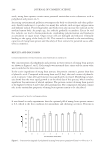
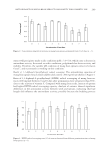
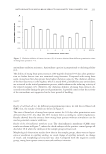
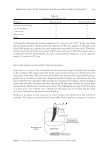
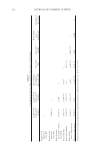
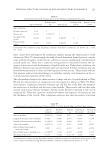
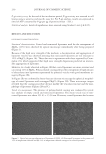
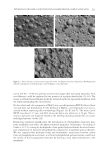
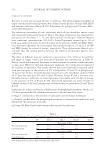
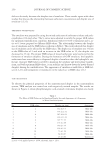
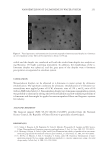
JOURNAL OF COSMETIC SCIENCE 212 Human skin patch test results. The results of the human skin patch test are shown in Table I. Results show that no change, even light erythema, was observed on the skin of those 32 subjects, indicating that mung bean sprout extracts from 0 to 8 days after germination are safe to human skin. In conclusion, all safety evaluation results mentioned above indicate that the mung bean sprout extracts are safe to use in products intended for application on human skin. EXPERIMENTAL REAGENTS AND MATERIALS Mung beans (V.radiatus L.) (Beijing, China) DPPH radical, Folin–Ciocalteu reagent, AR (Sigma-Aldrich Co., Ltd, St. Louis, MO) and Coomassie Brilliant Blue, AR (Biodee Figure 6. Hemolysis ratios during different periods of mung bean sprout. Figure 7. Photographs from CAM assay taken during vascular morphological observation of chick embryos: (A) negative control (0.9% normal saline), no hyperemia, no exudation, clear morphological structure and profi le (B) positive control (0.4% SDS), obvious hyperemia, obvious fading, hemoglobin degeneration (C) mung bean sprout extract (10 mg/ml), slight hyperemia, no exudation, clear morphological structure and profi le, no change.

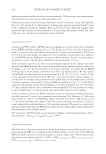
ANTIOXIDANTS IN MUNG BEAN SPROUTS AND SAFETY FOR COSMETIC USE 213 Biotechnology Co., Ltd., Beijing, China) FRAP work liquid (Beyotime Institute of Bio- technology, Shanghai, China) Chick embryos (Merial Vital Laboratory Animal Technology Co.. Ltd., Beijing, China) Ferrozine (3-(2-pyridyl)-5, 6-diphenyl-1,2,4-triazine-4′,4″- disulfonic acid sodium salt), AR (Sigma-Aldrich, Poznań, Poland) Ferrous sulfate (FeSO4·7H2O), AR (Beyotime Institute of Biotechnology, Shanghai, China) Ethylene diamine tetraacetic acid (EDTA), AR (Beijing Chemical Reagent Company, Beijing, China). Other reagents were bought from Beijing Chemical works. SAMPLE PREPARATION Whole, unbroken mung beans without insect damage or mildew were chosen as the ex- perimental raw materials. Each group consisted of 12 g mung bean seeds, which were budded. The mung bean seeds were washed in water and disinfected by 0.1% sodium hypochlorite solution. Three-times-deionized water (W/V) was put in 26 constant- temperature incubators to soak the mung bean seeds for 16 h, until the mung bean shells burst to bud. To sprout the mung beans, they were put in petri dishes (Φ = 150 mm) that had been sterilized by 75% alcohol, with two layers of fi lter paper as a germination bed (14). The germinating seeds were kept moist with sterile water and incubated in the in- cubator without light at 26°C. Assays were performed daily for the next 8 days. EXTRACTI ON AND ANALYSIS OF COMPOSITION Every 4 g of sprout pieces (1.0 g, 0–8 days, respectively) with 20 ml water was kept at 50°C for 2 h and centrifuged at 5000 rpm for 5 min. The supernatant of the sample was used for the analysis of composition. Concentrations of polyphenols in the extracts of mung bean sprouts were measured by the Folin–Ciocalteu colorimetry (14). The Folin–Ciocalteu reagent was prepared by diluting the commercial reagent concentrate in a 1:4 ratio with water. The supernatant of the sample (0.3 ml), the Folin–Ciocalteu reagent (1.0 ml), 20% Na2CO3 (3.0 ml), and water (5.7 ml) were added in order and then kept in the dark for 2 h. Then the samples were Table I Results of Human Skin Patch Test Group Time (h) No change (0) Light erythema (1) Erythema, infi ltration, papules (2) Edematous erythema or papules (3) Signifi cant erythema with pimples or blisters (4) Negative control 0.5 32 0 0 0 0 24 32 0 0 0 0 48 32 0 0 0 0 Mung bean Sprouts (10 mg/ml) 0.5 32 0 0 0 0 24 32 0 0 0 0 48 32 0 0 0 0
Purchased for the exclusive use of nofirst nolast (unknown)
From: SCC Media Library & Resource Center (library.scconline.org)