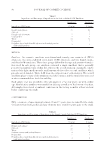
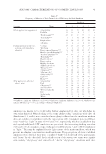
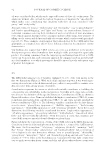
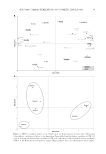
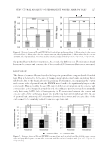
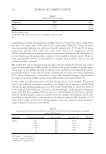
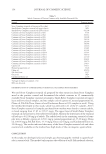
JOURNAL OF COSMETIC SCIENCE 94 oily/greasy, hard to spread, gluey, and dull in their appearance. The relationship between these terms is coherent considering that a light cream is expected to be easy to apply, whereas a heavy cream could be regarded as oily/greasy. Having these terms in this distri- bution suggests that consumers were able to distinguish between the emulsions based on their sensory properties. Looking at the second dimension, the terms “off-white,” “wet/ not fully dry,” “glossy/shiny (afterfeel),” and “cooling” had a correlation of 0.7 or higher, whereas “bright white,” “white,” “dull,” “smooth/soft,” and “silky/smooth” had a correlation of -0.6 or lower. The results from MFA suggest that the fi rst dimension primarily discriminated emul- sions based on rub-out and pick-up characteristics, including how thick or thin they felt on spreading on the skin (i.e., sensation of thickness/viscosity). Appearance attributes, including glossiness/dullness and thickness also determined this axis. The second dimension was primarily related to the appearance of the emulsions, including color and glossiness/ dullness, as well as afterfeel after 3 min, including smooth and watery feeling, provided by the emulsions. An intriguing fi nding was that the terms “warming” and “cooling” did not appear to be antonyms in this study. Warming, located at the positive values of both dimensions, was in the cluster characterizing heavy creams. Cooling, located at the negative values of the fi rst dimension and positive values of the second dimension, was mainly used by consum- ers to characterize thin, glossy, off-white creams. As mentioned previously, “warming” was one of the least mentioned terms. It suggests that most consumers could not relate this term to any of the emulsions. Products can be designed to provide a warming sensa- tion on the skin on application (30) however, none of the emulsions in this study were designed to have a warming sensation on the skin. This can explain the infrequent use of the term. Characteristics that none of the emulsions will likely have (“warming” in this case) may cause negligible noise in the data because some consumers may still select these terms as a sensory attribute for certain samples. However, the low incidence of such cases did not affect signifi cantly the robustness and reliability of the results obtained. When looking at the frequency of mention of the term “cooling,” it can be seen that cooling was used very frequently. Typically, W/O emulsions (often called cold creams) are known to be cooling, providing a cooling sensation as water evaporates from the skin after apply- ing the product. However, “cooling” was selected a similar number of times for all emul- sions. This suggests that consumers could not really distinguish products based on this characteristic. Figure 2B shows the representation of emulsions in the MFA dimensions. This fi gure suggests that consumers were able to categorize the emulsions into groups. The principal axis was highly correlated with variables that belong to two separate groups. It opposed Emulsions 1 and 2 from Emulsions 3–6. From the perspective of appearance, Emulsions 1 and 2 were characterized as dull, whereas Emulsions 3–6 were characterized as shiny. From the perspective of skin feel during application, Emulsions 1 and 2 were considered heavy and the rest of the emulsions as light. The off-white trait of an emulsion practically coincides with the main factor. The second dimension sorted the samples based on color and afterfeel into two groups, one including Emulsions 2, 5, and 6 and the other includ- ing Emulsions 1, 3, and 4. Considering the color, a sharp discrimination was detected in the shade of the emul- sions (i.e., bright white or off-white). As shown in Figure 2B, Emulsion 1 was located

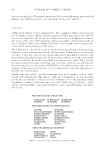
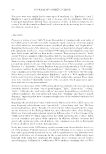
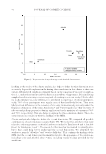
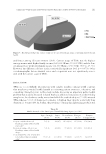
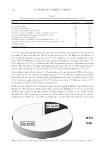
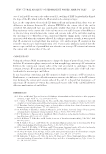
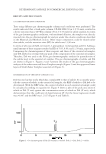
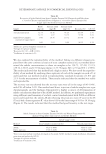
SENSORY CHARACTERIZATION OF COSMETIC EMULSIONS 95 at the positive values of the fi rst dimension and negative values of the second dimen- sion, being described by consumers as bright white, thick/creamy, and easy to rub-in. On the other hand, Emulsion 5 was located at the negative values of the fi rst dimension and positive values of the second dimension. It was described as cooling, glossy/shiny, and thin/milky. These results are in agreement with the viscosity measurements. The afterfeel characteristics also had a large discriminative power, which helped differenti- ate Emulsion 3 from Emulsion 5. Consumers felt that Emulsion 3 left their skin smooth/soft and dull, whereas Emulsion 5 made the skin glossy/shiny 3 min after application. We also looked at which ingredient types were driving the skin feel and sensory charac- teristics, and how these were related to each other. Five supplementary groups of variables were added to the empirical investigation. They expressed the percentage of emollients, emulsifi ers, water, and other ingredients in the emulsions, as well as the measured viscos- ity. One of the main purposes of factorial analyses is to make predictions via displaying external profi les in a created map. Thus, supplementary variables were not included in constituting the plane but their relative position and relationship with the factors were shown geometrically. The results showed that the sensory characteristics were primarily driven by the emulsifi ers, not the emollients. These fi ndings empirically verify previous fi ndings (21,22). Figure 3 shows that water and the emulsifi ers are strongly related to the main factor. This factor has a strong inertia for two other clouds of variables, including appearance and pick-up/rub-out, meaning that numerous variables from these groups are related to this common factor. On the other hand, the relationship of emollients with both factors was statistically weak, as is shown by their location in the MFA dimensions. The other ingredients, including the humectant and preservatives, did not have any cor- relation to the skin feel characteristics at all because they were used in the same concen- tration in each emulsion. Viscosity had a high correlation with the emulsifi ers and water, suggesting that viscosity is determined by both of these ingredients (Figure 3). Viscosity was closely located to pick-up/rub-out, which indicates that viscosity has an important role in infl uencing these skin feel characteristics. On the other hand, the location of afterfeel and viscosity are far- ther from each other, suggesting a weaker relationship. Cluster analysis. HCA under MFA was performed using two types of distance metrics (including Manhattan and Euclidean) and four agglomeration methods (including aver- age, complete, single, and Ward linkage). All dissimilarity measures with both cluster methods resulted in the same classifi cation (Figure 2B). The fi rst cluster was composed of Emulsion 3. The second cluster included Emulsions 4, 5, and 6, and the third cluster was composed of Emulsions 1 and 2. According to this analysis, consumers categorized emul- sions slightly differently as compared with the original grouping based on emulsion type (i.e., steric-stabilized O/W, liquid crystal–stabilized O/W, and W/O). Consumers grouped the steric-stabilized emulsions together. These emulsions were the thickest, considered “heavy” by consumers, and very dissimilar compared with the rest of the emulsions. The second group included two W/O emulsions and the liquid crystal–stabilized O/W emul- sion with olive oil. The fact that two different types of emulsions, both containing olive oil, were grouped together suggests that consumers could detect similarities between these two products. This is a notable result, especially when we consider that the partici- pants were untrained consumers.
Purchased for the exclusive use of nofirst nolast (unknown)
From: SCC Media Library & Resource Center (library.scconline.org)