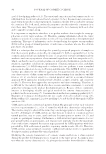
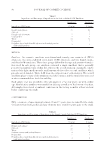
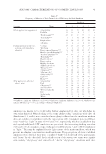
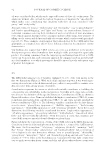
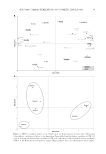
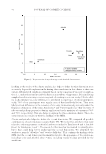
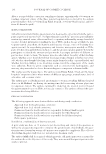
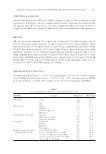
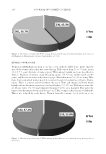
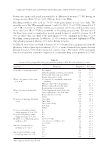
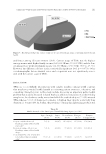
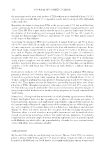
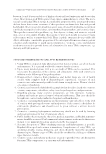
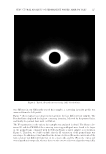
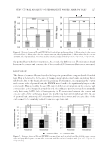
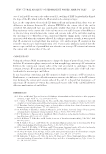
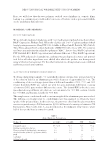
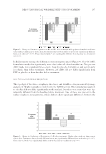
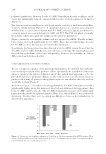
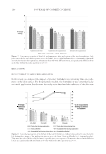
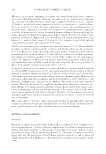
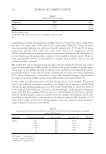
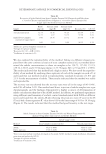
JOURNAL OF COSMETIC SCIENCE 96 Looking at the results of the cluster analysis also helps to defi ne the fi rst dimension more accurately. A possible explanation for having three emulsions in this cluster is that con- sumers differentiated emulsions primarily based on the sensation of viscosity on applica- tion (i.e., under shear) and not just thickness as an attribute of appearance. Discriminating samples based on viscosity is not an easy task. According to a recent study (31), the abil- ity to discriminate viscosity differences is attributed to experience. As mentioned previ- ously, 74% of our participants were regular users of hand and body lotions. They more likely noticed differences in the sensation of viscosity. As mentioned previously under the frequency of mention of the terms, Emulsions 3 and 4 were regarded as “thin” in terms of rub-out and pick-up properties (during application) by the majority of consumers (78% and 70%, respectively). This also helps to explain the three-emulsion cluster. These ob- servations are in correlation with the fi ndings of the MFA. Cluster analysis also helped to defi ne the second dimension. We compared all possible combinations of each emulsion in pairs (Table VI). We looked for attributes that were related to either appearance or afterfeel and were similar for Emulsions 4 and 6, but dif- ferent for Emulsions 3 and 5. The reason for this was that we wanted to identify attri- butes that could help better understand the second dimension. We identifi ed two attributes, namely “off-white” and “wet/not fully dry.” This confi rms the fi ndings of the MFA that the second dimension was mainly related to the appearance of the emulsions, including color and afterfeel after 3 min, including watery feeling provided by the emulsions. Figure 3. Representation of ingredient types and skin feel characteristics.

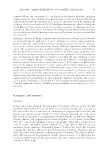
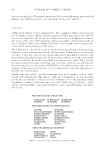
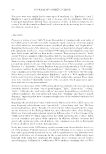
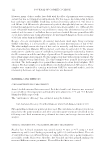
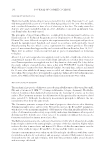
SENSORY CHARACTERIZATION OF COSMETIC EMULSIONS 97 CONCLUSIONS A CATA survey provided useful information about consumers’ perception of the skin feel and sensory characteristics of six cosmetic emulsions. Emulsions represented three main types of emulsions, differing in the amount and type of emulsifi ers. Emulsions of the Tabl e VI Comparison of Pairs of Emulsions for Statistical Differences Attributes Emulsion pairs 1–2 1–3 1–4 1–5 1–6 2–3 2–4 2–5 2–6 3–4 3–5 3–6 4–5 4–6 5–6 Appearance Glossy/shiny Dull/fl at * Thick/creamy *** *** *** *** *** *** *** *** * *** * *** *** * Thin/milky *** *** *** *** *** *** *** *** ** *** ** *** *** * Bright white Off-white * Cooling * Rub-out and pick-up Warming Easy to spread/slippery *** *** * ** *** ** *** Hard to spread/dragging ** ** ** ** * *** * *** * Thick/creamy/fi rm *** *** *** *** *** *** *** *** ** * Thin/milky *** *** *** *** *** *** *** *** * Hard to rub in ** * * Easy to rub in * Highly absorbent * Slightly absorbent Watery/wet *** *** *** ** *** *** *** *** ** *** * Oily/greasy *** ** ** *** ** ** * ** Silky/smooth ** ** Gluey/sticky ** *** * * *** * Light *** *** *** ** *** *** *** * * *** Heavy *** *** *** ** *** ** *** * *** * Afterfeel after 3 min Glossy/shiny Dull Oily/greasy ** *** * Smooth/soft * *** ** *** ** Wet/not fully dry * * Dry Sticky/tacky * * * White Total (stars) 0 35 28 25 18 41 29 24 16 9 17 28 7 13 9 ***Indicates signifi cant differences ( p 0.001) **Indicates signifi cant differences ( p 0.01) *Indicates sig- nifi cant differences ( p 0.05), according to two-sample ANOVA test.
Purchased for the exclusive use of nofirst nolast (unknown)
From: SCC Media Library & Resource Center (library.scconline.org)