JOURNAL OF COSMETIC SCIENCE 84 goal of developing products (3,4). The emotional connection and excitement can be es- tablished from the initial look and feel of a product. In fact, the emotional connection is made when the product is fi rst experienced, usually in the fi rst few seconds after opening the container. The look, smell, and tactile properties can either draw the consumers in or turn them away. These properties must be engineered to be in harmony with each other and to appeal to a target group. It is important to emphasize that there is no perfect aesthetic that is right for every ap- plication or every target audience (4). Therefore, gaining information about the target audience’s opinion of a certain product is critical for successful product development and marketing. This type of information can be obtained using descriptive sensory analysis (DSA) with a group of trained panelists or with naive consumers who are the ultimate purchasers of a product. DSA is a technique that was developed to quantify perceptual properties of samples so that their sensory profi les can be directly compared (5). DSA is a powerful tool in the cosmetic and personal care industry because it can provide relevant information about aesthetics and sensory experience of raw material ingredients and skin care products (1), which can then be used to provide guidance in new product formulation, product refor- mulation, ingredient substitutions, optimization of manufacturing processes, and claim substantiation (5,6). DSA being used to evaluate skin care products is now a standard practice in the American Society for Testing and Materials. This ASTM E 1490-11 guide outlines procedures for two different approaches for quantitatively describing the sen- sory characteristics of skin creams and lotions and measuring their similarities and dif- ferences (6) (i) a technical expert (i.e., trained panelist) and (ii) a consumer behavior approach. Both approaches usually provide detailed, accurate, reliable, and consistent results (5). However, these approaches are expensive and time-consuming. Therefore, it is diffi cult for the industry, which often faces resource and time constraints, to routinely apply this technique in the product development process. Because of these constraints, interest in developing reliable and quick methods for sensory characterization of products has been increasing (7). Consumer-based methods are gaining popularity (8,9). Examples of techniques developed in the last couple of decades include sorting (10), fl ash profi ling (11), napping (12), pivot profi ling (13), and check-all-that-apply (CATA) questions (14). CATA questions have a structured question format.The principle is that each volunteer receives a questionnaire (i.e., a list of terms) by which they characterize each product. Their task is simply to select all the terms they consider appropriate to describe the prod- uct (15). Advantages of CATA surveys are that they are focused on consumers and not trained panelists, easy to create, quick and easy for participants to answer (16,17), and require no participant training. Furthermore, a well-structured questionnaire does not put special burden on participants, and response rate generally reaches the maximum. Some studies have compared the sensory maps generated by CATA questions with those provided by DSA with trained panelists, reporting similar results (18–20). Therefore, CATA surveys using untrained consumers could provide similar results to quantitative descriptive analysis performed by trained panelists. Modifying the sensory characteristics of cosmetic creams and lotions is often required during the product development process to appeal to the target group. A common prac- tice when the sensory characteristics of a given product need to be modifi ed is to change

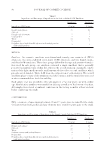
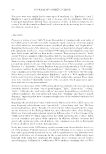
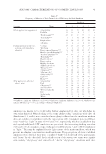
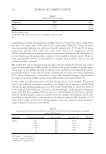
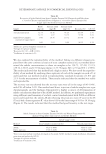
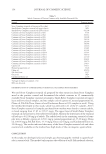
SENSORY CHARACTERIZATION OF COSMETIC EMULSIONS 85 (remove/add) the oily components (i.e., emollients) in the formula. However, signifi cant changes cannot be expected from such a modifi cation, as it has been demonstrated using trained panelists that the emulsifi er choice plays the dominant role in determining the aesthetics of a skin care emulsion (21,22). Emulsifi ers determine the skin feel during the initial phases of skin sensory evaluation, including assessment of appearance, pick-up, and rub-out. Emollients have a substantial role during the later phases (afterfeel) of skin sensory evaluation. Afterfeel parameters are a mix of effects from emulsifi er and emollient selections (22). Although consumer profi ling techniques have become more relevant, only a few stud- ies reported about the application of such techniques to cosmetic and personal care products. The aim of this work was to have consumers evaluate the sensory character- istics of six cosmetic emulsions before, during, and after application using a CATA survey. The six emulsions represented three different types of emulsions with different skin feel and esthetic attributes however, emulsions within the same group were sim- ilar. As mentioned previously, it is known from the literature (21,22) that different types of emulsions provide different skin feel, even when the same emollient is used. We set out to examine whether consumers can feel these differences and differentiate between samples based on their sensory characteristics. If consumers can differentiate between the samples based on their sensory characteristics and the differences can be clearly attributed to the formulation technology and composition of the products, it means that a carefully designed CATA survey using consumers could serve as an easy, quick, economical, and useful approach in the characterization of cosmetic emulsions during the product development phase. In addition, if our study using untrained con- sumers indicates that emulsifi ers are the primary determinants of skin feel and aesthet- ics of cosmetic emulsions, a concept that was previously proven using trained panelists, it would confi rm the validity of CATA surveys and indicate their reliability as screen- ing tools. MATERIALS AND METHODS MATERIALS Heptyl undecylenate (LexFeel® Natural Inolex, Philadelphia, PA) was used as the light emollient, whereas clear olive oil (AC Clear olive oil Active Concepts LLC., Lincolnton, NC) was used as the rich emollient. A combination of polyglyceryl-10-hexaoleate and polyglyceryl-6-polyricinoleate (Pelemol® P-1263 Phoenix Chemical, Inc., Somerville, NJ), as well as lauryl PEG-9 polydimethylsilcoxyethyl dimethicone (KF 6038 ShinEtsu Silicones, Akron, OH), polyglyceryl-10-stearate (Polyaldo® 10-1-S Lonza, South Plain- fi eld, NJ), cetyl alcohol (Making Cosmetics, Snoqualmie, WA), and a combination of sorbitan stearate and sorbityl laurate (Arlacel™ LC Croda, Edison, NJ) were used as emulsifi ers for the emulsions. Propanediol (Zemea® DuPont Tate & Lyle Bio Products Company, LLC, Loudon, TN) was used as the humectant. A mixture of propylene glycol, diazolidinyl urea, methyl paraben, and propyl paraben (Germaben™ II Ashland, Bridge- water, DE) was used as the preservative. Finally, deionized water of 18 M purity was used as the vehicle/solvent for the aqueous phase. The exact composition of the emulsions is shown in Tables I–III.
Purchased for the exclusive use of nofirst nolast (unknown)
From: SCC Media Library & Resource Center (library.scconline.org)