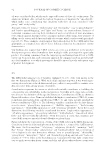
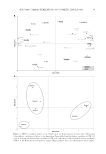
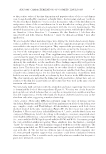
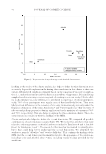
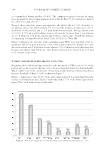
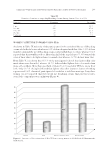
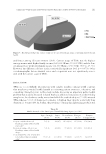
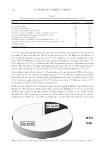
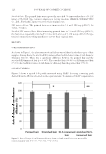
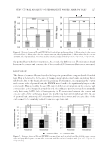
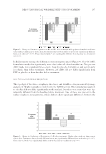
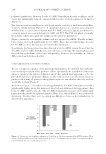
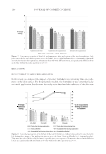
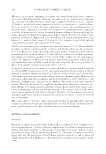
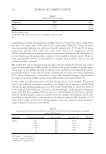
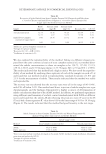
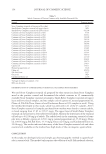
JOURNAL OF COSMETIC SCIENCE 114 the participants as the most toxic product of TPAs whereas more than half of them (53.2%) selected corticosteroids (Figure 5). Comparable results have been reported by Alghamdi in his study (16). Regarding the duration of applying TPAs in the present study, 8.7% had used bleaching creams continuously for more than 1 year with an overall duration ranging between 1 and 72 mo (Table III). This is quite smaller than the report in a previous Saudi study (16) where the duration of the bleaching practice ranged between 1 and 150 mo (12.5 years). In Senegal, the duration ranged between 1 and 420 mo (35 years) (9). That may be related to the degree of skin darkness. Concerning the amount of TPAs used each month, it ranged between 1 and 800 g (mean 61.6 ± 98.5 g/mo) (Table II). Actually, this extremely necessitates health education. Toxicity of some components, e.g. mercury is related to the dose and duration of exposure. In an- other Saudi study, it ranged between 2 and 600 g (mean 90.09 g/mo). In African coun- tries, such as Nigeria, the amount ranged between 60 and 150 g/mo (25) whereas in Senegal the amount ranged between 15 and 350 g/mo (9). The maximum amount used in the present study (800 g) is considered too big if we recognize that 45 g of bleaching cream is quite enough to cover the whole body (16). The difference between our fi gures and those reported in African countries is attributed to the fact that skin color in African countries is of the dark black (type VI) whereas in Saudi Arabia it is lighter (skin type IV–V) (16). In the present study, 11.6% of the investigated women continued applying TPAs during pregnancy whereas 20% did that during lactation (Table II). Quite close results were observed in a previous Saudi study regarding the main city Riyadh where 10.3% of women continued applying bleaching products during pregnancy and 20.8% during lac- tation (16). These fi gures are very far from those reported in Senegal where rates of ap- plication of TPAs throughout pregnancy or lactation were 81% and 87%, respectively (9). This difference may be attributed to the lower level of awareness about the dangers of using nonprescribed medications or products during pregnancy in Senegal compared with Saudi Arabia. Hamed et al. (19) reported that women who use skin lightening agents are more likely to believe that lighter skin color has a positive role to play in self-esteem, perception of beauty and youth, marriage, and employment opportunities compared with nonusers. In the current study, self-reported complications of discontinuing the use of bleaching prac- tice were returning of the normal skin color or a darker one, skin dryness and skin rash (Figure 4). These side effects prevent the consumers from discontinuing this practice. Therefore, there is a need to make a more public awareness to ask for medical advice instead of continuing using these products. Our study had some limitations. It included a nonprobability convenient sample of women attending outpatient clinics in general hospitals in Al-Madinah city, which affect the generalizability of results. Its cross-sectional nature creates diffi culties in ascertaining causality. CONCLUSIONS By the end of this study, we can draw many conclusions. The use of skin TPAs is a common practice among Saudi women aged 16–60 years attending outpatient clinics of general hospitals in Al-Madinah city, Saudi Arabia. It is signifi cantly higher among women aged

HEALTH KNOWLEDGE AND ATTITUDE REGARDING BLEACHING AGENTS IN WEST SAUDI ARABIA 115 between 26 and 40 years and those of higher educational level (university and above) than others. Most women used TPAs against their own recommendation to others. The moti- vation beyond using TPAs is strong. A considerable proportion of the investigated women did not know that overuse or misuse of these products can harm their skin and general body health. Most topical skin bleaching agents were obtained from pharmacies (without a medical prescription), herbal shops, open markets, beauty markets, and cosmetic shops. These products caused skin problems, e.g. skin dryness, itching, and return to original skin color or even darker. Finally, those products were used mostly to increase beauty, self-esteem as well as to renew their look. There is public awareness about possible side effects, although a considerable proportion of the investigated women need more patient education and counseling to guard against malpractice. Cosmetic science and industry needs more research to provide better safe alternatives for many TPAs components, e.g. mercury and hydroquinone. STUDY RECOMMENDATIONS AND FUTURE PERSPECTIVES 1. Usin g TPAs is a repeated daily phenomenon that denotes women care about beauty and smartness. It is a general worldwide common female criterion. 2. Up t o many hundred grams (800 g in our study) of TPAs can be consumed. This necessitates the awareness of the contents and components of the used cosmetics in addition to the follow-up of the prolonged use. 3. Nonp rescribed cosmetics from pharmacies and herbal shops are out of health control with complete lack of dermatologists’ supervision. Contents of such cosmetics are unknown and possible health harm strongly exists. Women’s health education is mandatory. 4. Cosm etics are better to be labeled with a pamphlet that describes clearly the cosmetics content, components, side effects, safety issue for prolonged use, and precautions. 5. Rega rding pricing, many cosmetic preparations are very expensive. Cosmetics industry and trade are quite relevant to women health status. That issue should be brought into control under umbrella of regular health authorities. 6. Cosm etics containing hydroquinone and mercury may carry side effects to the level of toxicity with prolonged overuse and malpractice. Such cosmetics should not be sold outside pharmacies and should never be given without a written doctor’s prescription. 7. Cosm etics containing hydroquinone and mercury should not be used by lactating and pregnant women for fear of teratogenic effects. 8. Publ ic health education, media education, medical magazines, and health announce- ments should be activated. Paid commercial advertisements in the media that attract women to use unknown bleaching agents should be discouraged. 9. Syst emic absorption of TPAs containing mercury and hydroquinone is possible. Regular follow-up of such women is mandatory. Complications of using TPAs, e.g. epidermal atrophy, eczema, dermatitis, and others should be treated by specialized dermatologists. Future usage of TPAs should be modifi ed by shifting to different types that are tolerable. 10. Cos metic science and industry needs more research to provide better safe alternatives for many TPAs components, e.g. mercury and hydroquinone.
Purchased for the exclusive use of nofirst nolast (unknown)
From: SCC Media Library & Resource Center (library.scconline.org)