JOURNAL OF COSMETIC SCIENCE 132 by users. Active ingredients can be included to achieve other benefi ts, such as skin plump- ing that smoothes out wrinkles and biological effects on the skin microstructure and me- chanical integrity. However, biological product claims in cosmetic products are generally limited by regulatory authorities, because the long-term physiological effects of the ac- tive ingredients may not be known. Other antiaging ingredients in skin care products provide an optical effect to hide wrinkles and pores by covering up such imperfections with pigments and fi lm formers. In contrast, products that achieve antiaging effects such as wrinkle and pore size reduction by mechanical means, rather than optical or biological, have not received much attention in the literature. In addition to active ingredients, skin care products may also contain polymers mainly for their properties as thickeners, rheology modifi ers, and fi lm formers. The process of coat- ing, spreading, and drying of cosmetic emulsions containing polymers is not well under- stood (1). The mechanics of emulsion application, phase behavior of the multicomponent emulsion formulation, polymer deposition and crystallization, skin formation, and surface tension–driven fl ows (Marangoni fl ows) all play a role. The drying process of cosmetic emulsions with polymers may not result in homogeneous fi lms (2,3). In contrast to the drying behavior of aqueous polymer solutions, drying phenomena in polymer dispersions (latexes) have been extensively studied (4–6). The fi lm formation process in those systems is made up of three steps: evaporative drying and ordering of the polymer particles, particle deformation, and polymer diffusion followed by merging of the particles. Signifi cant internal stresses can build up in the polymer fi lm during drying. These can be large enough to cause coating defects or deform the underlying substrate by the shrinking of the fi lm (7). Shrinkage of the fi lm starts at a certain volume fraction of solvent in the fi lm, which is correlated with the glass transition temperature of the polymer Tg, which itself depends on the solvent volume fraction (8). When the glass transition is reached, the polymer chains become less mobile and are unable to fl ow in response to the drying stress, which causes fi lm shrinkage. Polymer fi lm shrinkage has been used to obtain a visible reduction in the size of fi ne lines and wrinkles. Various polymers produce this effect, including bovine serum albumin (9) and synthetic hair styling polymers (10). These materials have a Tg near ambient condi- tions. Skin covered with a thin fi lm consisting of these polymers experiences tightening when the fi lm shrinks on drying and contracts mechanically. In addition to the tightened skin feel experienced by test subjects, the mechanical properties of the skin are measur- ably changed (11). This polymer fi lm shrinkage is a different phenomenon than the stratum corneum shrink- age that is observed when skin is stripped of its surface lipids by surfactant solutions. In that case, consumer-perceivable tightening is caused by dehydration of the underlying skin layers (12,13). In this work, we studied two fi lm-forming polymers with relatively high Tg values, a poly (vinylpyrrolidone) (PVP) polymer and an acrylate/methacrylamide copolymer (AMC) (14). For PVP, the Tg decreases as the weight fraction of water in the polymer solution increases, reaching room temperature at 75–90 weight percent PVP, depending on the molecular weight of the polymer (15). Following the model described previously, fi lm shrinkage and skin tightening is expected when the fi lm has lost enough water through absorption and drying to reach such high polymer levels. The AMC polymer was chosen because its Tg value is the highest in a portfolio of commercial hair styling polymers.

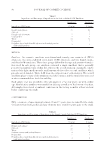
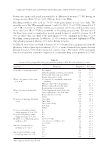
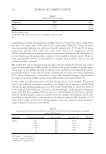
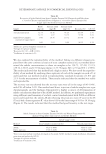
REDUCING FACIAL WRINKLE SIZE USING POLYMERS 133 Here, we will show that the two polymers studied cause shrinkage in cosmetic fi lms, leading to a consumer-perceivable reduction in size of features such as pores and wrinkles on the underlying skin substrate. MATERIALS AND METHODS PRODUCT FORMULATIONS We used model emulsion formulations with 5 w% hydrogenated polyisobutene (Luvitol Lite BASF Corporation, Florham Park, NJ) as the oil phase and 1 w% of a phenoxyethanol/ethyl- hexylglycerin preservative (Euxyl PE 9010 Schülke & Mayr GmbH, Fairfi eld, NJ) (Table I). The pH was adjusted with sodium hydroxide (AMRESCO LLC, Solon, OH). The polymers used were an acrylate/methacrylamide copolymer (“AMC”, Luviset One BASF Corporation), PVP (Luviskol K90 BASF Corporation) and carbomer (Rheocare C Plus BASF Corporation). For the PVP and placebo formulations, carbomer was predispersed in water and neutral- ized before all other ingredients were added, after which the product was homogenized using a Silverson homogenizer. For the other formulations, all ingredients were combined and homogenized until uniform. GLASS TRANSITION TEMPERATURE MEASUREMENTS To obtain solid polymer samples, 5% neutralized polymer solutions were prepared and 10 g of the solution dried in an aluminum pan with a diameter of approximately 3 cm. The conditioning of the resulting polymer fi lms at different humidities (50%, 75%, and 90% relative humidity (RH)) was carried out with the open aluminum differential scanning calorimeter (DSC) pans in three different desiccators. The desired RH in the desiccators was adjusted using different salt solutions: calcium nitrate for 50% RH, sodium chloride for 75% RH, and barium chloride for 90% RH. The samples were conditioned until a constant weight of the aluminum pans was reached. The difference in weight (start vs. equilibrium state) was analyzed to obtain the water uptake of the polymer fi lms. In the next step, the pans were closed and the glass transition was investigated using a TA Instruments Q2000 differential scanning calorimeter (TA Instruments, New Castle, DL). Tg was determined as the midpoint temperature, where half of the specifi c heat increment occurred. Table I Model Emulsio n Formulations Product # 4% AMC 2% AMC PVP Placebo Deionized water 89.7 w% 91.7 91.9 93.4 Hydrogenated polyisobutene 5.0 5.0 5.0 5.0 Phenoxyethanol/ethylhexylglycerin mixture 1.0 1.0 1.0 1.0 Acrylate/methacrylamide copolymer (AMC) 4.0 2.0 PVP 1.5 Carbomer 0.5 0.5 Sodium hydroxide 0.3 0.3 0.1 0.1
Purchased for the exclusive use of nofirst nolast (unknown)
From: SCC Media Library & Resource Center (library.scconline.org)