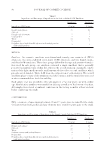
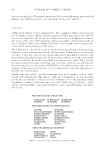
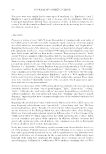
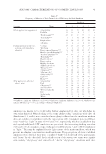
J. Cosmet. Sci., 69, 145–156 (March/April 2018) 145 Rapid Method for The Gas Chromatographic Quantitative Analysis to Determinate Safrole in Commercial Essential Oils SHENG-CHING CHAN, YOUK-MENG CHOONG, and SHUN-HSIANG WENG, Department of Nursing, Tajen University, Neipu, Pingtung 912, Taiwan (S.-C. C.), Department of Food & Technology, Chia Nan University of Pharmacy and Science, Rende District, Tainan 717, Taiwan (Y.-M. C), and Department of Food Nutrition, Meiho University, Yanpu Township, Pingtung, Taiwan (S.-H. W.) Accepted for publication March 28, 2018. Synopsis Safrole is a well-known carcinogenic agent that is present in camphor trees. In this study, a gas chromatographic method was established to quantitate the levels of safrole in essential oils using n-decyl alcohol as an internal standard. The method used a nonpolar column and was able to detect concentrations of safrole as low as 5 μg/ml in the samples. Following addition of 2–10 mg of safrole into 1 g of essential oil extracted from Stout Camphor wood (Cinnamomum kanehirai Hayata) or 1–10 mg of safrole into 1 g of essential oil extracted from Small-fl ower Camphor wood (Cinnamomum micranthum Hayat), the recovery rates of safrole were determined. With direct injection of samples into the gas chromatograph, the results showed that the recovery was more than 96.1%, with a coeffi cient of variation below 5.6%. We then analyzed 23 commercially available Stout Camphor and other essential oil samples and found that 21 of them contained safrole in the range of 37.65– 355.07 mg/g. In addition, in the heavier essential oil distilled from Small-fl ower Camphor wood, the safrole level was up to 642.98 mg/g. Our results demonstrated that most camphor essential oils on the market have a carcinogenic potential due to their high safrole levels. INTRODUCTION Safrole (4-allyl-1,2-methylene dioxybenzene) is a principal component of essential oils obtained from several herbs and spices, such as the piper betle fl ower, camphor, nutmeg, and sassafras (1–7). In Taiwan, the term “camphor tree” indicates several species of trees belonging to the Cinnamomum genus, which can be subclassifi ed into four groups based on the recovery rate of camphor (8): camphor tree, linalool tree (C. camphora CT linalool), C. longepaniculatum, and C. camphora (Linn.) Presl var. camphora. These four groups of “camphor trees” are very diffi cult to distinguish according to their morphology. Based on Address all correspondence to Shun-Hsiang Weng at ssweng@meiho.edu.tw.
Purchased for the exclusive use of nofirst nolast (unknown)
From: SCC Media Library & Resource Center (library.scconline.org)