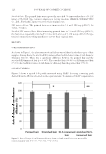
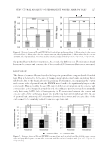
JOURNAL OF COSMETIC SCIENCE 142 thin, leading to cracks that could limit the area of mechanical impact. The dependence of Tg on the polymer weight fraction in the emulsion system also remains to be elucidated, as does the infl uence of other emulsion components such as the oil phase. DIFFERENCES BETWEEN POLYMER FORMULATIONS Among the three polymer formulations studies, the formulation with 4% polyacrylate showed the highest effi cacy in skin tightening. It was signifi cantly better than the pla- cebo in the change in the R0 and R3 parameters and signifi cantly better than all other formulations in the change in CoR. Against baseline, it outperformed signifi cantly in the change in skin roughness in terms of parameters Sq and Sa, in the change in curvature density and area, and outperformed directionally in the change in total wrinkle volume. In consumer perception, it was signifi cantly better than the placebo formulation and the benchmark formulation with PVP. It was perceived as signifi cantly tackier on application than the PVP and placebo formulations, but this tackiness was acceptable. The formulation with 2% polyacrylate showed skin tightening as well, but not as strong and in most experiments not strong enough for statistical signifi cance. Also, the formula- tion with 1.5% PVP showed signifi cant tightening against baseline in the Cutometer measurements only, but not in any of the other experimental studies. Moreover, the test subjects were unable to perceive any tightening effect with this formulation. In summary, the polyacrylate polymer was superior to PVP in skin tightening effi cacy, particularly at the higher concentration of 4% in our model emulsion formulation. CONCLUSION We have shown that the skin care polymers studied reduce facial wrinkle size and make skin fi rmer. Skin fi rming measures indicated that both polymers instantly tightened facial skin, whereas the placebo product offered no signifi cant tightening benefi t. However, in clinical evaluation only the polyacrylate polymer produced clinically signifi cant improve- ments in wrinkle size and skin fi rmness on the face without signifi cant consumer use negatives such as tackiness. Skin care products with materials such as this have the poten- tial to offer immediate and visible benefi ts to consumers with aged skin. The tightened skin feel that users perceived is a direct and welcome signal of product effi cacy. ACKNOWLEDGEMENTS We would like to thank our clinical panelists for their participation in this study. REFERENCES (1) T. Okuzono and M. Doi, Effects of elasticity on drying processes of polymer solutions, Phys. Rev. E Stat. Nonlin. Soft Matter Phys., 77, 030501 (2008). (2) E. Bormashenko, S. Balter, R. Pogreb, Y. Bormashenko, O. Gendelman, and D. Aurbach, On the mechanism of patterning in rapidly evaporated polymer solutions: Is temperature-gradient-driven Marangoni instability responsible for the large-scale patterning? J. Colloid. Interface. Sci., 343, 602–607 (2010).

REDUCING FACIAL WRINKLE SIZE USING POLYMERS 143 (3) H. Haidara, L. Vonna, and L. Vidal, Unrevealed self-assembly and crystallization structures of Na-alginate, induced by the drying dynamics of wetting fi lms of the aqueous polymer solution, Macromolecules, 43, 2421–2429 (2010). (4 ) Y. Holl, J. L. Keddie, P. J. McDonald, and W. A. Winnik, “Drying modes of polymer colloids,” in Film Formation in Coatings, Mechanisms, Properties, and Morphology, T. Provder and M. Urban. Eds. (2001) ACS Symp. Ser. 790, ACS Publications, Washington, DC, pp. 1–26. (5) J. L. Keddie, P. Meredith, R. A. L. Jones, and A. M. Donald, Kinetics of fi lm formation in acrylic latices studied with multiple-angle-of-incidence ellipsometry and environmental SEM, Macromolecules, 28, 2673–2682 (1995). (6) J. L. Keddie, Film formation of latex, Mat. Sci. Eng. Reports, 21, 101–170 (1997). (7) S. G. Croll. Internal stress in a solvent-cast thermoplastic coating, J. Coatings Technol., 50(638), 30–35 (1978). (8) R. Katsumata, S. Ata, K. Kuboyama, and T. Ougizawa. Evaporation rate effect on starting point of shrinkage stress development during drying process in solvent cast polymer fi lm, J. Appl. Polym. Sci., 128, 60–65 (2013). (9) A. M. Kligman and C. M. Papa. Albumin as an antiwrinkling cosmetic, J. Soc. Cosm. Chem., 16(10), 557–562 (1965). (1 0) J. Jachowicz, R. McMullen, Y. Zolotarsky, and D. Prettypaul. Skin tightening with polymer-containing formulations, Cosmet. Sci. Technol., 206–215 (2005). (1 1) J. Jachowicz, R. McMullen, and D. Prettypaul. Alteration of skin mechanics by thin polymer fi lms, Skin Res. Technol., 14, 312–319 (2008). (1 2) M. Kawai and G. Imokawa. The induction of skin tightness by surfactants, J. Soc. Cosm. Chem., 35, 147–156 (1984). (1 3) P. Purohit, P. Chandar, A. Vilinska, K. P. Ananthapadmanabhan, and P. Somasundaran. Effect of mixed surfactants on stratum corneum: A drying stress and Raman spectroscopy study, Int. J. Cosm. Sci., 36, 379–385 (2014). (1 4) P. Hoessel, C. Schade, A. Tomlinson, H.-M. Haake, D. Prinz, and B. Schröder. A new polymer genera- tion offering truly multifunctional performance, HPC Today, 9(2), 16–20 (2014). (15 ) M. D. P. Buera, G. Levi, and M. Karel. Glass transition in poly(vinylpyrrolidone): Effect of molecular weight and diluents, Biotechnol. Prog., 8, 144–148 (1992). (16) R. Bazin and E. Doublet, Skin Aging Atlas, Volume 1, Caucasian Type. (MED’COM, Paris, 2007). (17) S. Luebberding, N. Krueger, and M. Kerscher. Mechanical properties of human skin in vivo: A com- parative evaluation in 300 men and women, Skin Res. Technol., 20, 127–135 (2014). (18 ) H. Ohshima, S. Kinoshita, M. Oyobikawa, M. Futagawa, H. Takiwaki, A. Ishiko, and H. Kanto. Use of cutometer area parameters in evaluating age-related changes in the skin elasticity of the cheek, Skin Res. Technol., 19, E238–E242 (2013). (19) G. B. E. Jemec, E. Selvaag, M. Ågren, and H. C. Wulf. Measurement of the mechanical properties of skin with ballistometer and suction cup, Skin Res. Technol., 7, 122–126 (2001).
Purchased for the exclusive use of nofirst nolast (unknown)
From: SCC Media Library & Resource Center (library.scconline.org)