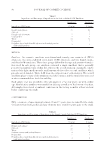
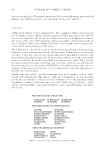
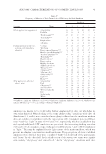
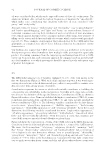
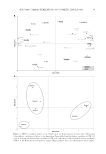
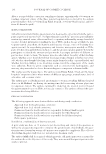
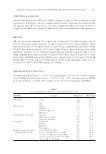
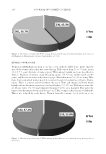
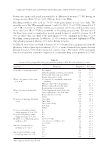
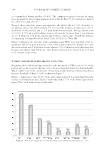
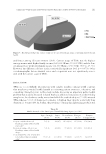
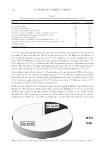
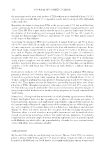
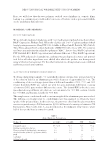
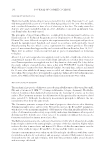
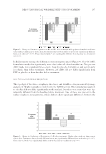
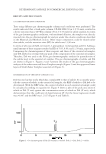
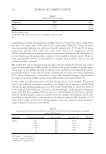
JOURNAL OF COSMETIC SCIENCE 152 peppermint oil sample obtained from a market were 36.23 and 24.01 mg/g, respectively, and the CV% values were 5.89% and 6.11%, respectively (Table IV). Using our direct injection method, however, the safrole levels in the samples were 37.65 and 35.28 mg/g, respectively, and the CV% values were only 3.62% and 2.73%, respectively. As the AOAC method requires sample pretreatment with steam distillation and chloroform ex- traction before gas chromatographic analysis, 4 h are needed to obtain a result. However, with our proposed method, no pretreatment is needed, and, therefore, only 25 min are needed to analyze a sample. The small CV% values obtained using our direct injection method indicated that it has a higher accuracy than the AOAC method. In addition, the greater number of sample prepa- ration steps in the AOAC method, including steam distillation and chloroform extrac- tion, might lead to a lower yield of safrole, resulting in lower detection values and higher CV% values. Furthermore, chloroform is a toxic and controlled reagent, which renders the application of the AOAC method more diffi cult than our method (Table V). In this study, we performed tests to validate the specifi city of our method. The process used 0.1-μl solutions of reference standards, test samples, and a negative control (blank solvent) in a gas chromatographic protocol. The results showed that no safrole was detected in the negative control (Figure 3A) and no chromatographic peaks appeared during the range of the RT. This confi rmed that the negative control (blank solvent) did not interfere with the chromatographic analysis of safrole in the test samples and standards, which indi- cated that our method had a good specifi city. In addition, near the RT of safrole (11–14 min), only a single symmetrical chromatographic peak was observed, demonstrating a single compound consistent with the RT. Table I RRF and GC RT of Safrole Compound RRFa RTb DAc 1.000 11.356 Safrole 1.207 11.809 a RRF of safrole to DA. b A CP-SIL 8 CB column (0.53 mm × 30 m, DF=1.0 μm) was used. c I S. Table II Lowest quantitatively Determinable Concentration of Safrole by Gas Chromatography equipped with an FID Detector Compound Concentration (μg/ml) Detectabilitya Recovery (%)b RSD (%)c Safrole 50.0 Yes 103.8 3.8 25.0 Yes 102.5 3.5 10.0 Yes 98.1 5.8 5.0 Yes 110.7 10.9 2.5 Yes 122.8 18.5 1.0 No — — a FID range = 2, attenuation = 2. b Average of triplicate analyses. c Coeffi cient of variation (cv%).

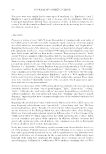
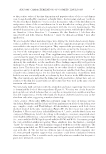
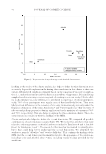
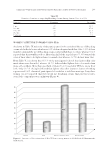
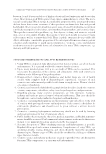
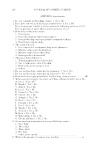
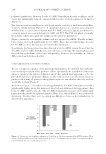
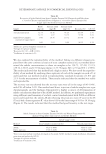
DETERMINATE SAFROLE IN COMMERCIAL ESSENTIAL OILS 153 We also explored the reproducibility of the method. Taking six different aliquots pre- pared from the same commercial source of stout camphor essential oil, our method deter- mined the safrole concentrations in these six samples to be 136.73, 135.28, 131.19, 139.54, 136.05, and 135.92 mg/g (mean = 135.79 mg/g, SD = 2.70 and CV = 1.99%). The results indicated that this method had a high accuracy. We also tested the reproduc- ibility of our method by analyzing three replicates of each of the samples on each of 3 d and found that our method resulted in reproducibility standard deviations of 1.8% and 2.1% for the measurement of safrole. These results indicated that the method was stable and reproducible. The recovery rate test showed that the recovery rates were all in the range of 96–104%, with CVs all below 5.6%. Our method used direct injection of safrole samples into a gas chromatograph, and the fi ndings demonstrated a higher accuracy of determination of safrole concentration than that of the AOAC method. In addition, we performed experiments using different small amounts of a safrole control standard mixed with IS DA at different ratios and found that the safrole–IS plot showing the peak area ratio (Y axis) to the IS (X axis) had a linear regression R2 value above 0.99 in the linear range of 0.05 to 10.10 mg/g (Figure 4). The results indicated that this method had good linearity in the test range. Table IV Safrole Content in Stout Camphor Essential Oil (S1) and Natural Peppermint Oil Analyzed Using Direct Injection GC and AOAC Methods Safroleb mg/gb (cv%)c Methoda Stout Camphor essential oil (S1) Natural peppermint oil AOAC 36.23 (5.89%) 34.01 (6.11%) Direct injection 37.65 (3.62%) 35.28 (2.73%) a Direct injection method = method developed in this study AOAC method = steam distillation, chloroform extraction and analysis by GC (4). b Average of triplicate analyses. c Coeffi cient of variation (cv%). Table III Recoveries of Spiked Safrole from Stout Camphor Essential Oil (Extracted with Ether from C. kanehirai Hayata) and Small-Flower Camphor (C. micranthum Hayat) Essential Oil (Upper Layer) by the Direct Injection Method Sample Blanka (mg) (A) Amount added (mg) (B) Amount found (mg)b (C) Recovery (%)c CV (%)d Antrodia essential oil 32.73 10.36 43.25 101.54 2.41 32.73 2.07 34.75 97.58 5.61 Small-fl ower Camphor essential oil (upper layer) 0.00 10.36 10.72 103.50 3.49 0.00 1.03 0.99 96.12 4.24 a Safrole in 1 g Stout Camphor essential oil. b Average of triplicate analyses. c Recovery (%) = (C - A)/B × 100%. d Coeffi cient of variation (cv%).
Purchased for the exclusive use of nofirst nolast (unknown)
From: SCC Media Library & Resource Center (library.scconline.org)