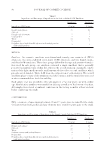
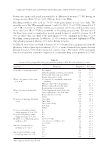
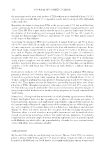
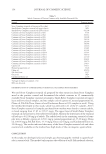
JOURNAL OF COSMETIC SCIENCE 154 DETERMINATION OF SAFROLE LEVELS IN ESSENTIAL OIL SAMPLES FROM MARKETS We used Stout Camphor essential oil prepared by ether extraction from Stout Camphor wood as the positive control and determined the safrole contents in 15 commercially available Stout Camphor essential oil samples, Small-fl ower Camphor essential oil (upper layer and lower layer) samples, and one sample each of cypress oil, natural peppermint oil, China oil, Pak Fah Yeow, Green oil and Cardamom fl ower oil (23 samples in total). Using the method developed in this study, safrole was detected in 21 of the 23 samples. All 15 Stout Camphor essential oil samples purchased from markets were found to contain safrole, in levels ranging from 37.65 to 355.07 mg/g. The upper layer of Small-fl ower Camphor essential oil did not have a detectable level of safrole, whereas the lower layer of the essential oil had up to 642.98 mg/g of safrole. The safrole levels in the remaining essential oil sam- ples were as follows: cypress oil, 129.11 mg/g natural peppermint oil, 35.28 mg/g China oil, 109.56 mg/g Pak Fah Yeow, 33.37 mg/g Green oil, 0 mg/g and Cardamom fl ower oil, 22.06 mg/g. The results indicated that many of the Stout Camphor essential oils and other essential oils available on the market have high levels of the carcinogenic agent safrole. CONCLUSION In this study, we developed a fast and simple gas chromatographic method to quantify saf- role in essential oils. The method only requires the addition of an IS DA methanol solution, Table V Safrole Contents of Various Commercially Available Essential Oils Sample Content (mg/g)a Stout Camphor essential oil (extracted by ether) 32.73 Small-fl ower Camphor essential oil (upper layer) ND Small-fl ower Camphor essential oil (Lower layer) 642.98 Commercial Stout Camphor essential oil (S1) 37.65 Commercial Stout Camphor essential oil (S2) 306.52 Commercial Stout Camphor essential oil (S3) 326.98 Commercial Stout Camphor essential oil (S4) 256.18 Commercial Stout Camphor essential oil (S5) 281.60 Commercial Stout Camphor essential oil (S6) 196.48 Commercial Stout Camphor essential oil (S7) 136.46 Commercial Stout Camphor essential oil (S8) 176.85 Commercial Stout Camphor essential oil (S9) 301.65 Commercial Stout Camphor essential oil (S10) 355.07 Commercial Stout Camphor essential oil (S11) 269.70 Commercial Stout Camphor essential oil (S12) 227.09 Commercial Stout Camphor essential oil (S13) 304.91 Commercial Stout Camphor essential oil (S14) 199.76 Commercial Stout Camphor essential oil (S15) 278.37 Cypress oil 129.11 Natural peppermint oil 35.28 China oil 109.56 Pak Fah Yeow 33.37 Green oil ND Cardamom fl ower oil 22.06 a Average of duplicate analyses. (24) ND: not detected.

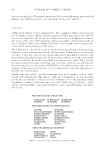
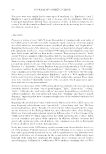
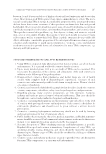
DETERMINATE SAFROLE IN COMMERCIAL ESSENTIAL OILS 155 and the samples can then be directly injected into a gas chromatograph to determine the level of safrole. The analysis of each sample takes only 25 min because no complicated pretreatments are required, in contrast with the AOAC method, using which sample analy- sis requires 4 h. Our fi ndings indicated that most of the Stout Camphor essential oils on the market have high safrole levels (ranging from 37.65 to 355.07 mg/g). In addition, several other essential oils that are very popular in many Asian countries and some Euro- pean countries also have high safrole contents (0–129 mg/g). To protect public health, the safe, cheap, and fast quantitative method developed in this study has the potential for use in the assessment of the safety of essential oils. REFERENCES (1) A. W. Archer, Determination of safrole and myristicin in nutmeg and mace by high-performance liquid chromatography, J. Chromatogr., 438, 117–121 (1988). (2) O. Ekundayo, I. Laakso, R. M. Adegbola, B. Oguntimein, A. Sofowora, and R. Hiltunen, Essential oil constituents of Ashanti pepper (Piper guineense) fruits (berries), J. Agric. Food Chem., 36, 880–882 (1988). (3) Association Française de Normalisation (AFNOR). “Essential oils of sassafras and nutmeg. Determina- tion of contents of safrole and cis- and transisosafrole,” in Packed Column and Capillary Column Gas Chromatographic Methods, French-Standard NF T, 75-407. (4 ) J. Baldry, J. Dougan, W. S. Matthews, J. Nabney, G. R. Pickering, and F. V. Robinson, Composition and fl avour of nutmeg oils, International Flavours and Food Additives, 7, 28–30 (1976). (5) G. F. Russell, and W. G. Jennings, Constituents of black pepper. Oxygenated compounds, J. Agric. Food Chem., 17, 1107–1112 (1969). (6) C. K. Wang, and L. Sun-Hwang, Separation of safrole from Piper betle fl ower, J. Chin. Agri. Chem. Soc., 566–569 (1993). (7 ) C. K. Wang, and L. Sun-Hwang, Analysis of the phenolic compounds in betel quid, J. Chin. Agri. Chem. Soc., 31, 623–632 (1993). (8) N. Hirota, Subspecies, varieties and subvarieties of the camphor tree in the world. I., Mem. Ehime. Univ., Sect 2.1, 1–49 (1951). (9) Y. Fujita, S. I. Fujita, Y. Akama, and T. Morita, On the essential oils shools, fruits and peduncles of Cin- namomum camphora Sieb, Nippon Nogei Kagaku Kaishi, 47, 639–643 (1973). (1 0) J. Sekizawa, and T. Shibamoto, Genotoxicity of safrole-related chemicals in microbial test systems, Mutat. Res., 101, 127–140 (1982). (11) J. D. Peele, Jr., and E. O. Oswald, Metabolism of the proximate carcinogen 1′-hydroxysafrole and the isomer 3′-hydroxyisosafrole, Bull. Environ. Contam. Toxicol., 19, 396–402 (1978). (12) M . S. Benedetti, A. Malnoe, and A. L. Broillet, Absorption, metabolism and excretion of safrole in the rat and man, Toxicology, 7, 69–83 (1977). (13) S. Y. Chiang, P. Y. Lee, M. T. Lai, L. C. Shen, W. S. Chung, H. F. Huang, K. Y. Wu, and H. C. Wu, Safrole-2′,3′-oxide induces cytotoxic and genotoxic effects in HepG2 cells and in mice, Mutat. Res., 726, 234–241 (2011). (14) E. Ma rtati, M. G. Boersma, A. Spenkelink, D. B. Khadka, A. Punt, J. Vervoort, P. J. van Bladeren, and I. M. Rietjens, Physiologically based biokinetic (PBBK) model for safrole bioactivation and detoxifi ca- tion in rats, Chem. Res. Toxicol., 24, 818–834 (2011). (15) L. C. Shen, S. Y. Chiang, M. H. Lin, W. S. Chung, and K. Y. Wu, In vivo formation of N7-guanine DNA adduct by safrole 2′,3′-oxide in mice, Toxicol. Lett., 213, 309–315 (2012). (16) P. A. P. Liddle, Glass capillary gas chromatography in the wine and spirit industry, Anal. Proc., 19, 515–516 (1982). (17) Internatio nal Organization of the Flavour Industry (IOFI), Safrole and isosafrole gas chromatographic method, Int. Flavours Food Addit., 8, 27–29 (1977). (18) D. Larry, Gas chromatographic determination of safrole and related compounds in nonalcoholic bever- ages: collaborative study, J. Assoc. Off. Anal. Chem., 54, 900–902 (1971). (19) D. Larry, Gas chromatographic determination of methyl salicylate, safrole and related compounds in nonalcoholic beverages, J. Assoc. Off. Anal. Chem., 52, 481–485 (1969). (20) H. Jelen, and E. Kaminski, Determination of safrole and myristicin in essential oils by GC/MS-SIM, Bromatologia i Chemia Toksykologiczna, 27, 269–274 (1994).
Purchased for the exclusive use of nofirst nolast (unknown)
From: SCC Media Library & Resource Center (library.scconline.org)