141 ImprovedPROVED AVB PhotostabilityOTOSTABILITY UsingING NLCs
In addition to photostability, the increase in the photoprotective properties of creams based
on lipid nanoparticles versus conventional creams has already been described.36,37 Liposomes
and lipid nanoparticles have increased AVB photoprotection by 40%.38 The increased UV
protection is attributed to the synergistic effect of the lipid matrix. Isopropyl myristate has
been shown to be the most appropriate lipid-excipient for ensuring AVB photostability.30
Similarly, the entrapment of avobenzone in lipid microparticles have been demonstrated as
an effective strategy to reduce the photo-instability of AVO after irradiation.39 Normally
nanoparticles act as UV physical filters, due to their efficient light scattering properties,
which promotes a synergistic UV protection effect with the encapsulated UV chemical
filter. Additionally, depending on their composition, lipid components may present
antioxidant activity and add to the photostabilisation effect of the encapsulated material.39
Understanding photodegradation pathways when using photosensitive filters is a crucial
step in the design of photoprotective formulations. The combination of several strategies,
including encapsulation, antioxidants, photostabilizing substances, and suppressors can be
used as effective tools for photoprotection.39-41
SKIN RETENTION AND PERMEATION
Recently, the Food and Drug Administration has evidenced that various UV filters
can diffuse into systemic circulation and cause harm.42 The lipophilic character and
permeability properties of AVB, such as its lipophilicity, could favor its diffusion through
biological membranes. AVB pKa is between 9.60–9.80. At both physiological pH values
and cutaneous pH, there will be a clear dominance of AVB in the nonionized state, which
is predictive of high permeation across biological barriers.43,44
The effectiveness of a sunscreen depends on its ability to keep UV filter molecules in the
outermost region of the skin. The ideal sunscreen should have low permeation properties
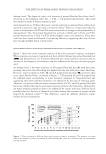
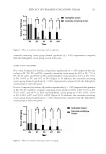
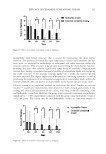
and high accumulation capacity in this region.39 Here, we demonstrated that encapsulation
in NLCs promoted greater skin retention of AVB, showing a significantly (p 0.05) higher
retention on the skin surface when compared to the concentration that penetrated the
stratum corneum (Figure 8).
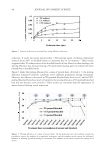
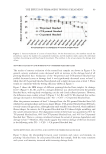
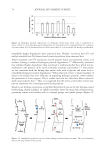
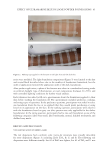
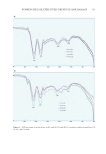
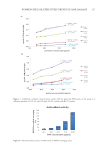
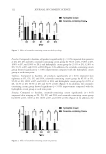
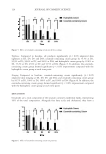
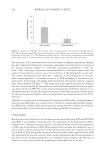
Figure 7. Photostability of free and NLC-encapsulated AVO (F3). Samples were exposed for 24h and subjected
to UVA radiation (3,025 mW/cm²) for 24h in a photostability chamber.
In addition to photostability, the increase in the photoprotective properties of creams based
on lipid nanoparticles versus conventional creams has already been described.36,37 Liposomes
and lipid nanoparticles have increased AVB photoprotection by 40%.38 The increased UV
protection is attributed to the synergistic effect of the lipid matrix. Isopropyl myristate has
been shown to be the most appropriate lipid-excipient for ensuring AVB photostability.30
Similarly, the entrapment of avobenzone in lipid microparticles have been demonstrated as
an effective strategy to reduce the photo-instability of AVO after irradiation.39 Normally
nanoparticles act as UV physical filters, due to their efficient light scattering properties,
which promotes a synergistic UV protection effect with the encapsulated UV chemical
filter. Additionally, depending on their composition, lipid components may present
antioxidant activity and add to the photostabilisation effect of the encapsulated material.39
Understanding photodegradation pathways when using photosensitive filters is a crucial
step in the design of photoprotective formulations. The combination of several strategies,
including encapsulation, antioxidants, photostabilizing substances, and suppressors can be
used as effective tools for photoprotection.39-41
SKIN RETENTION AND PERMEATION
Recently, the Food and Drug Administration has evidenced that various UV filters
can diffuse into systemic circulation and cause harm.42 The lipophilic character and
permeability properties of AVB, such as its lipophilicity, could favor its diffusion through
biological membranes. AVB pKa is between 9.60–9.80. At both physiological pH values
and cutaneous pH, there will be a clear dominance of AVB in the nonionized state, which
is predictive of high permeation across biological barriers.43,44
The effectiveness of a sunscreen depends on its ability to keep UV filter molecules in the
outermost region of the skin. The ideal sunscreen should have low permeation properties
and high accumulation capacity in this region.39 Here, we demonstrated that encapsulation
in NLCs promoted greater skin retention of AVB, showing a significantly (p 0.05) higher
retention on the skin surface when compared to the concentration that penetrated the
stratum corneum (Figure 8).
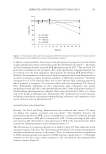
Figure 7. Photostability of free and NLC-encapsulated AVO (F3). Samples were exposed for 24h and subjected
to UVA radiation (3,025 mW/cm²) for 24h in a photostability chamber.