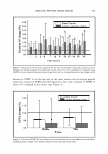
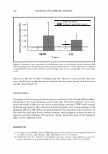
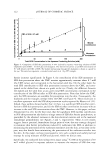
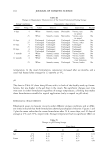
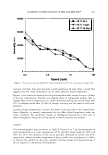
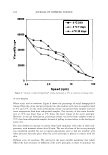
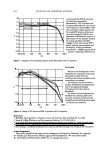
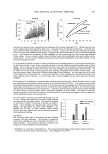
188 JOURNAL OF COSMETIC SCIENCE AN OVERVIEW OF ANTIPERSPIRANT AND DEODORANT TESTING Linda P. Oddo, James P. Bowman and John E. Wild Hill Top Research 1. INTRODUCTION Benefiting from 40 years of conducting and designing antiperspirant and deodorant efficacy studies, a brief overview of the ,study methods and guidelines, critical study controls, screening methods and FDA requirements will be presented. Included will be a comparison of the original 1975 self perception data used to establish the current FDA minimum efficacy requirement to recent self perception information. 2. PURPOSE This presentation will provide an overview of deodorant and antiperspirant efficacy testing. 3. DISCUSSION 3.1 Guidelines for Antiperspirant Testing Since antiperspirants affect the function of the body by inhibiting perspiration, they are considered an OTC drug. As OTC drugs, their labeling and claims are regulated by the Antiperspirant Drug Products for Over-the-Counter Human Use Final Monograph (effective on December 9, 2004). 1 Testing requirements according to: (1) qualification and restrictions of test subjects, (2) requirements for hotroom or ambient testing conditions, (3) study procedures, and ( 4) data analysis. Requirements for establishing minimum antiperspirant efficacy, and for supporting enhanced duration and extra effective claims are also specified. The testing guidelines will be presented and discussed. 3.2 Antiperspirant Screening Studies Screening studies provide reduced cost options for predicting antiperspirant efficacy. These include, (1) modifying the standard design by decreasing the number of subjects, product applications and/or collections, (2) using the back as a test site for sweat collections2, allowing several products to be evaluated at the same time, and (3) the starch iodine procedure. 3.3 FDA Monograph - Subject Self-Perception of Sweat Reduction The objective of the current research was to determine if the original self-perception data presented to the OTC Panel for Antiperspirants in 1975 by Carabello and Majors would be the same or similar to current consumer opinion. Subjects participating in the original research completed questionnaires indicating if they noticed a difference in wetness between underarms. It was the relationship of self-reported efficacy to gravimetric measurements that the OTC panel used to determine when noticeable antiperspirant effect was observed and establish the current minimum 20% reduction requirement. Results from recent self-perception research will be compared to the earlier data. 3.4 Deodorant Efficacy Testing Procedures Since underann deodorants are designed to reduce or prevent the formation of malodor, they are regulated as cosmetics and are not subject to a specific regulatory monograph. Industry guidelines have been provided in the American Society for Testing Materials' (ASTM) Standard Practice for the Sensory Evaluation of Axillary Deodorancy. 4 The practice recommends study procedures for using odor judges to determine product efficacy and specifically addresses: (1) selection and training of odor judges, (2) qualification and restrictions of test subjects, (3) study design, (4) sensory scale options, and ( 4) data analysis. The document does not include a discussion of claims The ASTM testing guidelines will be presented and discussed.

2006 ANNUAL SCIENTIFIC MEETING 189 3.5 Deodorant Efficacy Testing Controls Since they are the primary measurement tool, the process for selecting, training, monitoring and maintaining the odor judges is essential to a successful program. Equally important is to provide a quiet, odor free evaluation area and controlling evaluation intervals to limit judge fatigue. Another important control is the subject selection process and monitoring subject restrictions during testing. These aspects will be discussed along with other factors that can impact judge performance. 4. CONCLUSION Understanding applicable historical infonnation and having a clear definition of the project objectives are important when designing a deodorant or antiperspirant efficacy study. Knowledge of which basic procedures must be followed, how they can be modified, and applying the appropriate statistical techniques is critical to the design of a successful study. Bibliography 1 Food and Drug Administration, "Antiperspirant drug products for over-the-counter human use (Final Monograph)," Federal Register, 68 FR 34273 (June 9, 2003). 2 Bowman, J.P., Oddo, L.P., Bates, T., Wild, J.E., "New Screening Technique for Antiperspirant Testing Utilizing Sweat Collections and Instrumental Evaluations", poster session presented at the Cosmetic Toiletries and Fragrance Association, 1998. 3Majors, P., Carabello, F, "Hill Top Research Method of Antiperspirant Evaluations and General Discussion of Results", presented to the OTC Panel for Antiperspirants, August 14, 1975. 4 ASTM Standard E 1207-02, Standard Practice for the Sensory Evaluation of Axillary Deodorancy, Nov. 2002.
Purchased for the exclusive use of nofirst nolast (unknown)
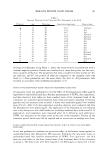
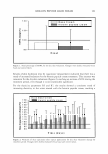
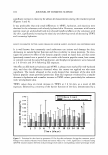
From: SCC Media Library & Resource Center (library.scconline.org)