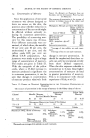
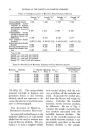
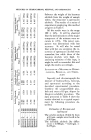
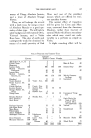
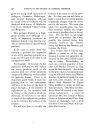
90 JOURNAL OF THE SOCIETY OF COSMETIC CHEMISTS in-water emulsion type, the latter being chosen because its properties might be expected to be most modi- fied by the presence of a wetting agent. The results. are given in Table 10. There was no effect on B, the vehicle whieh contained no water. In the case of vehicles A and C, marked incr4ase of mercury pene- tration was brought about by. the wetting agent. The effect of tile wett?ng agent on C is p6rhaps to be expected but on A more difficult to interpret because, Jike B, the vehicle contained no water. With the indication that in cer- tain bases, Triton NE enhances the penetration of mercury, it seemed of interest to determine whether differences between wetting agents could be demonstrated. The effect of 2 per cent concentration of Triton NE, Aerosol OT (sodium dioctyl sulfosuccihate) and Duponal C (sodium lauryl sulfate) in base A was studied. No differences in cutaneous penetration of mer- cury were found. Whether this would hold for the oil-in-water base or certainother types refnains at pres- ß ent undetermined. The most that can be said for the tests with wetting agents is that the degree of increased pendtration of mercury is .disap- pointingly small as compared with that observed by Dueruling (9). z•. Effect of Stiffening of/he l/ehicle Many of the ointments submitted for assay were rather stiff and did not spread easily. It was noted that this characteristic seemed to

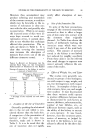
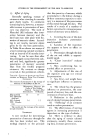
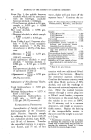
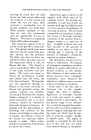
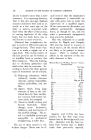
STUDIES ON THE PERMEABILITY OF THE SKIN TO MERCURY 91 cause a lower penetration of mer- cury. To test the effect of the stif- fening, an inert diluent, talc, was added in 15 per cent concentration to an oil-in-water base of the fol- lowing compositior/: Propylene glycol ........ 25% Starch glycerite ........ 34:% Stearic acid ........ . .... 4:% GlyceryI monostearate.. 2% Spermaceti ............ 2% Water ................ 32% Penetration of mercury From the • above base, with and without 15 per cent talc filler, was compared. The result is shown in Table 11. Here it can be seen that the addition of an inert agent, with resultant stiffeninc action, reduces the penetration of mercury. In addition to these ob- servations the problem had another more practical aspect: Ointments were designed which contained in addition to 30 per cent calomel, also 15 per cent sulfathiazole, the latter being-added in powder form as a diluent of the base. All of the bases containing the sulfathiazole w•re stiffer and somcwhat less spreadable. Upon examination of 6 different ointments representing oil-in-water, animal fat, and petro- latum base, it was clearly shown that the presence of sulfathiazole reduced the penetration of mercury by about 33 per cent. In no case was there evidence of chemical action between the mercury and the sulfur. z$. State of Subdivision of Calomel Distinction was made between two different calomel powders on the basis of particle size. (a) Ordi- nary fine milled: range of size 10 to 100 micra. (b) Micronized: range of size 1 to 10 micra. It seemed de- sirable to determine what effect TABLE 11--EFFECT OF A STIFFENING AGENT (TALc) ON THE CUTANEOUS PENETRATION OF MERCURY THROUGH THE SKIN OF INDIVIDUAL RATS The measure of penetration is the storage of mercury in the kidney Micrograms Mercury per Gram of Wet Tissue Calomel Ointment Calomel Ointment q- 15% Talc Without Talc hv. 13 23 14 18 17 16 13 13 19 24 17 22 15 20 particle size would have on the pene- tration of mercury. Four different types of vehicles were .used, oil- in-water, water-in-oil, 100 per cent petrolatum, and 100 per cent pro- pylene glycol. In selecting these vehicles cognizance was taken of the possibility that the'effect of particle size on penetration might be re- lated to solubility of the finely divided calomel. Hence, two of 'the vehicles contained water and propylene glycol. Table 12 shows the results. It is clear that better penetration is obtained with micro- nized calomel but the effect is not favored by any particular 'vehicle. Possibly the better penetration of mercury from the ointment con- taining micronized calomel may re- sult from the greater facility with which these 'small particles can be forced into the skin appendages.
Purchased for the exclusive use of nofirst nolast (unknown)
From: SCC Media Library & Resource Center (library.scconline.org)