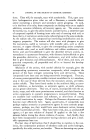
TOXIC AND ALLERGIC COMPLICATIONS OF HAIR DYES 119 NH• NH N---C•I'-Ia (NH•): C C C HC CH oxidation HC CH condensation HC CH HC CH HC CH HC H C C C N•C•Ha(NH:): p-Phenylenediamine •inonedi-imine Bandrowsky's b•e in the dyeing of furs. The actual principal coloring matter is an azine compound with the protein of the fiber. Previously it had been considered that it was Bandrowsky's base which was responsible for the deleterious effects of the para dyes. Gordon (27), as long ago as 1929, applied this substance to scarified human skin and concluded from his experiments that it was neither poisonous nor irritating. He believed that sensitivity was due to the para itself and not to any intermediate product. Quinonedi-imine which is the first step in the oxidation of para is con- sidered by some to be the actual irritant. For this reason it was suggested that oxidation of para should proceed rapidly beyond this stage to lessen potential irritation. This compound has a sharp, penetrating odor (ac- cording to Schwartz, et aL) (28) and produces local irritation wherever it contacts the mucous membranes. It is unstable and decomposes and combines with itself in a short time to form Bandrowsky's base, which is a more stable compound. Oxidation proceeds beyond this until the final compound is produced which is insoluble and inert. O'Donoval (quoted by Harry) has pointed out that normal persons may fail to react to a 10 per cent solution of Ursol (containing para) whereas susceptible individuals react to a concentration as low as 0.005 per cent. Rostenberg and Sulzberger (29) tested 411 subjects with 2 per cent para in petroleum jelly and obtained 6.3 per cent positive reactors. Cross-sensitization to related chemical compounds may develop in those sensitized to para. Many instances of so-called polyvalent sensitivity after reactions to para are due to the fact that the sensitizing agent from an immuno-chemical point of view is unknown and, therefore, these cases which are assumed to be due to sensitization to polyvalent unrelated chemicals, are actually examples of cross-sensitization. The term cross-sensitization will be employed in the same way in which Baer (30) and Sulzberger (31) used the term: A given sensitization may cross among several compounds because, (a) they can contain identical allergenic principles (b) that there is produced a sensitization not only to the primary sensitizing chemical, but also to one or more immuno- chemically related allergens which these authors call secondary allergens

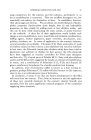
120 JOURNAL OF THE SOCIETY OF COSMETIC CHEMISTS causing secondary sensitization. The primary fi_llergen and the secondary allergen may be so closely related that the sensitized cell does not dif- ferentiate between them. The primary allergen can be converted in the body into an agent which is identical with or closely related to the secondary allergen. Furthermore, the secondary allergen can be converted in the body into an agent which is identical with or closely related to the pri- mary allergen. R. L. Mayer (32) pointed out in 1928 that the apparent occurrence and recurrence of dermatoses in workers who were once sensitized to para- phenylenediamine by further contact with apparently unrelated chemicals was really due to sensitization primarily to compounds of the quinone structure. Tzanck (33) and Sidi (34), as well as others, have demonstrated the ex- istence of cross-sensitization among paraphenylenediamine and local anes- thetics of a certain type. Apparently, here we have sensitization to a varying group in the para position. It is possible for a worker who has been sensitized to paraphenylenediamine to have a re-elicitation of his dermatitis upon receiving procaine as a local anesthetic. This also explains the development of dermatitis among patients who were sensitized to local anesthetics and showed spontaneous sensitivity to dyes of the paraphenyl- enediamine group. Such a case was recently reported by the author (35) where a physician who had been sensitized to the procaine part of the peni- cillin procaine also exhibited a four plus patch test to paraphenylene- diamine. This patient at the same time exhibited sensitivities among other local anesthetics as well as to picric acid solution. Cross-sensitization has been described between sulfonamide drugs and local anesthetics. Sulzberger, Kanof and Baer (36) observed cross-sensi- tization of para-aminobenzoic acid in a number of patients who had der- matiris due to sulfonamide drugs. Phillips (37) showed that in patients who had dermatoses from various sulfonamide drugs there was also a high incidence of hypersensitivity to procaine hydrochloride. In the patient reported by Peck and Feldman (35), there was sensitivity both to sul- fathiazole, benzocaine, para-aminobenzoic acid, pontocaine and butyn sulfate, but not to sulfanilamide. This is interesting in the light of Phillips' report that his patients showed a higher incidence of sensitivity to pro- caine hydrochloride than even to various members of some of the sulfon- amide group. Rogers (38) also reports a patient with sulfanilamide der- matiris who was sensitive to many of the local anesthetics. More recently, interest in the subject of cross-sensitization was further aroused by the work of Dobkevitch and Baer (39) who found cross-sensiti- zation between the azo dyes on nylon stockings and paraphenylenediamine. Cross-sensitization between azo dyes and paraphenylenediamine is ex- plained by the original studies of Mayer (32) as being primarily due to
Purchased for the exclusive use of nofirst nolast (unknown)
From: SCC Media Library & Resource Center (library.scconline.org)