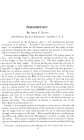
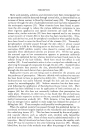
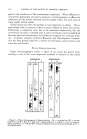
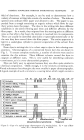
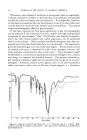
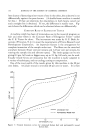
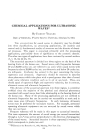
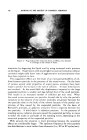
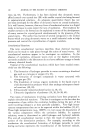
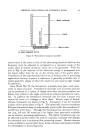
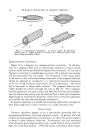
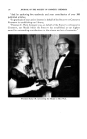
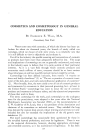
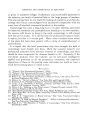
132 JOURNAL OF THE SOCIETY OF COSMETIC CHEMISTS Whenever a new method or technique is announced, there is, regrettably, a slavish inclination to follow in the footsteps of the pioneers and possibly to push on a few more paces into the unknown. It is important, however, to step back and examine this new development to see if, in some other way, it could better be turned to one's specific needs and problems. The advent of gas chromatography affords a good example. It has been reported (4) that good separations in gas chromatography can be achieved if the combination of inert support and high boiling liquid is replaced by the detergent "Tide" (The Procter and Gamble Company), and it has been found, indeed, that useful separations can be performed with it in the column. Other common household detergents have been ex- amined, and it has been found that they, too, can be used. The separations given by these detergents are not of the same degree. Ira standard mixture of alcohols and esters is separated by each of the detergent columns, dif- ferent patterns are obtained on the recorder chart. Thus, detergents might be identified in a novel way by packing the unknown detergent into a column and using it to separate the standard mixture. The pattern obtained un- der standard conditions might then be matched with one given by a known detergent. Similarly, surface active agents, such as the polyoxyethylene ethers and esters, when used as the inert liquid support in a chromato- lOO lOO z n• I I I I I I I I I I. I 3 4 5 6 7 8 9 10 11 12 1,3 14 15 MICRONS Figure 5.--Spectra of G-2162 and Tween 80. z/ = Tween 80 and B -- G-2162. Both solutions were 5% by weight in chloroform. The spectra were obtained on a double-beam spectrophotometer.

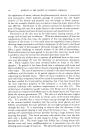
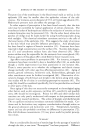
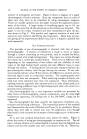
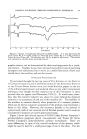
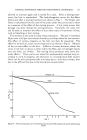
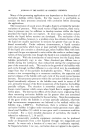
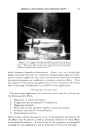
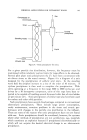
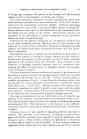
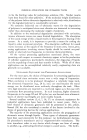
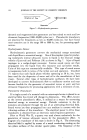
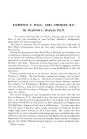
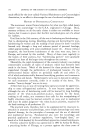
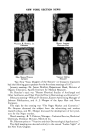
COSMETIC KNOWLEDGE THROUGH INSTRUMENTAL TECHNIQUES 133 I I I I I I I I I I I I 2 3 4 5 6 7 8 9 10 11 12 13 14 15 MICRONS Figure &--Spectra of O-2162 and Tween 80 run differentially. ,4 = base line Tween 80 versus Tween 80, B = 0.25% G-2162 in Tween 80 versus Tween 80, C = 0.5% G-2162 in Tween 80 versus Tween 80. All solutions were 5% by weight in chloroform. The spectra were obtained on a double-beam spectrophotometer. graphic column, can be characterized by their resolving powers for a stand- ard mixture. Needless to say, there are much more direct ways of analyzing detergents and surfactants, but it serves as a useful illustration of how man should direct the machine, and not the reverse. INFRARED SPECTROMETER If you looked through the last ten years Of THE JOUR•r^L OF THE SOCIETY or COSMETIC CHEMISTS and of the PROCEEDINGS OF THE SCIENTIFIC SECTION OF THE TOILET GOODS ASSOCIATION, you would find that papers on the use of the infrared spectrometer outnumbered those on any other instrumental technique, even though the first reported use of this instrument in these journals does not appear until December, 1952 (5). It would seem, there- fore, that the cosmetic industry was about ten years behind the chemical industry in its acceptance of and use of this machine (6). The inability of the machine to measure directly those properties of a cosmetic product, which can be tied to consumer acceptance of the product, may have been a factor in this delay. However, the enormous benefits to be derived in control work, both of raw material and of finished product and in analysis of competitive products are surely appreciated today. Figure 5 shows the infrared spectra of G-2162 (Atlas Powder Company's polyoxyethylene propylene glycol monostearate) and Tween 80 (Atlas Powder Company's polyoxyethylene sorbitan monooleate). There are some differences, in spite of the over-all similarity of the spectra, which might be used to look for a small percentage of one in the other. For the
Purchased for the exclusive use of nofirst nolast (unknown)
From: SCC Media Library & Resource Center (library.scconline.org)