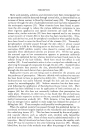
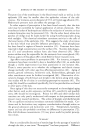
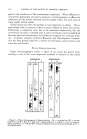
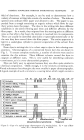
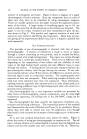
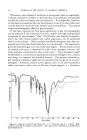
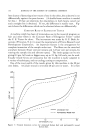
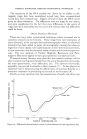
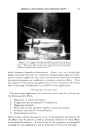
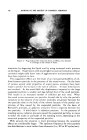
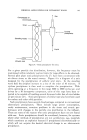
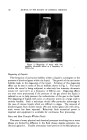
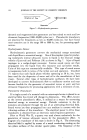
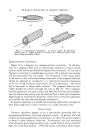
134 JOURNAL OF THE SOCIETY OF COSMETIC CHEMISTS best chance of detecting minor traces of one in the other, the unknown is run differentially against the pure known. (A double-beam machine is needed for this.) If they are identical, the absorptions in both beams cancel out and a straight line is obtained. If not, the difference is readily seen. Fig- ure 6 shows the differences which can be obtained when run differentially. CONSTANT RATE or ELONGATION TESTER A machine which has been of tremendous use in the research program on hair and other fibers is the Constant Rate of Elongation Tester--called the C. E. Tester for short. The instrument was made by G. F. Bush As- sociates (Princeton, N.J.) to meet the requirements of Evans Research and Development Corporation. An important feature is the arrangement for complete immersion of the sample under test. The fibers can be stretched anywhere between 50 per cent per minute and 1.25 per cent per minute, by varying the sample size and elevator speed. The strain gauge can be one giving 0.5 gin. full scale or bigger ones, up to 2.5 kg. full scale, can be used. Usually tensile forces are measured, but the machine is easily adapted to a variety of techniques, such as cycling, cutting or compression. One of the most useful of the results given by this machine is the 20 per cent Index. A 12-hair strand is stretched 20 per cent in water. It is then 200 150 lOO 50 PermanenHairWaved I I , I lO 15 20 EXTENSION (%) Figure 7.--Typical hysteresis curves for untreated human hair and permanently waved human hair.

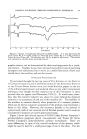
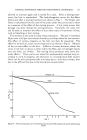
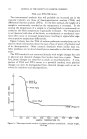
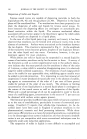
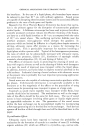
{•OSMETIC KNOWLEDGE THROUGH INSTRUMENTAL TECHNIQUES allowed to contract again and is rested for a day. After a waving treat- ment, the hair is restretched. The load-elongation curves for the fibers before and after a waving treatment are shown in Fig. 7. The 20 per cent Index is calculated from the ratio of the areas under the curves and is taken as a measure of the effect of the waving process. A low value means that damage was done during the waving process. Naturally, the same test can be used to measure the effect of any other type of treatment of hair, such as bleaching or hair dyeing. The machine is also used to study stress-relaxation. The hair is stretched 20 per cent at 85 per cent relative humidity, and kept there for ten minutes. The effect of various reagents on the hair can then be measured. The effects of mineral oil, water and waving lotion are shown in Fig. 8. Mineral oil has no extra effect on the hair. Addition of water, however, allows the stress in the hair to decay as links within the fiber, due to hydrogen bonds and salt links, are broken. The waving lotion produces even more dra- matic effects. These curves are suited for mathematical analysis and, ac- cording to work in progress, the relaxation in a waving lotion (like ancient Gaul) can be split mathematically into three parts: that due to water, that due to the pH and that due to the mercaptan concentration. lOO 8o •6o 40 20 o 0.1 mineral oil • water •.• 0.25 0.5 1 2 3 4 5 10 20 log ! Figure 8.--Stress-relaxation curves for human hair treated with mineral oil, water and waving lotion.
Purchased for the exclusive use of nofirst nolast (unknown)
From: SCC Media Library & Resource Center (library.scconline.org)