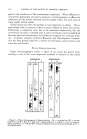
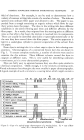
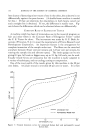
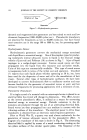
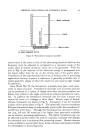
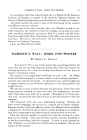
138 JOURNAL OF THE SOCIETY OF COSMETIC CHEMISTS 25 No neut•alixed hai• ..'•-- -- 100 200 300 400 SAMPLE TEMPERATURE (*C) Figure 11.--Differential thermal analysis curves of human hair processed by "no-neutralizer" waving procedure and human hair after reduction and fixative treatment. be achieved by instrumental means. This is a field that interests us a great deal, and we are confident that its application to problems in cos- metic research will eventually be achieved. The potential for such a method would seem to be enormous. The goal is well worth attaining. REFERENCES (1) McDonough, E.G., "The Development of Machineless Permanent Waving," J. Soc. COSMETIC CHEM., 1, 183 (1948). (2) McDonough, E.G., "Mercaptans in Cosmetics," Ibid., 1, 27 (1947). (3) Dimick, K. P., Stitt, F., and Corse, J., "Volatile Flavor of Strawberries. II Application of Gas-Liquid Partition Chromatography," Symposium on Vapor Phase Chromatography, American Chemical Society Meeting, Dallas, Tex., April, 1956. (4) Gohlke, R. S., and McLafferty, F. W., "Use of Vapor-Phase Chromatography in the Identification of Unknown Mixtures," Symposium on Vapor Phase Chromatography, American Chemical Society Meeting, Dallas, Tex., April, 1956. (5) Bernstein, R. B., "Infra-red Spectroscopy and Its Application to Cosmetic Chemistry," J. SOC. COSMETIC CHEM. 3, 265 (1952). (6) Hausdorff, H. H., "Infrared Applications to the Analysis of Cosmetics and Essential Oils," Ibid., 4, 251 (1953). (7) Courchene, W. W., "The Electron Microscope--A Tool for the Study of Hair Fibers," Ibid., 7, 60 (1957). (8) Gray, J. A., Schweitzer, H. C., Broge, R. W., and Rosedear, S. B., "Electron Microscope Studies of Tooth Enamel After Application of Stannous and Sodium Fluorides," Inter- national Association of Dental Research Meeting, St. Louis, March, 1956.

CHEMICAL APPLICATIONS FOR ULTRASONIC WAVES* By E•.N•:ST YEAGEP. Dept. cf Chemistry, ld/estern Reserve University, Clevdand 6, Ohio 'I'HE APPLICATIONS for sound waves in chemistry may be divided into three classifications, (a) processing applications, (b) analysis and control and (c) fundamental studies of structure and the kinetics of chemi- cal processes. This paper is concerned primarily with the processing applications, particularly those of significance to the cosmetic chemist. The other two types of applications have been reviewed by several authors (3, 7, 16, 32, 44-46, 53). The acoustical spectrum is divided into three regions on the basis of the hearing limits of the human ear. Sound waves with frequencies between 20 and 20,000 cycles/sec. are referred to as sonic while sound waves with frequencies above 20,000 cycles/sec. are ultrasonic and below 20 cycles/sec. are infrasonic. Confusion has existed in the past concerning the terms supersonic and ultrasonic. Supersonic should be reserved to describe those phenomena which take place with a speed greater than that of sound under some reference condition such as in air at sea level. Thus, one should speak of supersonic flight and supersonic velocities, but in contrast, ultrasonic waves and ultrasonic frequencies. This division of the acoustical spectrum into three regions is somewhat artificial since the majority of the physical and chemical phenomena associated with sound waves bear little relationship to the hearing limits of the human ear. Many of the processing applications are not confined to ultrasonic frequencies but can be carried out successfully at sonic and in some cases even infrasonic frequencies. In such instances, ultrasonic waves may be preferred for secondary reasons. For example, personnel operating ultrasonic equipment are not annoyed by sound waves which they can not hear. Frequent reference will be made in this paper to acoustical intensity. This term represents the amount of sound energy per second transmitted through a 1-cm. = cross section perpendicular to the direction of propagation of the sound waves. Acoustical intensity is often expressed in watts/cm. = which corresponds to joules/sec.-cm 2. * Presented at the December 13, 1956, Meeting, New York City. 139
Purchased for the exclusive use of nofirst nolast (unknown)
From: SCC Media Library & Resource Center (library.scconline.org)