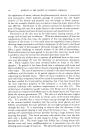
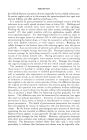
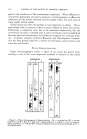
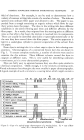
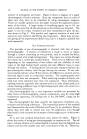
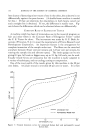
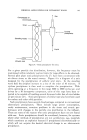
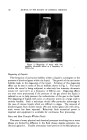
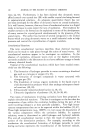
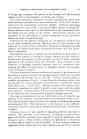
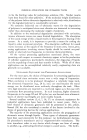
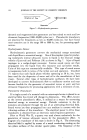
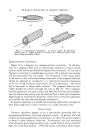
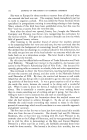
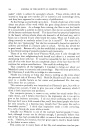
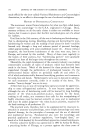
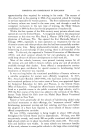
152 JOURNAL OF THE SOCIETY OF COSMETIC CHEMISTS Direction of flow Resonator Figure 7.--Hydrodynamic generator. dynamic and magnetostrictive generators are best suited to sonic and low ultrasonic frequencies (5000-50,000 cycles/sec.). Piezoelectric transducers are practical for frequencies as low as 10,000 cycles/sec. but have found most extensive use in the range 100 to 1000 kc./sec. for processing appli- cations. Hydrodynamic Devices Hydrodynamic generators convert the mechanical energy associated with liquid flow to acoustical energy. One of the simplest types for produc- ing moderately intense ultrasonic waves in liquid is the resonant wedge whistle of Janovski and Pohlman (18) as shown in Fig. 7. A jet of liquid impinges in a wedge-shaped resonator. Intense sound waves are then propagated into the liquid from this resonator and cavitation results. Units of this type are commercially available. This type of sound source is inexpensive both in terms of the initial cost and operation. Crawford (7) reports that such liquid phase whistles operating at 30 kc./sec. have been used for the dispersion of water and oil in the manufacture of hair cream. Several other types of hydrodynamic oscillators (4) have been developed to convert hydrodynamic flow to oscillatory motion and may become feasible for the generator of acoustical waves at sonic and low ultrasonic frequencies for processing applications with a minimum of cost. Piezoelectric Transducers If a single crystal of a material with an anisotropic lattice is placed in an electrical field, the crystal will change its dimensions. This effect, known as the inverse piezoelectric effect, is utilized as a means for converting electrical energy to acoustical energy. Periodic variations in the di- mensions are produced through the use of an alternating electrical field. Sound waves are then propagated into any medium in contact with the vibrating surfaces of the transducer. The electrical power to drive these transducers is obtained from an electronic radio-frequency generator. Prior to World War II, a-quartz was used almost exclusively for the generation of intense ultrasonic waves by the piezoelectric effect. A diagram of a transducer of this type is shown in Fig. 8. The alternating electrical field is applied by means of a metal conducting coating on the two plane surfaces of the circular quartz plate. The frequency of the

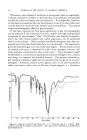
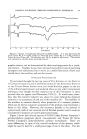
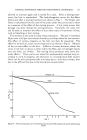
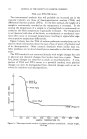
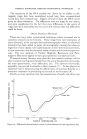
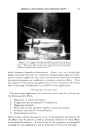
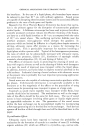
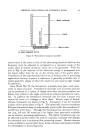
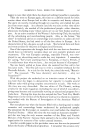
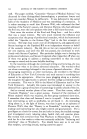
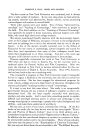
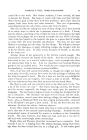
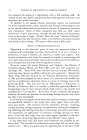
CHEMICAL APPLICATIONS FOR ULTRASONIC WAVES 153 , __l To radio frequency source Figure 8.--Piezoelectric transducer assembly. Metal contoiner Liquid Quartz plate sound waves is the same as that of the alternating electrical field but the frequency must be adjusted to correspond to a resonance mode of the quartz plate if intense ultrasonic waves are to be generated. With the unit in Fig. 8, the majority of the ultrasonic energy is propagated into the liquid rather than the air on the reverse side of the quartz plate. Transducers of the type described above are of limited value in processing applications because a-quartz is expensive, is generally available only in simple geometric shapes of relatively small size and requires high voltage for operation. Since World War II, the ferroelectric materials have been used exten- sively in place of quartz. Ferroelectric materials such as barium titanate can be produced in a variety of shapes since they are polycrystalline yet behave very similar to the single crystal of an ordinary piezoelectric mate- rial. In addition the ferroelectric materials cost less than a-quartz and require far lower a.-c. voltages to drive them. Several types of barium titanate transducers are shown in Fig. 9. Transducer A can be mounted in place of the quartz plate in Fig. 8. The spherically concave transducer B focuses the sound energy to substantially a point while the transducers C and D have a line focus. Through this focusing action, ultrasonic intensi- ties (e.g., 10 2 and 10 a watts/cm. •') far higher than previously available can be used for processing applications. The hollow cylindrical type can be obtained mounted within the wall of a stainless steel pipe with flanges for connection into a continuous flow processing system. Barium titanate is also available in several other forms within stainless steel jackets suitable for submergence in processing tanks.
Purchased for the exclusive use of nofirst nolast (unknown)
From: SCC Media Library & Resource Center (library.scconline.org)