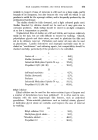
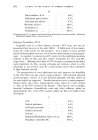
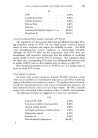
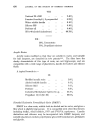
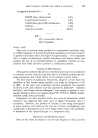
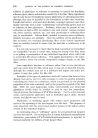
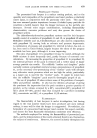
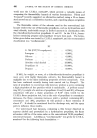
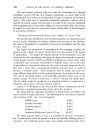
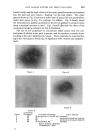
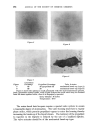
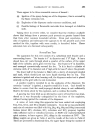
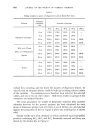
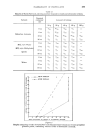
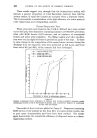
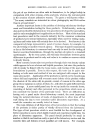
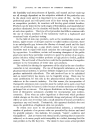
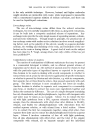
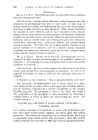
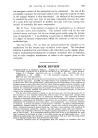
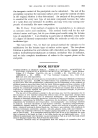
482 JOURNAL OF THE SOCIETY OF COSMETIC CHEMISTS The water-based products offer not only the advantage of a cheaper propellant system but also of a cheaper concentrate, as about half of the ethyl alcohol used in the conventional hair lacquer is replaced by de-ionised water. The extra cost of internally lacquered containers, special valves, and the increased capital cost incurred as a result of the need for additional safety equipment for hydrocarbon filling, do not materially offset the saving. It might be noted that the somewhat slower drying time of these lacquers is not always preferred. PROPELLANT/CONCENTRATE RATIO AND CHOICE OF VALVE TYPE The particle size distribution, and the spray pattern, are dependent upon several factors including the surface tension and viscosity of the product, the ratio of propellant to concentrate, the type of propellant, and the type of valve used. The higher the proportion of propeRant in the emerging product, the greater is the volume of vapour formed and thus the greater is the degree of atomization. The higher the vapour pressure of the propellant used, the more rapid is the vaporization, and again the degree of atomization is greater. A hair lacquer based on 70/30 or a 65/35 propellant/concentrate ratio, using a standard valve actuator, will produce a suitable spray, but as the ratio of propellant to concentrate decreases, the spray becomes progressively jet- like and a valve with a mechanical break-up actuator must be used to produce a suitable spray. These actuators vary in design and some are more efficient than others, but the general principle of operation is the same. The exit of the liquid stream is mechanically impeded so that some of the kinetic energy of forward movement is used to disrupt the liquid mass. The jet which would be produced by a standard actuator is replaced by a relatively coarse spray of lesser forward velocity. Figures 1--6 demonstrate the effect of the various combinations of pro- pellant type, propellant/concentrate ratio, and valve actuator. The spray pattern apparatus described by Gunn-Smith and Platt a• was used to record the spray patterns. The following basic concentrate, coloured with Gentian violet, was used throughout. DMHF resin ........ 6.25% Lanolin derivative ...... 0.45%o Propylene glycol ........ 0.45 ø/o Perfume .......... 0.75% Industhai Methylated Spirits 74 o.p. .. 92.10•o The spray pattern shown in Fig. I is suitable for all types of product, but is particularly useful for products where considerable holding power is required. The relatively narrow spray cone enables individual curls to be

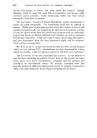
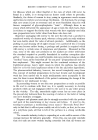
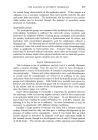
HAIR LACQUER SYSTEMS AND THEIR EVALUATION 483 treated easily, and the high velocity of the spray particles ensures penetration into the hair and also reduces "beading" on the hair shafts. The spray pattern shown in Fig. 2 indicates a softer type of spray with less penetration, whilst that shown in Fig. $ is, perhaps, too diffuse. Fig. •t clearly shows the unsatisfactory pattern produced by the low propellant to product ratio, when a standard actuator is used. Figs. 5 and 6 illustrate the effect of the mechanical break-up actuator on this formulation. The use of low propellant to concentrate ratios means that the con- centration of alcohol in the pack is greater, and the tendency towards stress- cracking of the valve diptube is increased. There could also be come harden- ing of the valve gasket, which may be significant with "mother and daughter" packs. Figure 1 2 3 4 Figure 1 Figure Figure Figure Concentrate Percentage 35 35 65 -propellant _Percentage Valve .4 ctuator 65 (propenant 1 l/IV. (50: 50) ) standard 65 .... mechanical break-up (type A) 65 ,, mechanical break-up (type B) 35 (prd•ellant 12) standard Spray distance: 8 inches Temperature: 70øF.
Purchased for the exclusive use of nofirst nolast (unknown)
From: SCC Media Library & Resource Center (library.scconline.org)