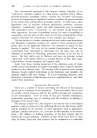
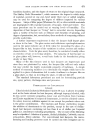
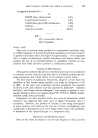
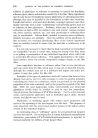
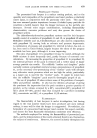
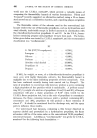
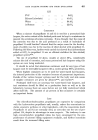
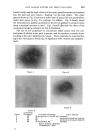
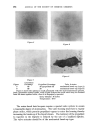
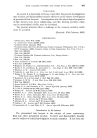
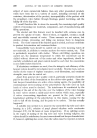
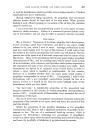
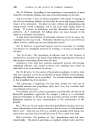
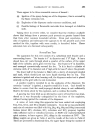
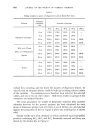
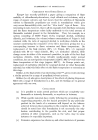
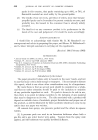
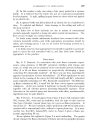
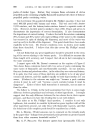
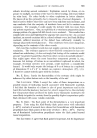
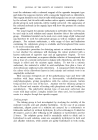
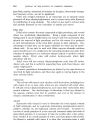
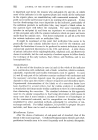
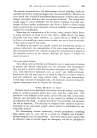
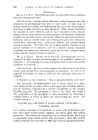
484 JOURNAL OF THE SOCIETY OF COSMETIC CHEMISTS Figure Figure ......... • ............. Figure 8 Figure • Concentrate Figure Percentage Propellant Percentage Valve Actuator 5 65 35 (propellant 12) mechanical break-up (type A) 6 65 35 mechanical break-up (type B) Figure • shows the optimum result obtainable with the same formulation sprayed, from a polythene squeeze bottle, while Figure 8 shows the result which may be obtained from the same squeeze bottle, when it is improperly operated. Spray distance: 8 inches Temperature: 70øF. The water-based hair lacquers require a special valve system to ensure a reasonable degree of atomization. The valve housing must have a vapour phase orifice, which permits propellant vapour to enter the housing thereby increash•g the break-up of the liquid stream. The tendency of the propellant to vaporize in the diptube is reduced by the use of a capillary diptube. The valve actuator should be of the mechanical break-up type.

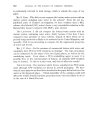
HAIR LACQUER SYSTEMS AND THEIR EVALUATION 485 CONCLUSION At present it is impossible to foresee what effect the present investigations into toxicity and flammability hazards will have on the future development of pressurized hair lacquers. Investigations into the physiological properties of film formers may prove enlightening, and film forming products which can be metabolized readily may be developed. The present situation offers a challenge to the cosmetic industry which must be accepted. (Received: 27th February 1963) REFERENCES Shirley Inst. Mere. 9 81 (1930) J. Textile Inst. Trans. 21 380 (1930) Schimmel Briefs (January 1961) Technical Data Sheet CSL-66 (Hercules Powder Company, Wilmington, Del., U.S.A.) _PV_P Formulary (1960) (General Aniline & Film Corporation, New York, U.S.A.) Brit. Pat. 828,970 Brit. Pat. 856,403 Technical Bulletin 184 (National Adhesives, Ltd., Slough Bucks.) Brit. Pat. 796,318 Brit. Pat. 796,319 Soap, Perfumery & Cosmetics 30 1267 (1957) U.S. Pat. 2,948,656 Bergman, M., Flance, I. J., and Blumenthal, I-t.T. New Engl. J. g/led. 258 471 (1958) Rosen, S. I-t., Castleman, 13., and Lubow, A. New Engl. J. g/led. 258 1123 (1958) Edelston, G.H. Lancet 2 112 (1959) Calandra, J., and Kay, J.A. Proc. Sci. Sect. Toilet Goods Assoc. 30 41.44 (1958) Draize, J. I-t., Nelson, N. A., Newburger, S. I-t., and Kelley, E.A. Proc. Sci. Sect. Toilet Goods Assoc. 31 28 (1959) Bergmann, M. et al New oengl. J. Med. 266 750 (1962) Schepers, G. W. H. ,f. Am. Med. Assoc. 181 635 (1962) Brit. Pat. 868,879 Aerosol Guide 11 (C.S.M.A., New York, U.S.A.) Felton, R. A., and Yeomans, A.H. Aerosol Age 8 18 (January 1963) C.S.M.A. Bulletin 84-62 (16th April 1962) Kempe, W. Aerosol Age 8 28 (January 1963) Sanders, P.A. Chem. Specialties Mfrs. Assoc. Proc. 66 (May 1960) Bower, F.A. Chem. Specialties Mfrs. Assoc. Proc. 57 (May 1961) Bower, F.A. Chem. Specialties Mfrs. Assoc. Proc. 49 (May 1962) Johnsen, M.A. Aerosol Age 7 29 (July 1962) Johnsen, M.A. Aerosol Age 7 39 (August 1962) Garton, L.M. Aerosol Age 7 108 (October 1962) Gunn-Smith, R. A., and Platt, N.E. Aerosol Age 6 33 (February 1961) Introduction by the lecturer The pressurized hair lacquer is the subject of more controversy than any other pressurized product. Toxicity and flammability hazards are the subject of critical investigation in many countries. It has been the
Purchased for the exclusive use of nofirst nolast (unknown)
From: SCC Media Library & Resource Center (library.scconline.org)