490 JOURNAL OF THE SOCIETY OF COSMETIC CHEMISTS sucrose octa-acetate or Bitrex, but what about the second ? Diethyl phthalate tends to make the resin film over-plasticise and greasy, while Cetrimide causes corrosion. Other denaturants suffer also from serious drawbacks of one kind or another. THE LECTURER: Customs & Excise Regulations require denaturants to render the spirit nonpotable. The denaturants must also be difficult to remove. Whilst general principles are laid down, the Customs & Excise will consider sympathetically any suggestions for alternative denaturant systems, if it can be clearly shown that the normal ones recommended are unsuitable. I agree that the use of diethyl phthalate and Cetrimide are open to objection for this type of product. A fair case could be made out for using alternatives, and two denaturants from the class mentioned might well be accepted. These matters are negotiable. MR. R. E. E½•rTo•: It has been stated recently that 60% of hair lacquers which do not contain 0.3% nitromethane develop objectionable odours within two months. Could you please comment on this from your experience ? TH• L•½TURER: In my own experience this is not so. A vast number of hair lacquers containing propellant 11 have been on the market for many years, and I have never encountered a complaint that the perfume had developed an objectionable odour. We recently examined some hair lacquers packed in 1956 and subsequently stored at ambient temperature. These were still satisfactory in all respects, including the perfumes.

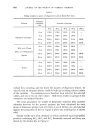
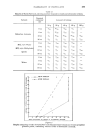
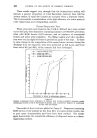
FLAMMABILITY OF PROPELLANTS 491 FLAMMABILITY OF PROPELLANTS K. DIXON, B.Sc*. Presented at the Symposium on "Aerosols", organised by the Society, at Southport, Lancs., on 25th April 1963. Possible tyl•es of accidents with aerosols in the user's hanfls are consiflerefl. A metho½l for assessing the fire risk associateel with a bursting disl•enser is •lescribe•l. Results obtaineel •rom this metho½l and •rom flame extension tests are comlmre•l with some l•ublishe•l figures. It is shown that any fire hazard is associateel with the comlflete •lisl•enser rather than with any l•ar•icular ingre½lient. THE AEROSOL industry is continually searching for a method of reducing the cost of its products, and it is well known that the use of flammable propel- lants in place of the conventional chlorofluorohydrocarbor•s would help in this direction--if it could be done safely. Practices differ from country to country. For example butane propelled aerosols, giving an extensive flame when ignited, are common in France, and in Germany we believe opinions to be divided, with some interest in the use of vinyl chloride. Since the end of 1961, a leading marketer in the U.S.A. has apparently made a success of products depending on a butane/water emulsion as propellant and in doing so has precipitated a maj or controversy with regard to their safety. In this country we are trying to decide, on the evidence available, what are the risks in usir•g a flarnmable propellant per se. In this paper the evidence is reviewed and the possible hazards in the user's hands have been considered. Possible hazards existing in the manufacture and bulk storage and transport also require careful cor•sidera- tion, but are beyond the scope of this paper. As little information on accidents appeared to be available, a review has been made of relevant incidents covering 12 years' experience, and the sale of over 70,000,000 aerosols. As a result of this review, a method of testing the fire hazard associated with a bursting dispenser was developed and this is described below. The results obtained are compared with those obtained by some of the standard C.S.M.A. methods, and with some published results from the literature. It is concluded that the most likely hazard in which fire may be involved is explosion of a dispenser due to mis-use, and that the intrinsic fire risk associated with a dispenser is rnore properly related to the *The Cooper Technical Bureau, Berkhamsted, Herts.
Purchased for the exclusive use of nofirst nolast (unknown)
From: SCC Media Library & Resource Center (library.scconline.org)