492 JOURNAL OF THE SOCIETY OF COSMETIC CHEMISTS total amount of flammable material contained in it than to the specific nature of the flammable material concerned. REVIEW OF fi•CCIDENTS During the period under review (1950--1962) our Company has sold over 70,000,000 aerosols, the majority direct to the consumer market, with others on a contract filling basis. This has given us some sight into consumer reaction, not only towards our own products but also towards a wide range of other types. The bulk of them have been distributed within the United Kingdom, but a proportion have been exported to many parts of the world, including most climatic and cultural conditions. In response to a question- naire sent out, covering accidents involving fire or explosion, we obtained reports of four relevant incidents, which were as follows: (a) A 20 oz insecticide pressure pack was placed in the steam from a boiling kettle, and exploded. There were, fortunately, no injuries nor fire. (b) A 6 oz insecticide pressure pack was placed on a domestic boiler. The ends inverted. There was neither fire nor explosion. (c) A 6 oz insecticide pack was exposed to strong sunlight in a shop window, and exploded. There was no fire. (d) A 12 oz insecticide left in strong sunlight in the back of a car failed at the sideseam. There was no fire. In addition to these specific reports, we have information from a few tropical or semi-tropical countries, of explosions occurring due to exposure either to sunlight or to other forms of heat. We have not been able to obtain any reports of accidents involving fire where the contents of an aerosol were the first material ignited, nor of any where, in the hands of a consumer, an aerosol has contributed effectively to a fire. During most of the period under review we have been selling, as a sig- nificant proportion of the total, a product containing over 50% w/w of flammable material, and giving a flame extension by the C.S.M.A. method of about 20". Products with similar fire characteristics have been widely marketed in this country for the last eight or ten years, and to the best of our knowledge no accidents involving fire have occurred. We can only conclude that these products, which bear legends such as "Do not spray near a naked flame or while smoking" are safe in a consumer's hands. The fact that few accidents have occurred in the hands of users would suggest that aerosol products are reasonably safe, and we are left with the two questions "Are those propelled by a butane-water emulsion any less safe?", and "In what way, if any, are they less safe?".

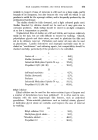
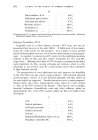
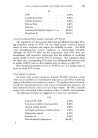
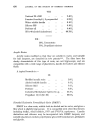
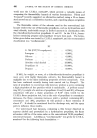
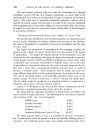
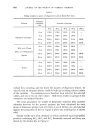
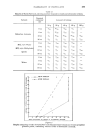
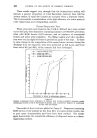
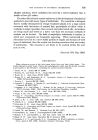
FLAMMABILITY OF PROPELLANTS 493 There appear to be three reasonable sources of hazard: (a) Ignition of the spray during use of the dispenser this is covered by the flame extension test. (b) Explosion of the dispenser under extreme conditions, and (c) Possible leakage of flammable materials from damaged or defective units. Taking these in reverse order, we consider that the evidence available shows that leakage from a pressure pack presents no greater hazard than that from other common household articles. From past experience, the risk of explosion and subsequent fire appears to be the greatest and a test method for this, together with some results, is described below. Flame extension tests are discussed subsequently. BURS•'/FiRE TEST The apparatus for this test consists of a cylindrical steel brazier and a surrounding frame. The brazier is 1 • in diameter and 1 • 3 '• high. It hasa closed base, air vents through about a quarter of the surface of the upper half of the cylinder, and a grid over the top. The frame is 6' in diameter, and arranged symmetrically around the fire. To it is fixed a cylinder of cretonne cloth, 6 • in diameter and 4 • high,with its base 2 • above the ground. The lower half of the brazier is filled with a slurry of isopropyl alcohol and sand, which should just not have liquid showing free on top. This mixture is ignited and when burning well, the dispenser under test is placed centrally on the grid with its axis horizontal. A positive result is recorded if, on the explosion of the dispenser, the cretonne "curtain" is ignited, a negative result if it is not. Care should be taken to ensure that the sand/isopropyl alcohol slurry is not sufficiently fluid to be blown about by the explosion, and so confuse the results. A gas-ring has been tried as an alternative source of heat but was aban- doned as it was frequently extinguished by the force of the explosion, without having ignited the contents of the dispenser. A series of tests using this apparatus has been carried out employing 6 oz, 8 oz, 12 oz, and 16 oz tinplate containers. In so far as was practicable each size of container was filled with 10 g, 20 g, 40 g, 80 g and 160 g commercial butane (about 55% nbutane, 35% isobutane and 10% propane) together with sufficient water or odourless kerosene, or 50/50 w/w water/methylated spirit mixture, to leave approx. 20% ullage in the container at 70øF. The filling weights are given in Table 1, and the results of the tests in Table 2. These are presented in fractional form, the upper figure being the number of
Purchased for the exclusive use of nofirst nolast (unknown)
From: SCC Media Library & Resource Center (library.scconline.org)