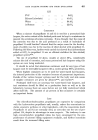
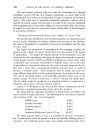
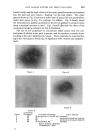
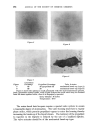
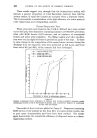
496 JOURNAL OF THE SOCIETY OF COSMETIC CHEMISTS These results suggest very strongly that the butane/water system will tolerate a greater proportion of total flammable material than will the Arcton system, if equal fire hazards are accepted when a dispenser bursts. This is presumably a manifestation of the high efficiency of a water spray as a fire suppressing, and extinguishing, medium. FLAME PROJECTION TEST Flame projection tests based on the C.S.M.A. Method • have been carried out on the spray from dispensers containing mixtures of 100/120øC petroleum ether with 50/50 Arcton 11/12 mixture, and on mixtures of commercial butane and water with emulsifiers. The filling weights and valve specifica- tion were such as might be found on production packs of this type. As there is some change in the composition of the water/butane mixture during the discharge from the dispenser, tests were performed on full packs, and those from which 50%and 90% of the contents had been discharged. Figure oe Graphs comparing flame extension of butane and Arcton-propelled pressure packs containing various levels of flammable material, and at different degrees of emptiness in the case of butane. The results of these tests are plotted in Figure 7. Dispensers containing 50/50 Arcton 11/12 mixture at less than 40% w/w gave erratic results, due to poor spray characteristics and these have been omitted. The results again demonstrate the remarkable efficiency of dispersed water as a flame- suppressing medium.

FLAMMABILITY OF PROPELLANTS 497 COMPARISON WITH OTHER l•ESULTS Kempe • has recently published a paper giving a comparison of flam- mability of chlorofluorohydrocarbons, vinyl chloride and isobutane, with a range of organic solvents and had shown that the addition of flammable solvent to flammable propellants can result in iormulations which give very severe flammabihty risks, and the "blow torch" type of flame. It is interesting to note, however, that in all his examples both the flame extension and the flame temperature relate fairly uniformly to the total amount of flammable material present in the formulation. Thus, for example, in a system consisting of 50/50 Frigen 11/12, isopropyl alcohol, methylene chloride, and isobutane, the volume/volume concentration of Frigen is held constant while the ratio of isopropyl alcohol to methylene chloride in the mixture constituting the remainder of the fill is increased, giving rise to a corresponding increase in flame extension and flame temperature. On replacement of the final mixture (50% v/v Frigen, 50% v/v isopropyl alcohol) with 50 v/v vinyl chloride, 50% v/v methylene chloride, little change occurs in either of the measured quantities, in spite of the fact that methylene chloride, while being virtually nonflammable under normal conditions, has an auto-ignition temperature (1224øF, 662øC) a well below the flame temperature at this stage (approx. 850øC). As Kempe points out, replacement of methylene chloride by isopropyl alcohol (or other flammable material) has relatively little effect on the flame temperature or extension at this stage. Kiibler, in the final article of an interesting series 4'*'6, gives results showing a similar pattern for a range of propellant/solvent systems. Kiibler (loc cit) also gives descriptions of the effects of placing dispensers filled with a range of formulations in a fire, and his findings are in general agreement with our own. (a) (b) CONCLUSIONS It is possible to make aerosol products which are completely non- flammable or intensely flammable, or anywhere in between. While specific materials have widely differing fire promoting or fire suppressing properties, the fire hazard presented by any particular product in the hands of a consumer will depend on the balance achieved between these properties in the complete formulation. It should be noted here that formulation is not necessarily the only feature contributing to the possible fire risk, and that proper selection of other components, such as the valve, may in some instances be especially important. (c) Extensive experience has shown us, and other marketers of pressure
Purchased for the exclusive use of nofirst nolast (unknown)
From: SCC Media Library & Resource Center (library.scconline.org)