498 JOURNAL OF THE SOCIETY OF COSMETIC CHEMISTS (d) (e) packs in this country, that packs containing up to 60% or 70% of flammable material are used safely by the general public. The results of our own tests, and those of others, show that butane- propelled packs can be formulated to present certainly no more, and probably less, fire hazard to the consumer than is already widely accepted. The final test on any consumer product is its performance in the hands of the user and judgement of it should be made accordingly. ACKNOWLEDGEMENTS I should like to acknowledge with thanks Mr. R. 3/. Mumford's en- couragement and advice in preparing this paper, and Messrs. D. Hollinshead's and A. Glass' intrepid assistance in carrying out the experiments. (Received: 19th February 1963) REFERENCES Aerosol Guide 11 (1957) (C.S.M.A., New York) Kempe, W. Aerosol Age 8 28 (January 1963) Sax N. I. Dangerous Properties of Industrial Materials 893 (1957) (Reinhold Publishing Corporation, New York) Kfibler, H. Aerosol Age 7 33 (May 1962) Kfibler, H. Aerosol •lge 7 34 (August 1962) Kfibler, H. Aerosol •lge 7 92 (October 1962) Introduction by the lecturer The paper presented relates only to hazards in the users' hands, and not to any that may exist in bulk storage or transport. I do not intend to discuss this aspect, which is one where other considerations may be of importance. My main thesis is that an aerosol pack should be considered as a whole, and that no undue attention should be paid to the inclusion or omission of any particular ingredient as such. If a pack is shown to be safe in use, then there is no point in taking exception to the inclusion of any material that may be dangerous on its own. The risk associated with a product will depend on suitable choice of materials, proper formulation and proper use of the product, as will be illustrated by three accidents which have come to my notice since my paper was written. All concern hair sprays, one pressure packed and the others in squeeze bottles. (1) A pressure pack was used in an American bathroom where both a gas fire and a gas water heater were going. Vapours from the spray were ignited, and the bathroom was quickly involved in flames.

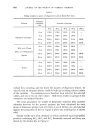
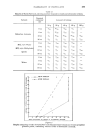
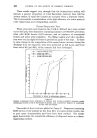
FLAMMABILITY OF PROPELLANTS 499 (2) In this country a lady was using a hair spray packed in a squeeze bottle. It is believed that the bottle was not of a material recommended for this purpose. It split, spilling lacquer down her dress which was ignited by an electric fire. (3) A squeeze bottle was left in front of an electric fire in a hairdresser's shop. It exploded and flashed. Some damage to the ceiling and walls of the shop occurred. The latter two of these incidents are due to misuse of conventional products generally regarded as being safe under normal circumstances. The first savours strongly of a similar history. No doubt many similar unfortunate incidents have occurred with other common household articles, and while appropriate precautions should be taken, and warnings given, I can see no reason for treating aerosols as a special case per se. I do think, however, that appropriate tests should be applied to a pressure pack to assess the risk associated with it, and that these tests should be appropriate to the product. DISCUSSION MR. G. F. PHILLIPS: In connection with your flame extension experi- ments, using mixtures of 100/120 ø petroleum distillate with butane and water, (1) would you care to comment on the remarkable increase in flamma- bility (0 to 50 cm flame extension) on progressively discharging a spray containing 70% flammable material? (2) Have you any data regarding the apparent fractionation of these formulations? (3) What significance do you attach to the crossing of the curves for full, half empty and 90% exhausted packs originally containing over 70% flammable components,? The difference in flame extension at 80% is small but the three curves appear reasonably contiguous. (4) Do you consider it legitimate to classify hydrocarbon gases together with all solvents present possessing flammable yapours? Their behaviour in the emitted spray and interaction with other, non-flammable, ingredients may be quite distinct. MR. P. DYSON: It would appear from Figure 2 that a full container with 70% butane, 30% water and an emulsifier, with the type of valve used on this type of product (vapour phase tap, etc.) gave no flame projection. Is this in fact so? We have obtained a flame projection of 35-45 cm with such a mixture with a conventional valve, without a vapour phase tap. It is note- worthy too, that 80% butane/20% water in Figure 2 gives a flame pro- jection approaching 55 cm. In my opinion the caption to Figure 2 is most misleading. The graphs do not compare the flame extensions of butane and Arcton-propelled pressure
Purchased for the exclusive use of nofirst nolast (unknown)
From: SCC Media Library & Resource Center (library.scconline.org)