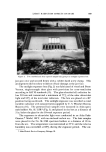
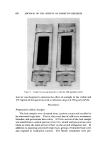
600 JOURNAL OF THE SOCIETY OF COSMETIC CHEMISTS prepared by adding the fillers and pigments to the oils and waxes dis- persed in water, drying the formed mixture, pulverizing the product, and compressing it into a cake form. Therefore, it appears that pressed cakes can be prepared from almost any good face powder provided a suitable binding agent is employed and a suitable compact press is utilized. CONSTITUENTS In general terms, a pressed powder may be considered simply as a face powder in a different physical form and, therefore, it is not sur- prising to find that the constituents found in both are similar. Some raw materials have good compression qualities, while others do not and cause swelling or crumbling after being pressed. Therefore, a proper balance of hard-to-compress and easy-to-compress raw materials and bind- ing agents must be utilized in preparing a suitable formulation. In prac- tice, the following raw materials should be considered: Fillers Talc is the most important single component found in pressed powders. It gives some coverage and exhibits slip, spreadability, and smoothness to the finished cake. Talcs vary in color, transparency, slip, shine, density, particle size, smoothness, and compressibility. Many pressed powder formulations contain more than one kind of talc in order to achieve the most desirable effects needed for the intended product use. Other ingredients used as fillers are kaolin, stearates, and carbonates. Kaolin imparts softness on application, has excellent adherent and ab- sorbent properties, and assists in wetting and binding. Zinc and mag- nesium stearates are water repellent, they promote skin adherence and film formation, and they aid in producing a firm cake. Calcium and •nagnesium carbonates increase bulk, have good covering power and water absorbency, and aid in compressibility. Binding Agents These chemicals consist of different grades of mineral oils, fatty esters, lanolin and derivatives, cellulose gums, natural gums such as tragacanth or Karaya, emulsifying agents such as sodium and triethanol- amine stearate, nonionics, and emulsions containing any and all of the aforementioned ingredients. Water and ethyl alcohol have been found successful as binding agents for difficult-to-press materials. Again, the

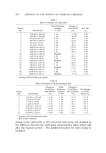
PRESSED POWDER TECHNOLOGY 601 amount of binder and type vary with the particular formulation. Since binding is so important in producing a quality finished pressed product, much care must be used in selecting the proper binding agent and the correct amount to be used. Problems such as glazing (too hard a cake), crumbling or laminating (too soft a cake), cake tone, and the amount of color development on the skin may be attributed to improper binder or binder amounts. Perfumes When required, a perfume should be neutral in fragrance, compatible with other materials in the formulation, and nonirritating. Most pressed eye products do not contain perfume. Different shades of pressed powders are generally obtained from two types of colors: (a) certified organic lakes and toners which cannot be used in the area of the eyes, and (b) noncertified inorganic pigments. Certified organic lakes and toners are available in many bright shades and are used in face powder for their brilliance of color. Lakes have had the serious drawback that they are more easily oxidized, are not completely light-fast, and occasionally are subject to bleeding. Some of the most important organic lakes used in pressed powder are D&G Red No. 7 Calcium Lake, Dg:C Red No. 9 Barium Lake, Dg:C Red No. 10 Sodium Lake, DEC Red No. 37 Stearate& and DEC Yellow No. 5 Aluminum Lake. A natural organic product that may be used around the eye area is a bright blue-red powder called carmine. There are many colors available among the inorganic pigments which are stable, light-fast, and nonbleeders. Aluminum powder, titanium dioxide and zinc oxide, carbon black and iron oxide black, yellow, red and brown iron oxides, ultramarine blue and violet, iron blue, manganese vio- let, anhydrous (Cr2Oa) and hydrated [Cr(OHa)] chrome green oxide are among the most popular shades used in this class. Finally, one cannot discuss pigments without discussing the pearles- cent varieties needed to produce frosted shades of pressed powder. Mica, titanium-coated mica, bismuth oxychloride, bismuth oxychloride-coated talc, bismuth oxychloride laminated on mica, and pearl flakes (CaCOa) are the most popular frosting materials used today. Natural pearl or guanine flakes are too costly and rarely used. Aluminum powder may also be used as a pearlescent material, but tends to produce dull, gray shades if not used properly. The coated and laminated mica materials
Purchased for the exclusive use of nofirst nolast (unknown)
From: SCC Media Library & Resource Center (library.scconline.org)