626 JOURNAL OF THE SOCIETY OF COSMETIC CHEMISTS from the surface, and then returns to the surface for release into the surrounding medium. All the studies cited deal with the use of a skin membrane either in vitro or in vivo. Recently, solvents have been used to act as receptor phases to simulate the skin. Chloroform (54, 62) and isopropyl myristate (62, 69) have served as "sinks." Since they are immiscible with the alcohol-water it is not necessary to introduce an artificial membrane to separate them from the vehicles. Poulsen and coworkers (69) measured the release of fluocinolone acetonide and its acetate ester into an isopropyl myristate phase. The vehicles used were mixtures of propylene glycol and water gelled with Carbopol 934 and diisopropanolamine. The studies showed that optimal release was obtained from vehicles containing the minimum concentra- tion of propylene glycol required for complete solubilization of the corticosteroid. The poorest release rates were obtained with very high concentrations of propylene glycol. The results indicated that the im- portant factors influencing the release into the receptor phase were the solubility in the vehicle and the partition coefficient of the steroid be- tween the vehicle and the receptor phase. The findings appear to indi- cate that each compound requires individual formulation based on its solubility characteristics and the formulation may also need modification for different concentrations of the agent to obtain maximal release rates. Busse et al. (62) used both chloroform and isopropyl myristate (IPM) as separate receptor phases in studies of betamethasone valerate in oint- ment bases. The rate of release of the steroid into the chloroform phase from a paraffin ointment was about 4.5 times that from a similar ointment containing 10% hydrogenated lanolin. Conversely, in the IPM system, the reverse occurred. The in vitro results suggest the IPM system more adequately represents the skin. "A cceleran t" Solyen ts In the past ten years attention has focused on methods of increasing the rate of absorption of topically applied drugs. So far, the one method that has come into everyday use is the application of topical corticosteroids under thin plastic film (46, 47, 89, 90). This method of treatment now has widespread application in the treatment of recalcitrant psoriasis. The other method is to add materials which can combine with, or dissolve in the structures of, substances which make up the barrier. These agents have come to be known as "accelerants." To increase permeability the

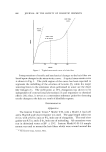
SKIN PENETRATION 627 accelerant causes the keratin to swell and leaches out essential structural material from the stratum comeurn, thus reducing the diffusional re- sistance and increasing the permeability (31, 58, 91-93). Varied agents have been reported to have accelerant action, particularly propylene glycol, surface active agents, and aprotic materials such as urea, DMSO, DMF, and DMA. The evidence for the effect of propylene glycol in skin penetration is conflicting (56, 62, 69, 77, 88, 94-100). In combination with surface active agents, propylene glycol was claimed by MacKee and coworkers (94) to promote the penetration of water-soluble substances via the transfollicular route. A concentration of 1% 5-fluorouracil in propylene glycol has been found to be as effective clinically in certain skin car- cinomas, as opposed to a minimum concentration of 5% in an ointment (100). Enhanced effects were noted in absorption of varied steroids (56, 62, 77, 96, 98, 99). The most effective of the "accelerants" are DMSO, DMF, and DMA. On application to the skin, DMSO passes rapidly through the stratum corneum (52, 101-104) and can aid in the penetration of a wide range of substances. The role of DMSO in enhancing percutaneous migration is well documented (13, 91, 101, 105-110). DMF and DMA enhance cutaneous penetration to a lesser degree than DMSO. Work with these solvents is contributing greater understanding of the chemical nature of the skin barrier in relation to a specified penetrant and the transport mechanisms of various compounds across skin. The mechanism of action of these penerrant accelerants needs greater definition. DMSO, DMF, and DMA are all strongly hygroscopic and it is likely that the presence of these substances in the stratum comeurn in- creases the hydration of the tissue and therefore its permeability. There are possible reversible configuration changes in skin protein structure brought about by substitution of integral water molecules by DMSO (111), with resultant swelling. This may explain, in part, the sometimes observed variable role of DMSO. Swelling may induce the formation of channels within the matrix of the stratum comeurn which either favor the passage of varied compounds (59) or lower the diffusional resistance of the stratum comeurn. DMSO can extract soluble components from the stratum comeurn, suggesting ultrastructural modifications consistent with an increase in permeability. DMSO exhibits an unusual concentra- tion dependence (15, 52, 58, 59, 112). At least 60% DMSO is required for a measurable penetration rate. The rate rises to a maximum at
Purchased for the exclusive use of nofirst nolast (unknown)
From: SCC Media Library & Resource Center (library.scconline.org)