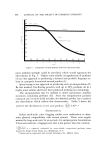
628 JOURNAL OF THE SOCIETY OF COSMETIC CHEMISTS about $ hours and then declines, and this is true for both the pure liquid and for DMSO-water mixtures containing 70% DMSO. The con- tinued increase in the penetration rate of pure DMSO with increase in the applied quantity is probably a consequence of progressive barrier impairment. The decline in the peak rate after 3 hours is probably due to the back-diffusion of water with consequent dilution of the DMSO (52). Surface active agents appear to play a major role in promoting trans- appendageal absorption. The influence, particularly of anionic type ma- terials, seems related to their ability to increase the permeability of the skin to water by altering the physical state of water in the skin in such a way as to permit greater freedom to the passage of charged hydrophylic substances (73). The irritant action of anionic materials, such as, e.g., "soap" or sodium lauryl sulfate, suggests that they must penetrate to susceptible tissue. The role of surfactants in percutaneous absorption has been reviewed by Barr (8d), Sprott (75), Ritschel (107), Scala et al. (113), and Minato et al. (63). Penetration of certain antimicrobial substances appears enhanced by addition of surface active agents. Washing with sodium dodecyl sulfate enhanced the amount of hexachlorophene and tetrachlorosalicylanilide which penetrated rat skin (73). However, the bulk of evidence indicates that the stratum corneum is an effective barrier (12, 14, 59, 112-116). When penetration occurs, anionics penetrate best (12, 14, 113, 115-117), followed by cationics and nonionic surfactants (118, 119). Among anionic substances the laurate ion is reported to have the greater penetration and the most effect on the penetration of other solutes (117, 120). Soaps of different fatty acids have this property in varying degrees (117, 119), with penetration more significant for salts of fatty acids with chain length of 10 carbon chains or less (14, 73, 115). The penetration of fatty acid soaps varies inversely with pH (14, 73, 115). At higher pH (ca. 11), the action of the anionic surfactant appears to be attenuated or overshadowed by the influence of the more alkaline pH itself. Interpretation of surfac- rant action upon the skin must deal separately with these two phenomena, i.e., pH on the one hand and surfactant effect on the other. Possible mechanisms whereby the skin is able to restrict the percutaneous migra- tion of synthetic anionic surfactants have been reviewed by Blank and gould (14). Scala and his colleagues (113) calculated permeability constants for a wide variety of materials, including surfactants. The nonlinearity of diffusion curves (permeability constants vs. time) for an anionic surfac-

SKIN PENETRATION 629 tant (sodium tetrapropylenebenzenesulfonate), a cationic (dodecyltri- methylammonium chloride), and soap probably means that the barrier to these surfactants is being altered by the surfactants themselves as they diffuse into and through the skin. Decrease in the barrier properties al- lows an increased diffusion, which in turn results in a greater alteration of the barrier. Removal of the surfactant causes the process to stop at the stage of barrier alteration to which it had progTessed. CONCLUSION While conflicting ideas and contrary evidence exist in elucidating skin barrier properties and mechanisms of skin penetration, it is becoming increasingly evident that main channels for understanding rest in well- defined studies of the physical-chemical properties of the agents and cor- relation with skin variables. Hopefully, chemical structures may be ma- nipulated to effect selective permeability. The role of vehicles or formu- lation is likely to remain of subsidiary importance. However, there is need to pursue studies to resolve much conflicting evidence and elucidate further the mechanism o1• action of vehicles which enhance penetration ot• varied materials. (Received March 8, 1971) REFERENCES (1) Malkinson, F. D., and Roth•an, S., Handbuch der Haut und Ge6chlechtskrankheiten, J. Jadasohn, Springer, Berlin, 1963. (2) Malkinson, F. D., in Montagna, W., and Lobitz, W. C. Jr., The Epidermis, Academic Prcss, New York, 1964, Chap. 21. (3) Blank, I. H., Penetration of low molecular weight alcohols into skin. I. Effect of con- centration of alcohol and type of vehicle, J. Invest. Dermatol., 43, 415 (1964). (4) fcott, A., The bchavior of radioactive mercury and zinc after application to normal and abnormal skin, Brit J. Dermatol., 71, 181 (1959). (5) Felsher, Z., and Rothman, S., Insensible perspiration of skin in hyperkeratotic condi- tions, ]. Inve6t. Derrnatol., 6, 271 (1945). (6) Elliott, J. A., Jr., and Odel, H. M., Percutaneous absorption of sodium in cases of exfoliative dermatitis, Ibid., 15, 389 (1950). (7) Malkinson, F. D., •tudies on thc percutaneous absorption of C TM labeled stcroids by use of the gas-flow cell, Ibid., 31• 19 (1958). (8) Malkinson, F. D., and Ferguson, E. H., Percutaneous absorption of hydrocortisone-4-C •* in two human subjects, Ibid., 25, 281 (1955). (9) Liddle, J. w., 9-a-Fluorohydrocortisone: A new investigative tool in adrenal physiol- ogy, ]. Clin. Endocrinol. Metab., 16• 557 (1954). (10) LoefIter, R. K., and Thomas, V., A quantitative study of percutaneous absorption. I. Absorption of radiostrontium chloride in minute quantities through intact and me- chanically damaged rat skin, U.S. Atomic Energy Comm. Rept. AD-225, Nucl. Sci. Abstr., 5, 48 (1951).
Purchased for the exclusive use of nofirst nolast (unknown)
From: SCC Media Library & Resource Center (library.scconline.org)