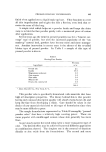
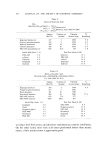
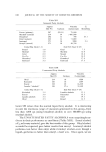
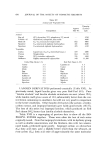
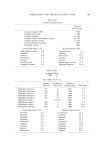
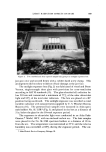
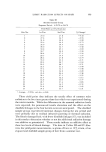
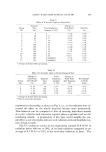
636 JOURNAL OF THE SOCIETY OF COSMETIC CHEMISTS Where it is possible to measure properties instrumentally (e.g., viscos- ity changes or hair sheen), numerical values are obtained which can be arranged into orderly tables or depicted graphically. Grouping of data allows the investigator to seek meaningful relationships, or to compare them with some external factor which may also be changing--i.e., mo- lecular structure. In the case of skin feel, no one heretofore has attempted to assign nu- merical values the situation was analagous to trying to describe odor changes verbally. Some words, such as "oily" or "dry-velvety" or "waxy," are over-used others, such as "scroopy" (the textile chemist's description of the somewhat rough, soft-draggy feel of raw silk), may be unfamiliar to most persons. In an attempt to become more precise, word modifiers are introduced to describe varying degrees of oiliness or velvetiness, etc. This often results in very complicated circumlocutions and language which mean different things to different investigators. Worst of all, such verbal descriptions cannot be ranked or summed up as can a series of nu- merical values. Various groups of compounds can be ranked in order of their in- creasing dryness, oiliness, dragginess, or tackiness on the skin. One can- not give absolute values to such properties, but it certainly can be de- cided whether one compound is oilier or more tacky than another. By systematic evaluation of many small homologous series of compounds (ranking for changes in skin fed within each such small series), it should be possible to discern trends of changes in skin fed which relate to chem- ical structure. For example, when a series of isopropyl esters are used as emollients in a particular lotion, what is the effect on skin feel of the molecular weight of the fatty alcohol portion of the ester molecule, of branching the fatty alcohol portion of the molecule, or of successively in- creasing the degree of unsaturated bonding in a particular series of Cls esters? This investigation was an attempt to answer questions of this type. EXPERIMENTAL At first, the ranking of various series of lotions, each containing the test emollient at a fixed percentage, was tried. Later, a numerical (1 to 5) rating system for each of various qualities was adopted. Each test series was limited to 4-6 samples, the number that could comfortably be applied to the inside of the tester's arm at one time. Emollients were not tested "pure," but incorporated at 7% in a basic lo- tion whose oil phase totalled 14%, which deposited an 18.9% total residue

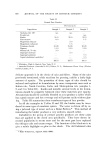
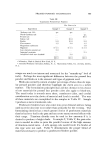
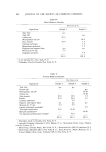
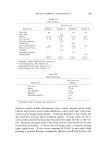
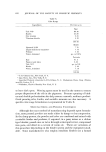
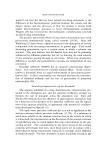
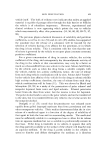
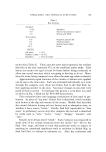
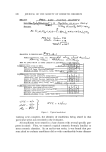
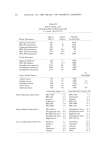
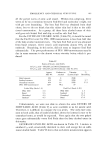
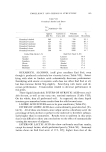
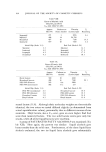
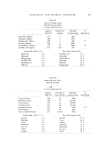
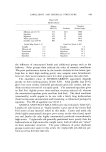
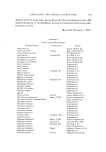
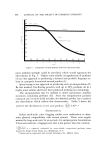
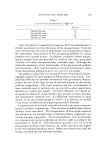
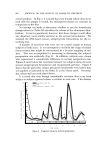
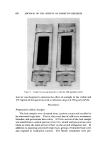
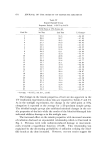
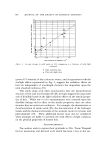
EMOLLIENCY AND CHEMICAL STRUCTURE 637 Table I Base Formula Oil phase 7.0% 4.0 3.0 Water phase 4.0 0.5 0.4 81.1 lOO.O% Oil phase = 14% Residue on skin = 18.9% Emollient = 37% of residue Emollient Glyceryl monostearate (pure) Stearic acid XXX Propylene glycol USP Triethanolamine Sodium lauryl sulfate Water on the skin (Table I). Thus, once the water had evaporated, the residual film left on the skin contained 37% of the emollient under study. Each lotion (or cream) was aged at least 48 hours before being evaluated, to allow any crystal structure which was going to develop to do so. Mem- bers of a series being compared were about the same age when evaluated. Approximately equal amounts of the creams or lotions were applied one by one to the inner arm. Each was evaluated individually as it went through the complete cycle (from wet Initial Feel to dry End Feel) be- fore applying another to the skin. Successive changes in skin feel were noted as they occurred. To facilitate this process a work sheet was used (as shown in Fig. 1, filled out for PEG 200 monooleate). This evaluation form uses language reminiscent of that used in per- fumery. In place of "top note" Initial Feel is described, which includes such factors as the slip and texture of the cream. Middle Feel describes the cream's behavior during rub-out, factors such as absorption time, or whether it has a watery "break." Finally, End Feel (equivalent to "base notes" in perfumery) occurs only after complete dry-out and is described by words such as "oily," "tacky," "waxy," "draggy," "smooth," and "rich." Samples were always tested "blind." Each evaluator was requested to make note of his various sensations from the initial "wet" feel to the final "dry" stage, and then to rank that particular series in respect to anything he considered significant--such as variation in Initial Slip., in final End Feel, in oiliness or tackiness, etc. After the evaluation and
Purchased for the exclusive use of nofirst nolast (unknown)
From: SCC Media Library & Resource Center (library.scconline.org)