634 JOURNAL OF THE SOCIETY OF COSMETIC CHEMISTS (106) (107) (108) (109) (110) (111) (112) ,,(113) (114) (115) (116) (117) (118) (119) (120) Maibach, H. I., and Feldmann, R. J., The effect .of DMSO on percutaneous penetration of hydrocortisone and testosterone in man, Ann. N.Y. Acad. Sci., 141, 425 (1967). Ritschel, W. A., Sorption promoters in biopharmaceutics, Angew. Chem., Int. Ed., 8, 699 (1969). Baker, H. J., The effects of dimethyl sulfoxide, dimethyl formanfide and dimethyl acetamide on the cutaneous barrier to water in human skin, J. Invest. Derrnatol., 50, 283 (1968). McDermot, H. L., Finkbeiner, A. J., Wells, W. J., and Heggie, R. M., The enhance- ment of penetration of an organophosphorus anticholinesterase through guinea pig skin by dimethyl sulfoxide, J. Physiol. Pharmacol., 45, 299 (1967) Kligman, A.M., Topical pharmacology and toxicology of dimethyl sulfoxide, J. Am. Med. Assoc., 193, 796 (1965). Rammler, D. H., and Zaffaroni, A., Biological implications of DMSO bascd on a review of its chemical properties, Ann. N.Y. Acad. Sci., 141, 13 (1967). Embery, G., and Dugard, P. H., The influence of dimethyl sulfoxide on the percutane- ous migration of potassium dodecyl (•S) sulphate, Brit. J. Dermatol., 81, Suppl. 4, 63 (1969). Scala, J., McOsker, D. E., and Reller, H. H., The percutaneous absorption of ionic surfactants, J. Invest. Dermatol., 50, 371 (1968). Blank, I. H., Cutaneous barriers, Ibid., 45, 249 (1965). Blank, I. H., and Gould, E. J., Penetration of anionic surafctants (surface active agents) into skin, Ibid., 33, 327 (1959). Blank, I. H., and Gould, E. J., Penetration of anionic surfactants into skin. III. Pene- tration from buffered sodium laurate solutions, Ibid., $7, 485 (1961). Bettley, F. R., The irritant effect of soap in relation to epidermal permeability, Brit. J. Dermatol., 75, 113 (1963). Wahlberg, J. E., The effect of anionic, cationic and nonionic detergents on the percu- taneous absorption of sodium chromate (•Cr) in the guinea pig, Acta Dermato-Ven- ereol., 48, 549 (1968). Bettley, F. R., The influence of detergents and surfactants on epidermal permeability, Brit. J. Derrnatol., 77, 98 (1965). Bettley, F. R., The influence of soap on the permeability of the epidermis, Ibid., 73, 448 (1961).

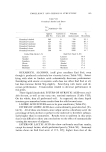
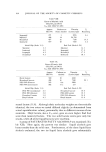
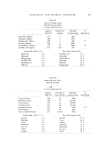
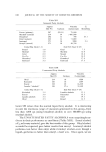
]. Soc. Cosmet. Chem., 22, 635-654 (September 17, 1971) Correlation of Skin Feel Emollients to Their Chemical Structure of ROBERT L. GOLDEMBERG, B.S., and CONSUELO P. DE LA ROSA, B.S.* Presented January 12, 1971, before the Midwest Chapter, Chicago, Ill. Synopsis--It has been found possible to quantitate the SKIN FEEL of cosmetics by use of a Skin Feel Index (SFI) proposed by the authors. This index is the ratio of Initial Slip of a product (scale 1-5) to its Total End Feel (scale 4-20) after complete dry-out on the skin. SFI values were determined for 85 cosmetic EMOLLIENTS comprising 14 chemical groups, each incorporated in a standard base at 37% of the total "residue" left on the skin by this base after evaporation of its water content. Effects of molecular weight, "oiliness," polarity, unsaturation, and chain branching were studied. Due to the unavailability of some "key" compounds, a detailed statistical or graphical analysis was not possible, but definite trends could nevertheless be observed as various factors (such as chain length or polarity) were systematically varied in this initial study. INTRODUCTION Attempting to correlate the chemical structure of raw materials with various properties of cosmetic interest (such as skin feel, sheen on the hair, or effect on viscosity ot5 lotions) has always fascinated the cosmetic chemist. However, measuring the influence of various changes in chem- ical structure implies the ability to measure numerical changes in other properties of these raw materials. Properties such as skin feel or odor, however, have generally been considered to be subjective in nature, and not amenable to numerical description. This has been a major stum- bling block. * Van Dyk & Company, Inc., Belleville, N.J. 07109. 635
Purchased for the exclusive use of nofirst nolast (unknown)
From: SCC Media Library & Resource Center (library.scconline.org)