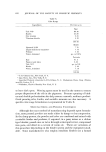
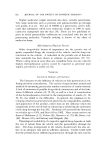
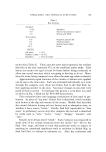
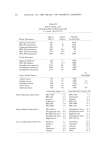
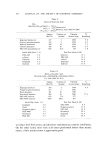
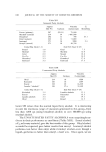
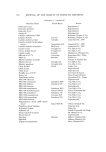
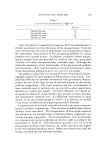
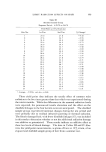
654 JOURNAL OF THE SOCIETY OF COSMETIC CHEMISTS APPENDIX I (continued) Chemical Name Trade Name Source Isostearyl lactate Isostearyl myristate Isostearyl oleate Jojoba oil Lanolin (anhydrous, USP) Lanolin alcohols Ceralan Lanolin alcohols acetate Acetulan Lanolin alcohols hydrocarbon extract Amerchol L-101 Lanolin alcohols ricinoleate Ricilan B Lauryl lactate Ceraphyl 31 Linear alcohol lactate Ceraphyl 41 Liquid lanolin Lantrol Mineral oil 65/75 Carnation Mink oil Emulan Myristyl alcohol (natural) Myristyl lactate Ceraphyl 50 Myristyl myristate Ceraphyl 424 Oleyl alcohol Novol Oleyl lactate Oleyl oleate Paraffin wax (130øF) Peanut oil Petrolatum (white) PEG 200 dilaurate PEG 200 monooleate Emulsynt 2180 PEG 400 dioleate Emulsynt 600 PEG 400 linoleate PEG 400 monolaurate Emulsynt 1060 PEG 600 monoisostearate Emery 3969D PEG 600 monooleate Emulsynt 710 PEG 1000 monostearate Cerasynt 840 PEG 1540 monooleate Emulsynt 910 PEG 4000 linoleate Polypropylene glycol 2000 mono- oleate Emcol F26-46 Propylene glycol linoleate Ricinoleyl alcohol Safflower oil Stearyl alcohol (natural) Stcaryl lactate Squalane Robane Squalene Triglyceryl monooleate Experimental Experimental Experimental Experimental Robinson Wagner & Co. Robinson Wagner & Co. Amerchol Div., CPC Amerchol Div., CPC Amerchol Div., CPC Van Dyk & Co. Van Dyk & Co. Maimstrom Chemical Co. Sonneborn Div., Witco Emlin Inc. Proctor & Gamble Inc. Van Dyk & Co. Van Dyk & Co. Croda, Inc. Experimental Experimental Int'l Wax Ref'g Co. Drew Foods Ref'g Co. Sonneborn Div., Witco Experimental Van Dyk & Co. Van Dyk & Co. Experimental Van Dyk & Co. Emery Industries Inc. Van Dyk & Co. Van Dyk & Co. Van Dyk & Co. Experimental Witco Chemical Co. Experimental Baker Co. Pacific Vegetable Oil Corp. M. Michel & Co. Experimental Robeco Chemical Co. Robeco Chemical Co. Drew Chemical Co.

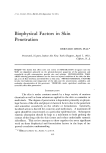
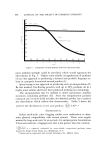
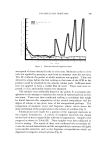
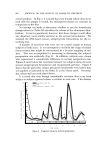
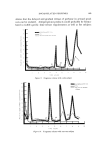
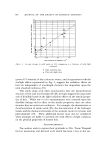
J. Soc. Cosmet. Chem., 22, 655-666 (September 17, 1971) Encapsulated Perfumes in Aerosol Products JEFFREY M. MILES, B.A., BERNARD M. MITZNER, M.S., JOSEPH BRENNER, Ph.D., and ERNEST H. POLAK, M.S.* Presented May 26-27, 1970, New Yorh City Synopsis--Stable, spray-dried, ENCAPSULATED FRAGRANCES which are formulated in AEROSOLS are described. When sprayed on a surface, under both in vivo and in vitro conditions, these gradually release fragrance upon exposure to moisture. It is shown that RELEASE RATE can be varied according to the liquid vchicle and that it varies with the individual test subject and the stimuli to which he is exposed. A novel analytical technique has been developed that simultaneously monitors the vola- tiles relcascd from an encapsulated fragrance and the moisture content of the axillary region of the subject. INTRODUCTION Liquid fragrances used in aerosol products tend to behave in the same manner as topically applied perfumes. The odor of the more vola- tile perfume components is noticed first, that of the moderately volatile components next, and at the end of a period of time only the odor of the least volatile ones. This effect is characterized in Fig. 1 by the bolder curves. Both the strength and character of a liquid fragrance change within a time period. Ideally, freshness of top note and unfading odor strength should be maintained throughout the application life. Fulfillment of such a requirement is not possible at present with liquid perfume oils. However, if the release of perfume volatiles could be delayed by a suitable encapsulation until functionally needed, greater fragrance inte•ity and * Polak's Frutal Works, Inc., 33 Sprague Ave., Middletown, N.Y. 10940. 655
Purchased for the exclusive use of nofirst nolast (unknown)
From: SCC Media Library & Resource Center (library.scconline.org)