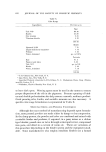
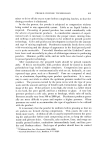
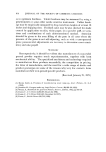
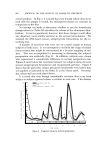
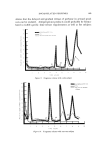
666 JOURNAL OF THE SOCIETY OF COSMETIC CHEMISTS with moderate, heavy, or light perspiration by varying the particular non- polar vehicle used in the formulation. The same delayed and gradual release has been incorporated into other aerosol products, such as feminine deodorant sprays, foot sprays, etc. (3). The same encapsulation system is also capable of incorporating other materials along with perfume oils. Encapsulated perfumes have been prepared with perfume oil to which has been added either hexachloro- phene an oil-soluble, germicidal quaternary or undecylenic acid. In general, oil-soluble, nonpolar materials compatible with the perfume in- gredients may be incorporated in the encapsulations along with the per- fume oil so that they also release over a period of time. A wide variety of fragrance types have been successfully encapsulated. However, adjustments are sometimes necessary in the perfume formula- tion to ensure accurate reproduction of the released perfume oil in the encapsulated form. With these encapsulations it is possible to include perfume types in product formulations which would not otherwise be suitable. Fragrance types, with very volatile character that would not be long lasting enough for inclusion in a product as liquids, can be success- fully employed using encapsulated perfumes. The encapsulated perfumes in aerosol formulations have been tested for extended periods of time with positive results. In the aerosol anti- perspirant formulations used in most of our testing, we ran elevated- temperature-stability tests at 130øF for 14 months. These tests showed that both the release characteristics and fragrance character of the encap- sulated perfume oil were maintained even though the small amount of surface oil on the encapsulations had broken down. It is concluded that a stable and functional encapsulated perfume for use in aerosol products can be produced. The technology developed also provides for other new product possibilities and helps solve problems that previously had no solution. A novel analytical method has also been de- veloped to measure the rate of perfume release as well as moisture release in the axillary region. (Received February 10, 1971) REFERENCES (1) Flinn, James E., and Nack, Herman, What is happening in microencapsulation? Chem. Eng. (New Yorh), 74 (25), 171-8 (1967). (2) Report by the Graduate Students at the Harvard Business School, Microencapsulation, Management Reports, 196•, p. 72. (3) Bakan, Joseph A., Paper on microencapsulation presented to the Eastern Regional IPT Section of the Academy of Pharmaceutical Science, Philadelphia, Pa., October 4, 1968.

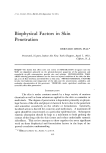
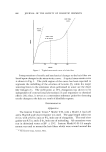
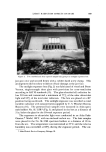
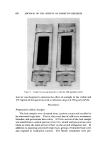
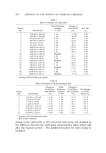
1. Soc. Co, met. Chem., 22, 667-678 (September 17, 1971) Elasticity and Tensile Properties of Human Hair. II. Light Radiation Effects RICHARD BEYAK, M.S., G. S. KASS, B.S., and C. F. MEYER, M.S., M.B.A. • Synopsis--The effects on the TENSILE PROPERTIES of HAIR by LIGHT RADIATION in the form of ULTRAVIOLET and SUNLIGHT are reported. These effects are inter- preted from the stress-strain measurements made on single fiber tests and the indcx used is the force at 15% elongation. The ultraviolet light effects were studied by exposing hair samples to a carbon-arc lamp for increasing pcriods of time, while the solar effects were examined by exposing hair to natural daylight for periods of ten wceks. The daylight ex- posures were made throughout the year to study seasonal variation in the solar radiation. Effects of other environmental factors such as temperature and humidity were monitored by te•ting unexposed control sample groups. Results indicate a correlation between the total light radiation on the hair and the loss of tensile properties as exprcssed by thc yield point at 15% elongation. In addition, the correlation appears to be the same for UV and sunlight suggesting the effects are due to the total inci:tent radiation and not the charactcr of the light. INTRODUCTION There is a growing interest in the field of physicomechanical test- ing of hair and wool. These studies may be classified into three cate- gories: chemical and morphological characterization of keratin (1-3), chemical and environmental effects on the fiber (4-9), and diagnostic in- terpretations in the medical literature (10-12). Sunlight and ultraviolet light have long been known to affect the mechanical properties of hair (6, 7, 13), but very little quantitative data are available in the literature. The purpose of this study is to determine the environmental effects of sunlight and ultraviolet radiation on the tensile properties of human hair. Alberto-Culver Co., Melrose Park, Ill. 60160. 667
Purchased for the exclusive use of nofirst nolast (unknown)
From: SCC Media Library & Resource Center (library.scconline.org)