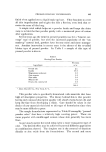
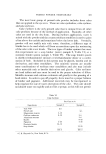
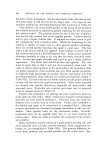
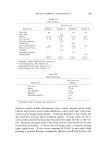
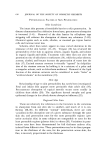
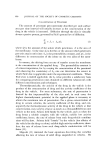
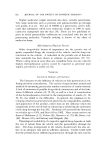
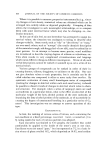
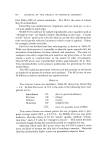
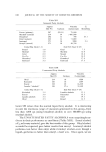
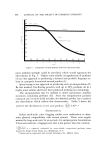
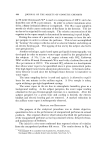
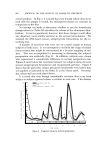
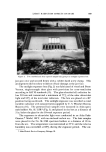
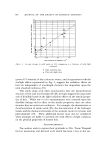
668 JOURNAL OF THE SOCIETY OF COSMETIC CHEMISTS / SLOPE / / / / YIELD POINT @ •5% STrmrN / / SLOPE / / / / / STRAIN Figure 1. Typical stress-strain curve of a hair fiber Interpretations of tensile and mechanical changes to the hair fiber are based upon changes in the stress-strain curve. A typical stress-strain curve is shown in Fig. 1. The yield region of the curve has been reported to represent the unfolding of the a-helices of keratin (2), while the major restoring forces to the extension when performed in water are the disul- fide linkages (1). The yield point at 15% elongation was shown to be independent of cross-sectional aberrations (3) and responsive to chemical effects (14) thus, it serves as a convenient reference point for detecting tensile changes to the hair as a result of disulfide rupture. EXPERIMENTAL Apparatus The Instron Tensile Tester, * Model TM, with a Model A load cell and a 50-g full scale chart response was used. The gage length taken was 2.5 in. with a 0.2-in./min or 8c•o/Inin rate of elongation. The total elon- gation was 0.5 in. and a 2-in./min rate of unloading. All extensions were run in deionized water at 20 ø ñ 2øC. Instron Model G-51-1A sample mount was used to mount the hair fibers which were wound around the The Instron Corp., Canton, Mass.

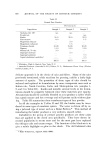
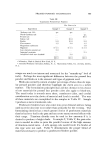
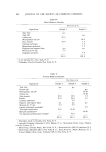
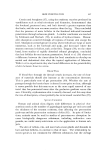
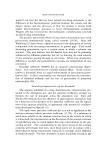
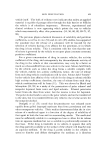
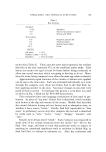
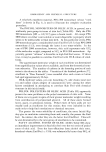
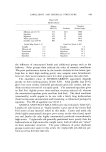
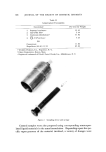
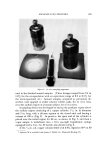
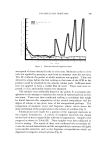
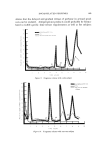
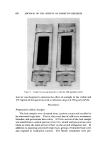
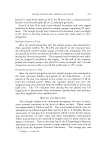
LIGHT RADIATION EFFECTS ON HAIR 669 Figure 2. Two shielded aud four exposed sample hair groups iu suulight expostire box jaw post once and secured firmly with a rubber-faced screw clamp. This arrangement did not show evidence of hair damage at the jaw face. The sunlight exposure box (Fig. 2) was fabricated of wood and Penn- Vernon, single-strength sheet glass with provisions for cross-ventilation according to ASTM standards (15). The glass absorbed all radiation be- low 310 nm and transmitted a minimum of 77% of the solar ultraviolet light and 85% of the total solar radiation. The box was placed at a 40 ø position facing southward. The sunlight exposure was recorded as total incident radiation with measurements supplied by U.S. Weather Bureau Reports (16). The pretested hair samples were mounted in Atlas speci- men holders No. SI.-I.SR* (Fig. 3) and placed in the box at a distance of 3 in. below the glass for the 10-week exposure period. The exposures to ultraviolet light were conducted in an Atlas Fade- Ometer,* Model 18FT, with an enclosed carbon arc. The hair samples were placed in the No. SL-LSR specimen holders at a distance of 10 in. from the arc. The temperature was maintained at 37øC and the relative humidity was controlled at 65% during the exposure period. The car- * Atlas Electric Devices Company, Chicago, Ill.
Purchased for the exclusive use of nofirst nolast (unknown)
From: SCC Media Library & Resource Center (library.scconline.org)